Korva is a scroll of the internet’s best ideas.
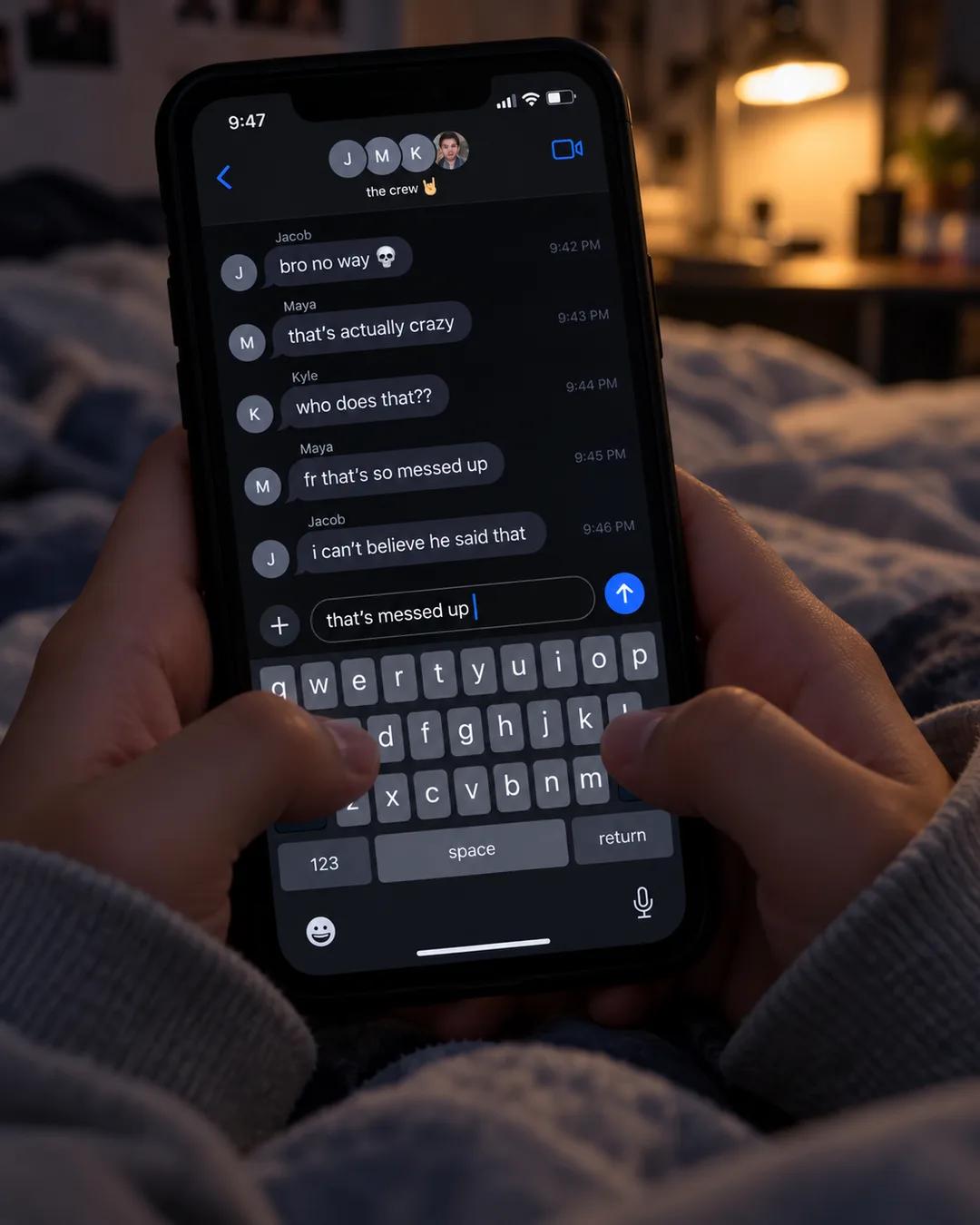
Rehearse the words and plan B

Naming what's hard
Asking a son whether he would speak up if friends were being disrespectful about a girl usually gets a quick yes. A better follow-up is what might make it hard. A boy who can't name anything hard about it is unlikely to manage it, and naming the difficulty lowers the fear around it. The difficulty is real: a 14-year-old's friends might call him a loser or leave him off the next Friday night invitation.
Rehearsing the words
From there the parent can ask what a kid his age would realistically write in a text, and offer ideas he can reject. Maybe he'd write that it's not nice, and he shoots that down, because nobody would write it that way. When asked what someone would write, he may come up with something blunter, like calling it messed up. He has now heard himself say it once, which makes one rep, and he will need more. Being rejected by the kid is a good sign, because he is about a second from supplying his own words.
Plan B for freezing
A plan B covers the freeze. Bodies do odd things under nerves, and a boy who locks up isn't weak or a bad person. He can still tell a parent, or pull one friend aside, bringing in another person even without a solution. Missing the first chance to act leaves the next one open: a boy who laughed because everyone else laughed and then felt sick about it can still decide what to do now.
Why does rehearsing words make speaking up easier?
Psychologist Peter Gollwitzer calls specific if-then plans implementation intentions. A 2006 meta-analysis by Gollwitzer and Paschal Sheeran found that forming such plans had a medium-to-large effect on whether people reached their goals. A plan hands the situation a ready response, so the person doesn't have to invent one under pressure. Rehearsal also lets the person hear their own voice say the words before the moment arrives.
Why do people freeze under social pressure?
Physiologist Walter Cannon described the fight-or-flight response in the early twentieth century. Later researchers added freezing as a defensive response in which movement pauses while the brain assesses the threat. Social threats such as ridicule or exclusion can trigger the same stress systems as physical ones. Freezing has been documented in many species, humans included.
Why does a crowd make speaking up harder?
In a 1968 experiment, John Darley and Bibb Latané had participants overhear what sounded like another student having a seizure. Of the participants who believed they were the only listener, 85 percent sought help before the victim's cries ended. Among those who believed four others were also listening, 31 percent did. The researchers named the effect diffusion of responsibility.
More from Good Inside with Dr. Becky