Korva is a scroll of the internet’s best ideas.
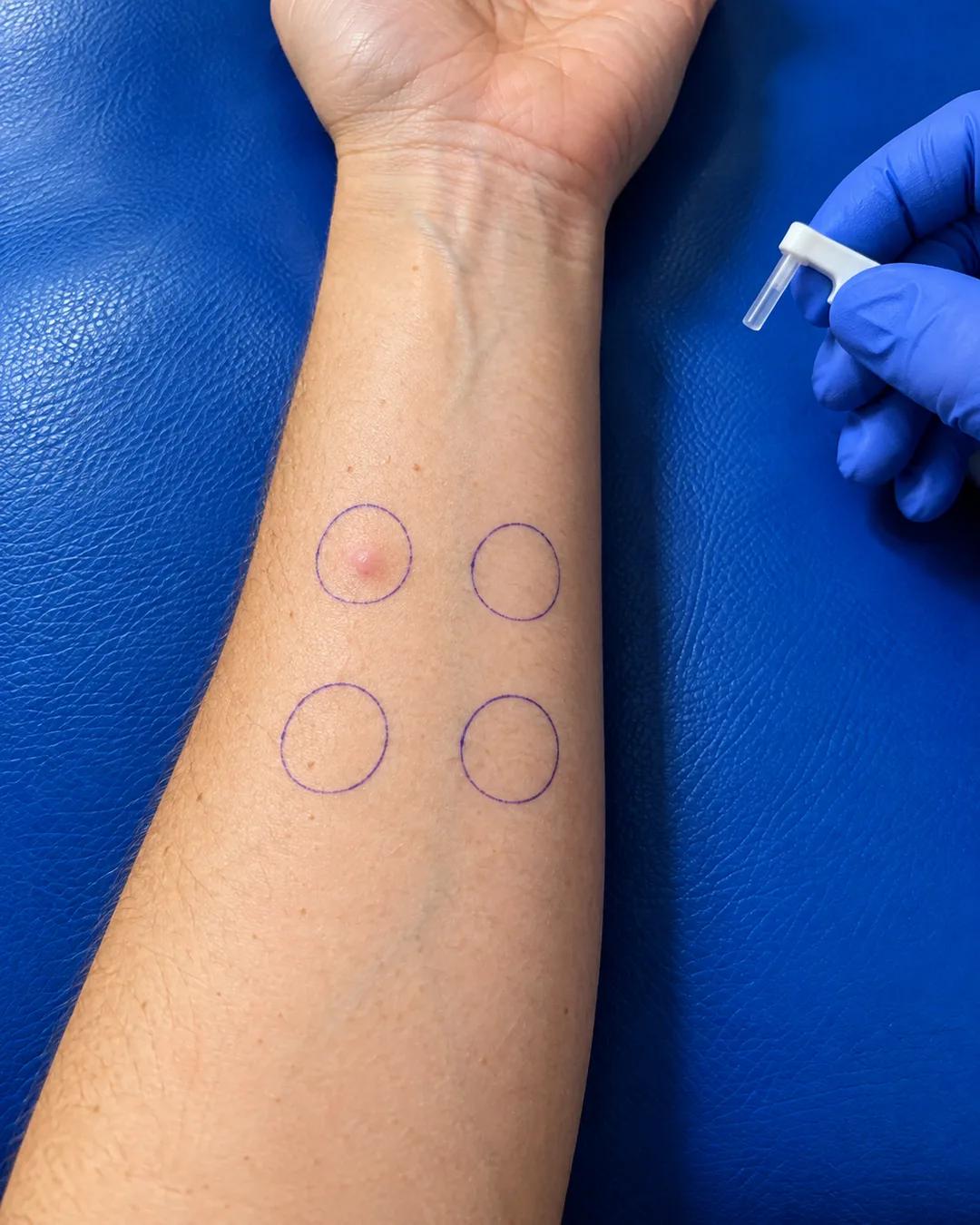
Salt water and histamine as controls

Tiny needles place four small pricks just under the surface of the forearm's skin: saline, histamine, and two penicillin reagents. Saline should do nothing and histamine should raise a red itchy bump. If the penicillin also raises one, that is a positive test, and the person is allergic.
If the skin prick is negative, an intradermal test comes next, with the same reagents placed just under the skin. The bumps are watched to see whether they get any bigger compared with saline. A positive result there also means allergy. When both tests are negative, studies show a 95% likelihood of passing a penicillin challenge, and in real life it is probably much higher.
The last step is an oral challenge with amoxicillin, a common oral penicillin, followed by a wait in the office to make sure the person is fine. That is the gold standard, because tests are tests. A person who takes the medication and is fine is not allergic.
Why does histamine raise a bump on the skin?
Histamine makes small blood vessels leak fluid into surrounding tissue and stimulates nearby nerve endings. The leaked fluid forms a raised swelling called a wheal, and the surrounding blood flow produces redness called a flare. The itch comes from the nerve stimulation. This is the same chain of events that produces hives.
Why test the skin before trying the drug?
Skin testing detects IgE antibodies already attached to mast cells in the skin, which gives a way to check for sensitivity before swallowing a full dose. A positive result means the immune system is primed. The test does not carry the risks of full exposure. Its main limit is that it only picks up the IgE type of allergy.
What are the penicillin reagents used in the test?
Penicillin skin testing uses the major determinant, benzylpenicilloyl polylysine, sold as Pre-Pen, together with minor determinant mixtures. These stand in for the breakdown products of penicillin that the immune system actually recognizes. Most of penicillin turns into the major determinant in the body. Testing both groups catches allergy that either one alone would miss.
More from Freakonomics Radio Network