Korva is a scroll of the internet’s best ideas.
Seawater makes Roman concrete stronger

Piers in the sea
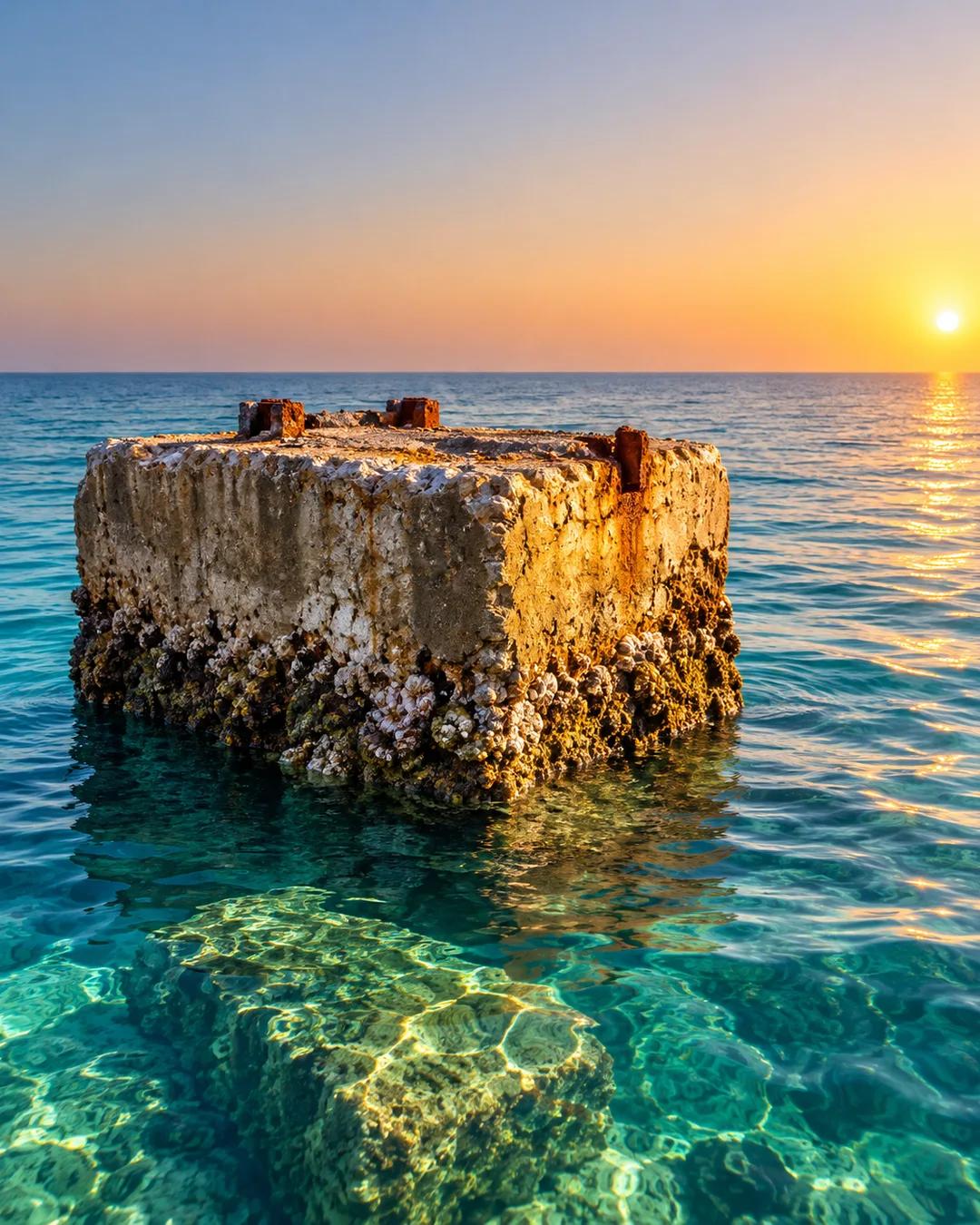
At the ancient harbor of Caesarea, on the coast of Italy, Roman engineers built huge concrete piers directly into the sea. Modern concrete in that setting can fail in just a few decades. Parts of the Roman piers are still standing after 2,000 years underwater.
Crystals that keep growing
When seawater soaks into Roman concrete, it dissolves the lime inside. The dissolved lime reacts with the volcanic ash in the mix and forms crystals of a rare mineral called aluminum tobermorite. The crystals grow into an interlocking structure of microscopic plates that fills pores and strengthens bonds. Researchers at the University of Utah found that they keep growing for millennia.
Why modern concrete fails sooner
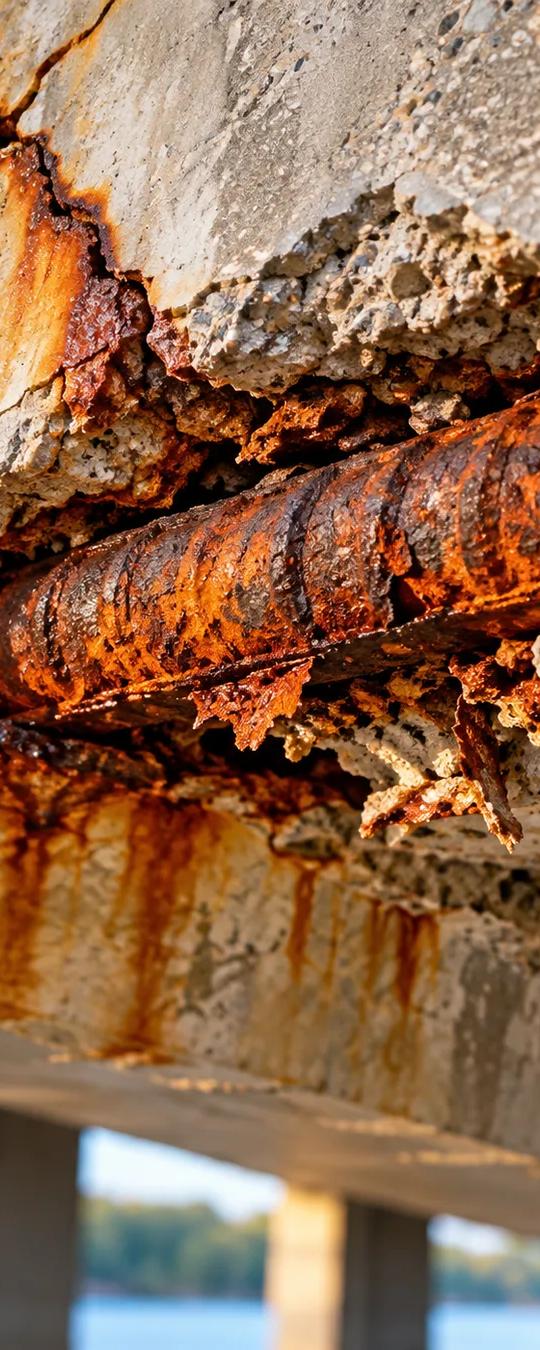
Concrete exposed to seawater today typically begins to deteriorate within 20 to 30 years, because the salt speeds up the corrosion of the steel rebar inside. The Pantheon in Rome has no steel at all. It has stood for nearly 2,000 years, and for more than 13 centuries after the Roman Empire fell it was the largest dome of any kind in the world. It is still the largest unreinforced concrete dome.
Why does seawater wreck steel rebar so fast?
Steel in concrete is normally protected by a thin passive film of oxide that forms in the highly alkaline pore water. Chloride ions from seawater and road salt are small enough to work through the concrete and break that film down at local spots. Once the film fails, rust begins to form even though the concrete around the steel is still intact. Chloride attack is considered the leading cause of corrosion in coastal concrete structures.
How did the Pantheon dome stay up without steel?
Concrete is strong under compression, and a dome directs its weight down along curved lines so that most of the material is being squeezed rather than pulled. The Roman builders made the upper dome thinner and used lighter aggregates such as pumice toward the top, which cut the load on the walls below. Recessed square panels called coffers removed even more weight from the dome's inner surface. The dome's oculus, a round opening at the top, leaves out the section where the compressive forces would otherwise converge.
Why do interlocking mineral plates add strength?
Plate-shaped crystals that grow into pores and gaps act like tiny fibers that bridge the space between grains. When a microcrack tries to spread, it has to break or detour around those crystals, which uses up energy and slows the crack down. The same principle, strength from interlocking plates and fibers, appears in materials such as nacre, the inner layer of mollusk shells. Tobermorite is closely related to the calcium silicate hydrate that makes up most of the binder in modern cement.
More from Medieval Wisdom