Korva is a scroll of the internet’s best ideas.
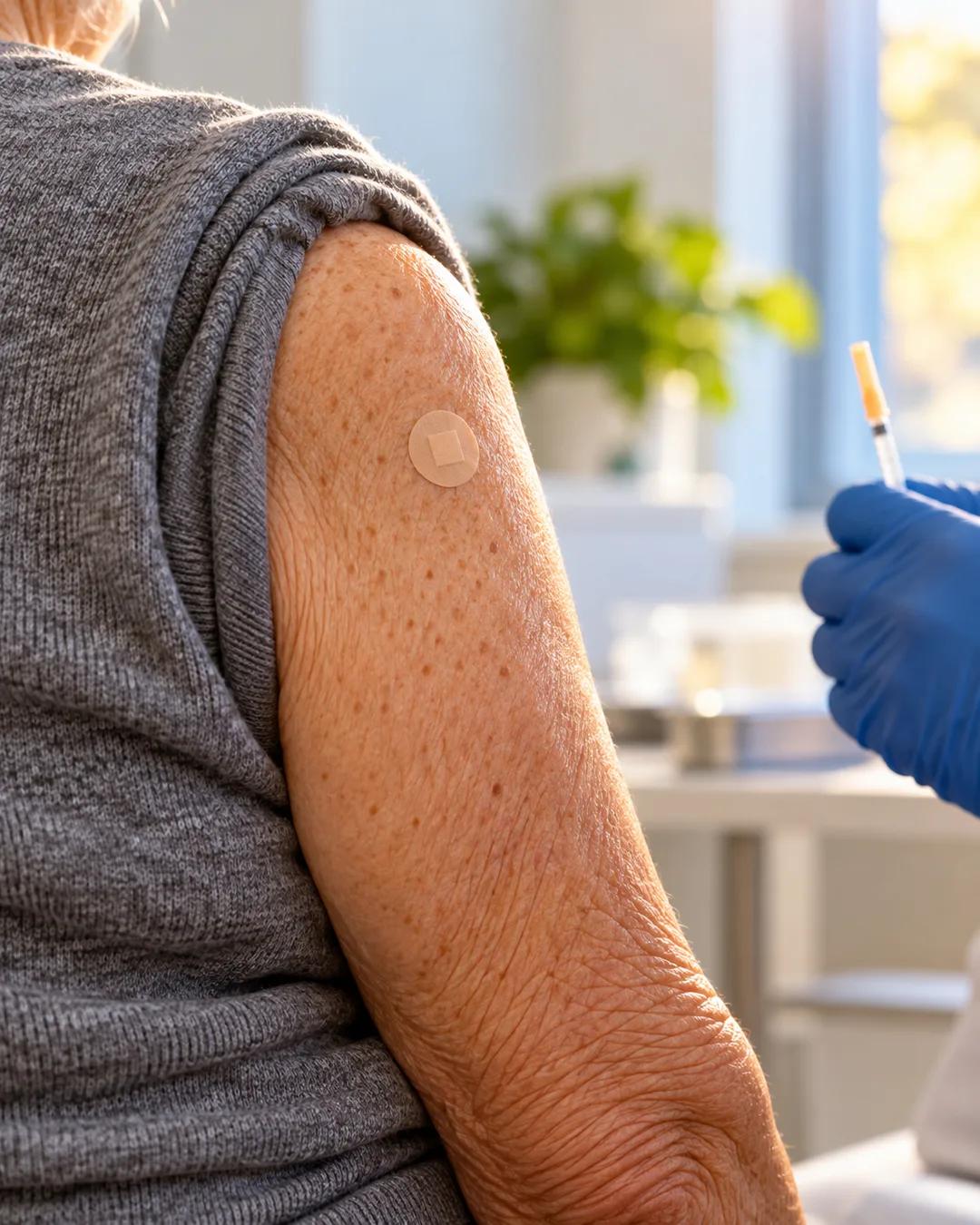
Shingles vaccine may cut dementia
The Welsh natural experiment
The cleanest comes from Wales, where the live attenuated shingles vaccine went to people born after a birth-date cutoff and not to those born before it. Comparing people on either side of that date, a design economists call a regression discontinuity, showed a 20% drop in the relative risk of Alzheimer's or dementia after seven years among those who were eligible.
The case against
The case against is that many vaccines, including flu and DTP, are linked to lower dementia risk, which raises the possibility that healthier people simply get vaccinated, though that does not apply to a cutoff design. A cutoff design has its own limit: only people just above and just below the birth date matter, so the groups are small and the results look marginally significant. An ongoing study covering all of England found no discontinuity. Results sitting barely under the significance threshold are a known warning sign.
Open questions
Two questions remain open. The Wales study used the older live vaccine, while the modern one, Shingrix, is a subunit vaccine with an adjuvant, and scientists disagree about whether it would do better or worse. The effect may also not run through shingles at all, and could come from a general immune boost that an adjuvant alone might supply. No randomized controlled trial has tested any of this yet.
Why does a birth-date cutoff act like a trial?
Whether a person was eligible for the vaccine depended only on which side of the cutoff their birthday fell, something no one chooses. People born a week apart share essentially the same health, habits, and background, so the two sides should differ mainly in eligibility. Ordinary comparisons of vaccinated and unvaccinated people cannot offer that guarantee. A Stanford-led team under Pascal Geldsetzer applied this design to Welsh health records and published the result in Nature in 2025.
How might a shingles vaccine affect the brain?
Varicella-zoster virus, the cause of chickenpox, stays dormant in clusters of nerve cells for life and can reactivate decades later as shingles. One idea is that preventing reactivation protects the brain from damage the virus can cause. Another is that the vaccine primes the immune system in ways that reach beyond shingles. Neurologists have documented zoster vasculopathy, in which the reactivated virus inflames arteries in the brain.
Why does Shingrix include an adjuvant?
An adjuvant is a substance added to a vaccine to strengthen the immune response to its main ingredient. Shingrix, a GSK vaccine approved by the FDA in 2017, contains a single viral protein, glycoprotein E, which on its own would provoke a weaker response. Its adjuvant, AS01B, combines a modified bacterial lipid with QS-21, a compound extracted from the bark of the Chilean soapbark tree.
More from Saloni Dattani