Korva is a scroll of the internet’s best ideas.
Show artifacts before graphic images

Where graphic images sit
The most graphic material in the 9/11 museum sits away from the places most visitors go. Showing especially graphic images before people understand what they are seeing is not appropriate, and it risks re-traumatizing the people who lived through the day.
Artifacts and stories
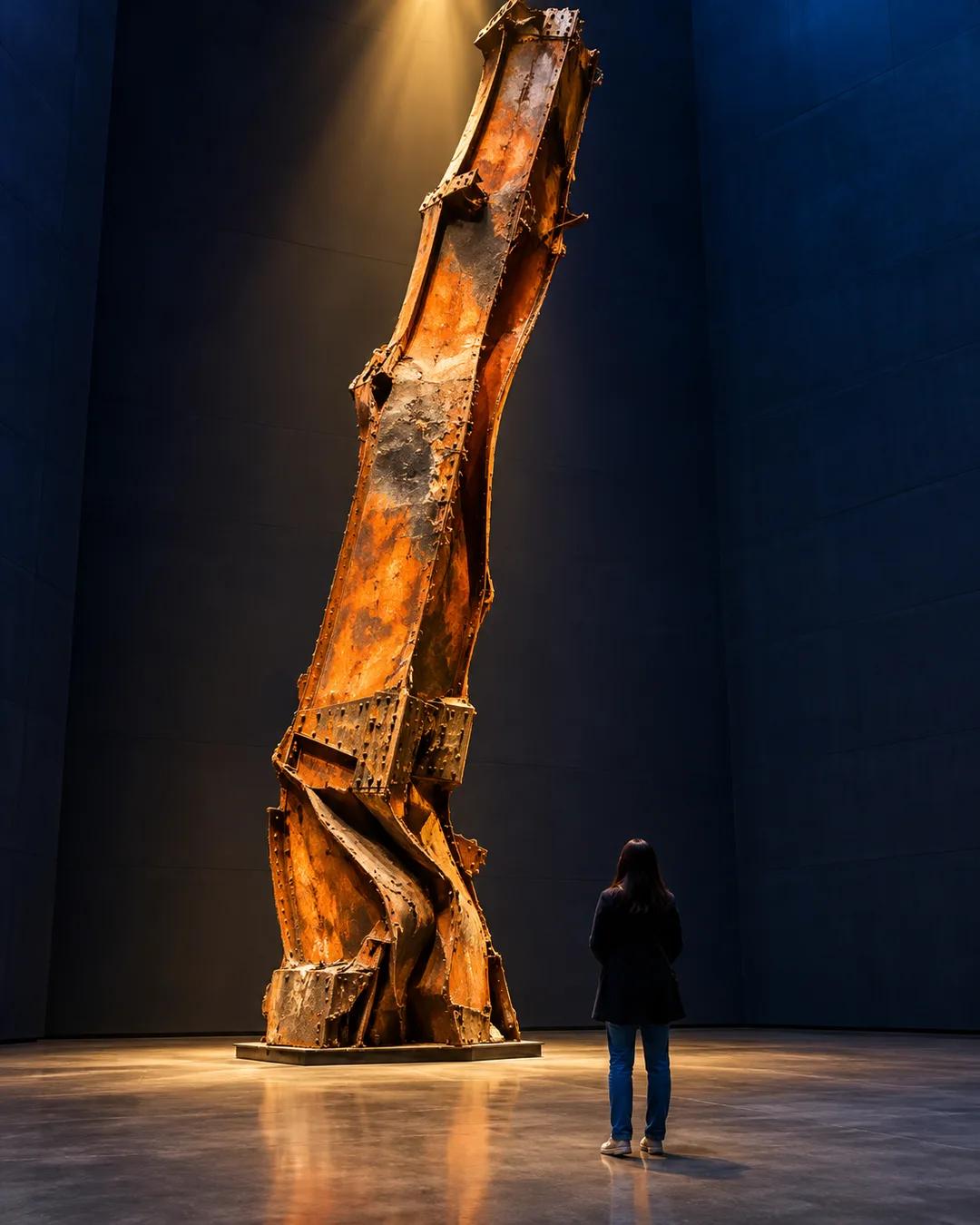
Monumental artifacts and the stories of the people who responded and came to help do something different: they make visitors interested in what happened and why. That curiosity keeps pulling them deeper.
Sensitivity and truth
People have different degrees of sensitivity, so staff are trained to be prepared for emotional reactions, including to the most challenging material. What counts as tolerable has not stayed stable either, because the images kids see today are very different from what they used to see.
Teachers who share what happened with fidelity to the truth find that students are interested and want to learn more.
Why do disturbing images stay with survivors?
Memories formed during extreme fear carry unusually strong sensory detail, and the brain's threat-detection system, centered on the amygdala, can respond to reminders as if the danger were present. Clinical research on post-traumatic stress describes this as a trigger: a sight, sound, or smell tied to the event can bring on an intense reaction. Museums that show violent history therefore tend to let visitors choose whether to encounter the hardest material, often through signage and separate alcoves.
How do other museums handle disturbing exhibits?
The United States Holocaust Memorial Museum recommends its permanent exhibition for visitors 11 and older. It places warning signs at the areas with the most disturbing footage. Many museums use the same approach with partial walls, alcoves with content warnings, and viewing that visitors must walk into on purpose.
Why do huge artifacts pull visitors in?
Museum educators call the approach object-based learning, in which standing near a real item prompts questions. A photograph shows what something looked like, while an object carries its size, weight, and damage. Visitors tend to ask how it got that way, and that question leads into the surrounding history. Object-based learning is widely used in university museums and collections.
More from Fox News Rewind: Financial Crisis '08