Korva is a scroll of the internet’s best ideas.
Silkworms edited to spin spider silk

Injecting the eggs
Kraig Biocraft Laboratories works with eggs the size of a pen's head, using needles half a micron wide. A tungsten needle pokes a hole, and a glass capillary injects fluid carrying the spider DNA into the part of the egg that will become the silkworm.
Pasting in the gene
To get that DNA into the silkworm's own genome, the lab borrows a jumping gene called piggyBac, first identified in a cabbage looper moth. An enzyme recognizes the short sequences at its two ends, cuts the piece out, and pastes it somewhere else, like a natural cut and paste system. Replace the middle with a spider silk gene and the enzyme inserts that instead.
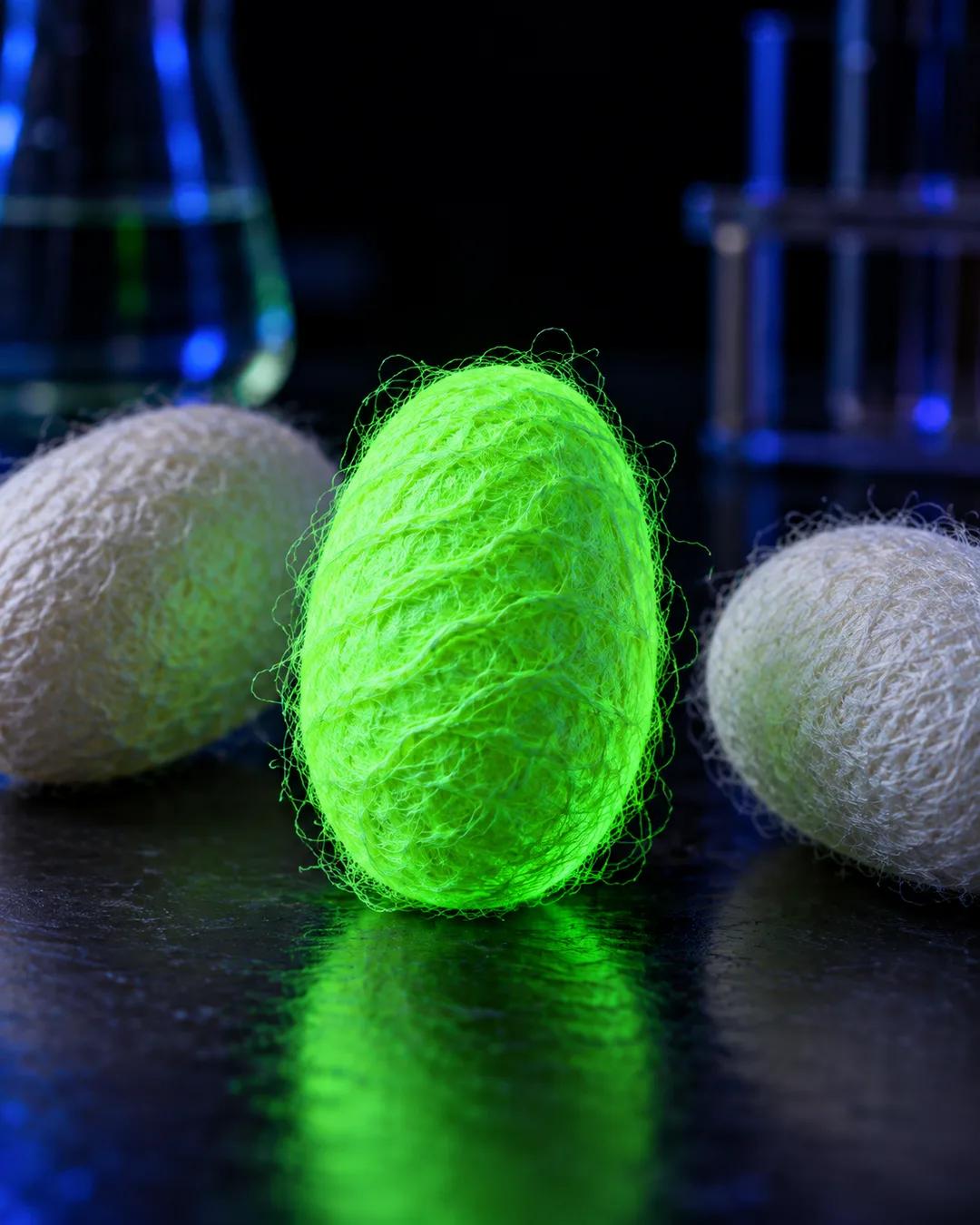
A silkworm where the edit worked looks like one where it didn't, so the first versions also carried a green fluorescent protein that makes the cocoon glow. Where the gene lands matters. PiggyBac only looks for the four letters TTAA, which appear all over the genome, so it is like filing the world's best chocolate chip cookie recipe in the pasta section.
What the fibers do
The fibers contain about 6 to 10 percent spider DNA and still average about 60 percent of the strength of spider silk. Last year the lab produced about half a ton of this cocoon silk.
Where does the piggyBac gene get its name?
Malcolm Fraser and colleagues discovered it in the early 1980s, when a segment of DNA from the cabbage looper moth jumped into a baculovirus that was being grown in insect cells. The way it hitched a ride inside the virus gave it the name piggyBac. Scientists later found it could be moved between species and used as a carrier for new genes. It has since been used to modify genomes from insects to mice.
Why does a green protein show the edit worked?
Green fluorescent protein was first isolated from the jellyfish Aequorea victoria. It absorbs blue light and gives off green light, so any tissue that carries its gene glows under blue illumination. Osamu Shimomura, Martin Chalfie, and Roger Tsien shared the 2008 Nobel Prize in Chemistry for discovering and developing it. Attaching its gene next to the one being added lets researchers see which animals took up the DNA without sequencing them.
How were jumping genes first discovered?
Barbara McClintock found them in maize during the 1940s, while working at Cold Spring Harbor Laboratory. She noticed that spots and streaks of color on kernels could be explained by pieces of DNA that moved from one position to another and switched nearby genes on or off. Many biologists doubted her at the time. She received the 1983 Nobel Prize in Physiology or Medicine for the work.
More from Veritasium