Korva is a scroll of the internet’s best ideas.
Silt that holds 100-ton machines

The Pier T expansion
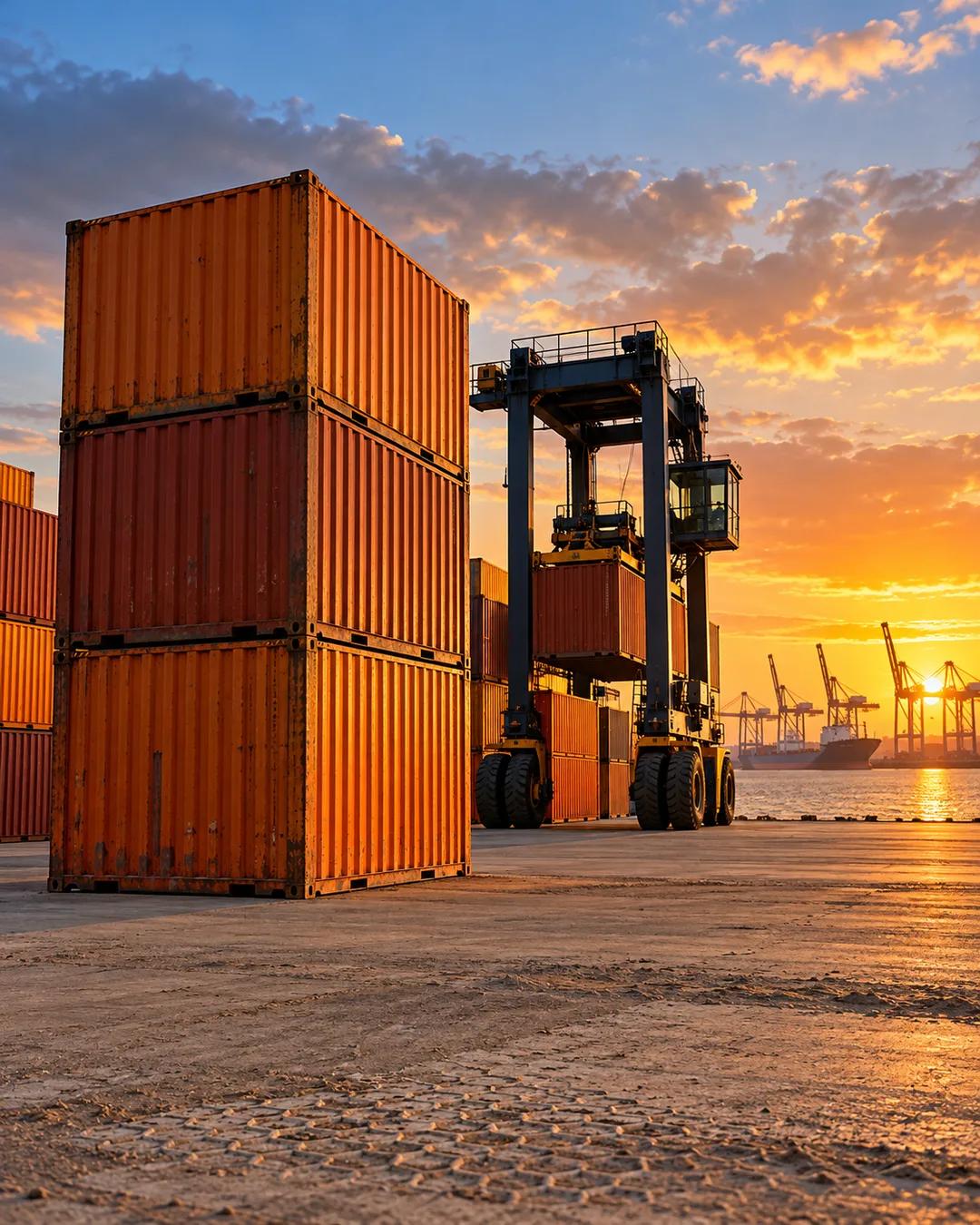
The port is the second-busiest container seaport in the United States, and together with the neighboring Port of Los Angeles, roughly half a trillion dollars' worth of trade moves through it every year. In the early 2000s, Long Beach was expanding the container storage yard at the Pier T Marine Terminal into an old, disused dry dock that sat much lower than the rest of the yard. It was going to need a lot of fill to bring it up.
The wrong kind of fill
Few paving jobs are harder than a container terminal. Cranes, forklifts, and yard trucks cross it constantly, and the fill available nearby was junk: soft, water-logged silt scraped from the bottom of the ocean, with the structural integrity of a cake in the rain.
The plastic accordion fix
The traditional fix is to dig out all the muck and haul in a mountain of expensive backfill, which costs millions of dollars and takes years. The engineers used a 3D network of plastic that looks like a giant plastic accordion. It held the dredged spoils in place and physically transformed them into a high-capacity platform.
Why do container yards need such strong ground?
Loaded shipping containers are stacked several high, and each stack rests its whole weight on four corner posts, so the pavement under it takes concentrated point loads. The reach stackers and straddle carriers that lift them weigh many tons on their own. Many container terminals are surfaced with interlocking concrete block pavers instead of asphalt, because blocks tolerate point loads and spread them to the base below.
Why is dredged ocean silt so weak?
Silt and clay particles on the seabed sit in water, and water cannot resist being sheared. When a load presses on saturated fine soil, part of it is carried by the water between the particles instead of by the grains touching each other. As the water slowly drains out, the soil settles and gains strength, a process called consolidation that can take years in clay-rich sediment.
How does a folded plastic grid expand?
Geocells are shipped as compact stacks of welded plastic strips and pulled open on site, much like a paper honeycomb decoration. Stakes or clips hold the expanded section open while fill goes in. Once the cells are filled and compacted, the fill itself keeps the walls from collapsing. Many products have textured or perforated strips that grip the fill.
More from Practical Engineering