Korva is a scroll of the internet’s best ideas.
Six weeks versus six hours

Studying the best plants
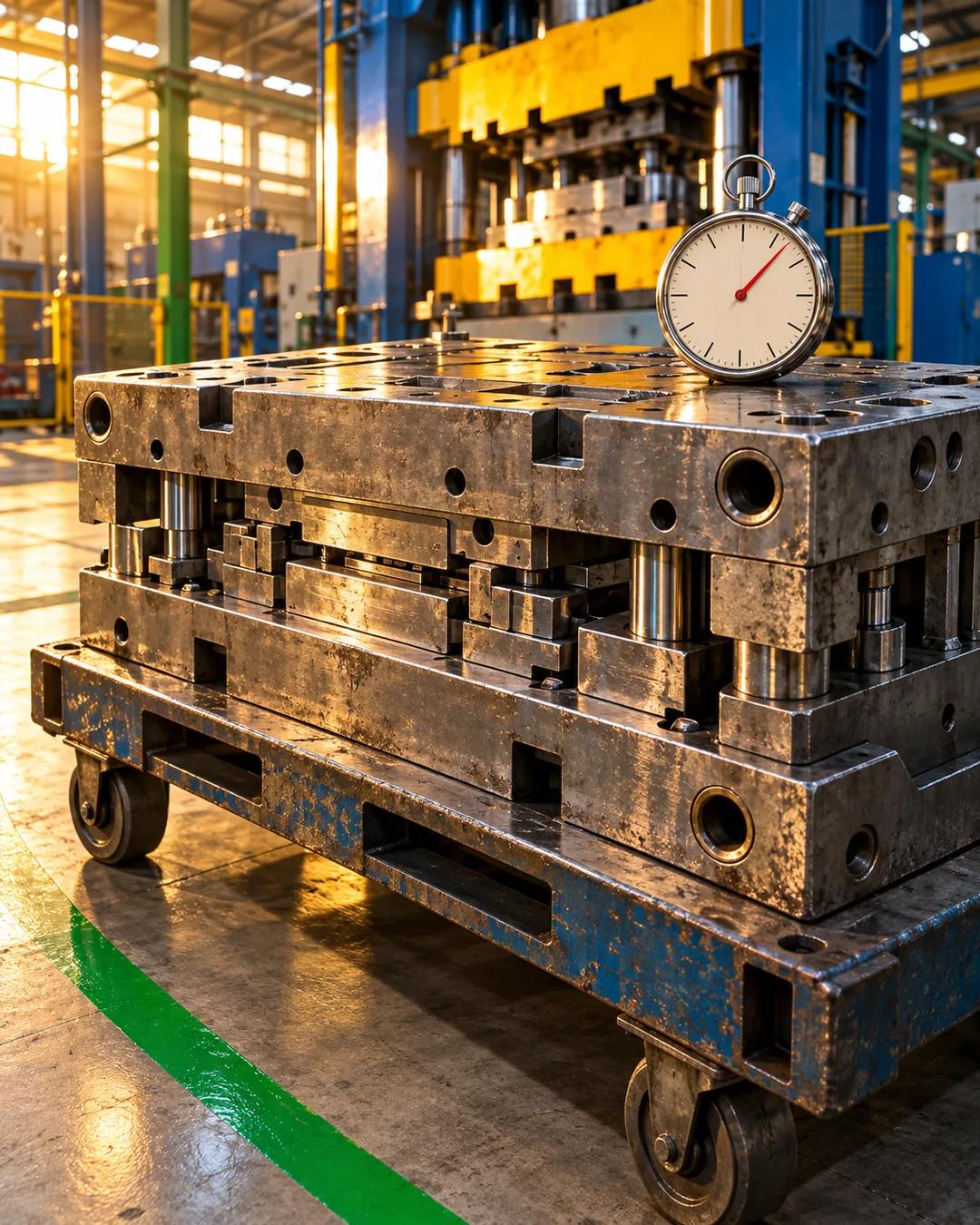
In 1985 and 1986, Mitch and Steve Rales had made a string of acquisitions and realized they knew little about manufacturing. They split up the world to study the best: Mitch took Europe, Steve took Asia, and they divided North America between them. Visiting GM, Ford, Chrysler, Toyota, and Volvo, they watched the two-ton die changeover at GM and at Toyota.
The gap traced to Edward Deming, a famous quality guru with ten or eleven quality principles. He had tried to sell them to GM, Ford, and Chrysler, and none of them were buying. In 1959, Toyota bought in hook, line, and sinker.
Bringing it home
The brothers took the Toyota system home. They tried it first at their most troubled manufacturing plant, one that was upside down with problems, under the name Jacobs production system. It grew into the Danaher production system, and in effect they were importing Deming's education back to America after he had exported it to Toyota.
The ideas turned out to apply well beyond the factory floor. Accounts receivable, call centers, and contracts can all be improved continuously, so Danaher built a business system out of the Toyota system, one that reaches every function in the company.
How does Toyota change a die so fast?
Shigeo Shingo, an engineer who worked with Toyota in the 1950s and 1960s, found that most changeover steps could be done while the press was still running. He split the job into internal steps, which need the machine stopped, and external ones, such as staging the next die and tools, which do not. Moving work from the first group to the second cut the downtime, and quick-release clamps replaced bolts that took minutes to turn. He called the method single minute exchange of dies, with a target of changeovers under ten minutes.
Why did Japan embrace Deming before America?
W. Edwards Deming, an American statistician, was invited to Japan in 1950 by the Union of Japanese Scientists and Engineers to lecture on statistical quality control. Japanese industry was rebuilding and needed to win export customers, which gave it a reason to listen. American factories of those years faced little foreign competition, so poor quality cost them less. Japan named its national quality award the Deming Prize in 1951.
Why do quick changeovers allow smaller batches?
Each changeover costs time while the machine makes nothing, so factories with slow changeovers run huge batches to spread that cost. The classic economic order quantity formula, published by Ford W. Harris in 1913, shows the best batch size rising with the square root of the setup cost. Cut the setup cost and the best batch shrinks. Smaller batches mean less inventory sitting around and faster feedback when a part comes out wrong.
More from Joys of Compounding