Korva is a scroll of the internet’s best ideas.
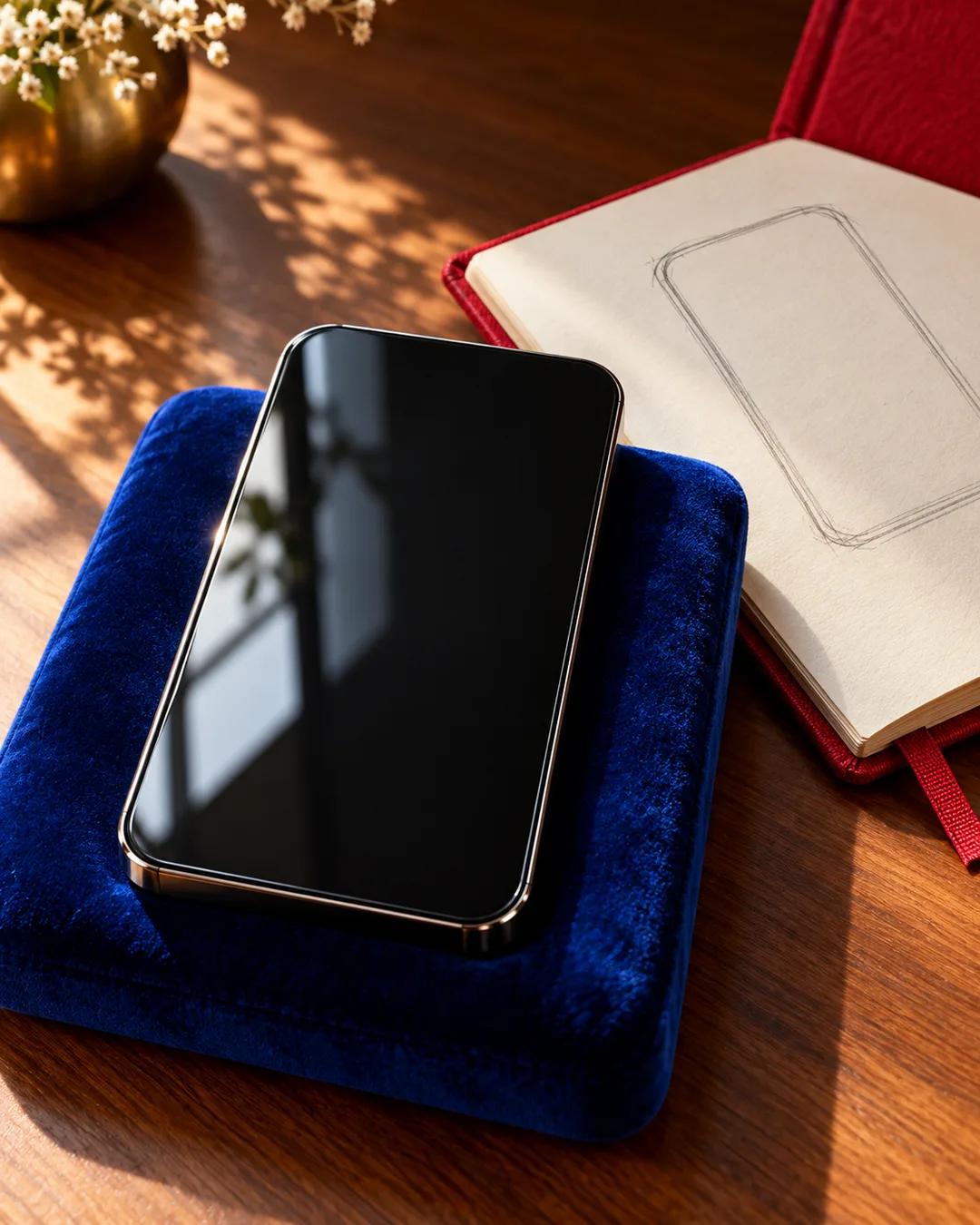
Sketched the iPhone in 1989

The Pocket Crystal
Porat had coined the phrase information economy in his doctoral research. In the late 1980s he joined the advanced technology group at Apple to think about what products the information society would need. In a big red notebook, he wrote that the device of the future should bring the personal satisfaction of a fine piece of jewelry and keep a perceived value even when it was not being used.
The sketch showed one object that worked as a phone, a messaging device, a portable television, and a games console, and that could also book a plane ticket. Most mobile phones in 1989 were the size of bricks, Apple's new portable computer weighed 16 pounds, and the World Wide Web did not exist.
Porat expected people to carry the Pocket Crystal everywhere and wear it like jewelry. If a house caught fire, the family would get out first and the Pocket Crystal would come next.
Spinning Out of Apple
Bill Atkinson and Andy Hertzfeld, two of the programmers behind the original Macintosh, were convinced. The idea was too big for Apple, so in 1990 it moved into a spinoff called General Magic, named for Arthur C. Clarke's line that any sufficiently advanced technology is indistinguishable from magic.
Why was Apple's first portable Mac so heavy?
The Macintosh Portable, which Apple released in 1989, used a sealed lead-acid battery, a heavy way to store power. It also had a large active-matrix LCD screen that drew a lot of power, so it needed a big battery to run for long. The machine launched at a price of $6,500.
Where did the line about magic come from?
Arthur C. Clarke, the science fiction writer, published it as the third of his three laws in a revised 1973 edition of his essay collection Profiles of the Future. The book first appeared in 1962. The first law concerns what elderly scientists declare impossible. The second says the only way to find the limits of the possible is to venture a little way past them into the impossible.
How did touchscreens work before 1990?
The first finger-driven touchscreen was built by E. A. Johnson at Britain's Royal Radar Establishment in the 1960s, and it sensed the electrical capacitance of a fingertip. Resistive screens followed, using two flexible layers that touch where pressed and complete a circuit at that point. Resistive panels needed firm pressure and registered one touch at a time. Multi-touch capacitive screens became common in phones only in the late 2000s.
More from Cautionary Tales with Tim Harford