Korva is a scroll of the internet’s best ideas.
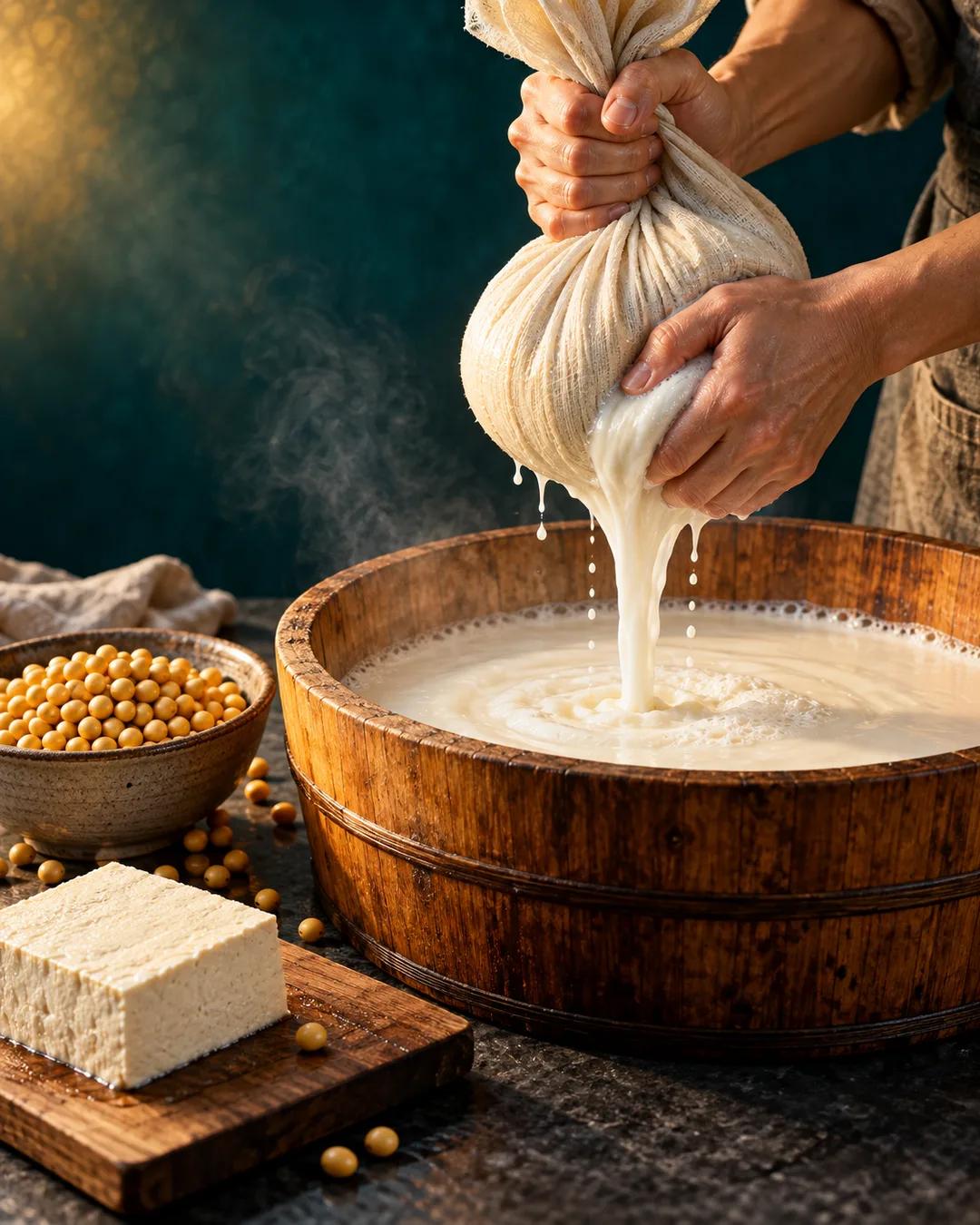
Soy milk was tofu's first step
Early soybean foods
Soybeans have been food for at least a couple of thousand years, but at first they were likely boiled and mashed into a porridge or congee, and the textual references suggest it was not appetizing. Mature soybeans are also a different thing from the edamame served at sushi restaurants, which are boiled or steamed immature soybeans.
Why raw soy milk is bitter
Another option was to soak the beans, grind them, and press out a white, creamy liquid. Drunk at that point, it tastes very astringent and can cause all sorts of stomach issues. Raw soy milk has one compound that blocks digestive enzymes and another that is astringent and bitter, and boiling neutralizes them. Even then it tastes a little beany.
A route to tofu
That flavor mattered little, because the liquid was a route to tofu. Historically, Chinese people weren't regularly chugging soy milk, though some did, sometimes, as a warming drink for winter and a restorative drink for the weak.
How does soy milk become tofu?
Cooks stir a coagulant into hot soy milk, such as nigari, which is magnesium chloride from seawater, or gypsum, which is calcium sulfate. The coagulant makes the soy proteins bond together and form curds, which separate from a yellowish whey. The curds are pressed into blocks in cloth-lined molds, and more pressing gives a firmer tofu. Chinese texts mention tofu by about the 10th century, according to food historians.
Why does raw soy upset the stomach?
Raw soybeans carry trypsin inhibitors, proteins that block trypsin, the enzyme that digests protein in the gut. Soybeans likely make them as a defense against insects and other animals that eat the seeds. Heat unfolds these inhibitor proteins and disables them, which is why soy milk is always boiled. Cooking also destroys the lectins in raw soybeans, which can irritate the gut lining.
Why does soy milk taste beany?
Grinding soybeans releases enzymes called lipoxygenases, which react with the beans' fats and oxygen. The reaction produces compounds such as hexanal, which smells like cut grass and beans. Grinding the beans in hot water or blanching them first inactivates the enzymes. Soy milk made that way tastes noticeably milder.
More from Gastropod