Korva is a scroll of the internet’s best ideas.
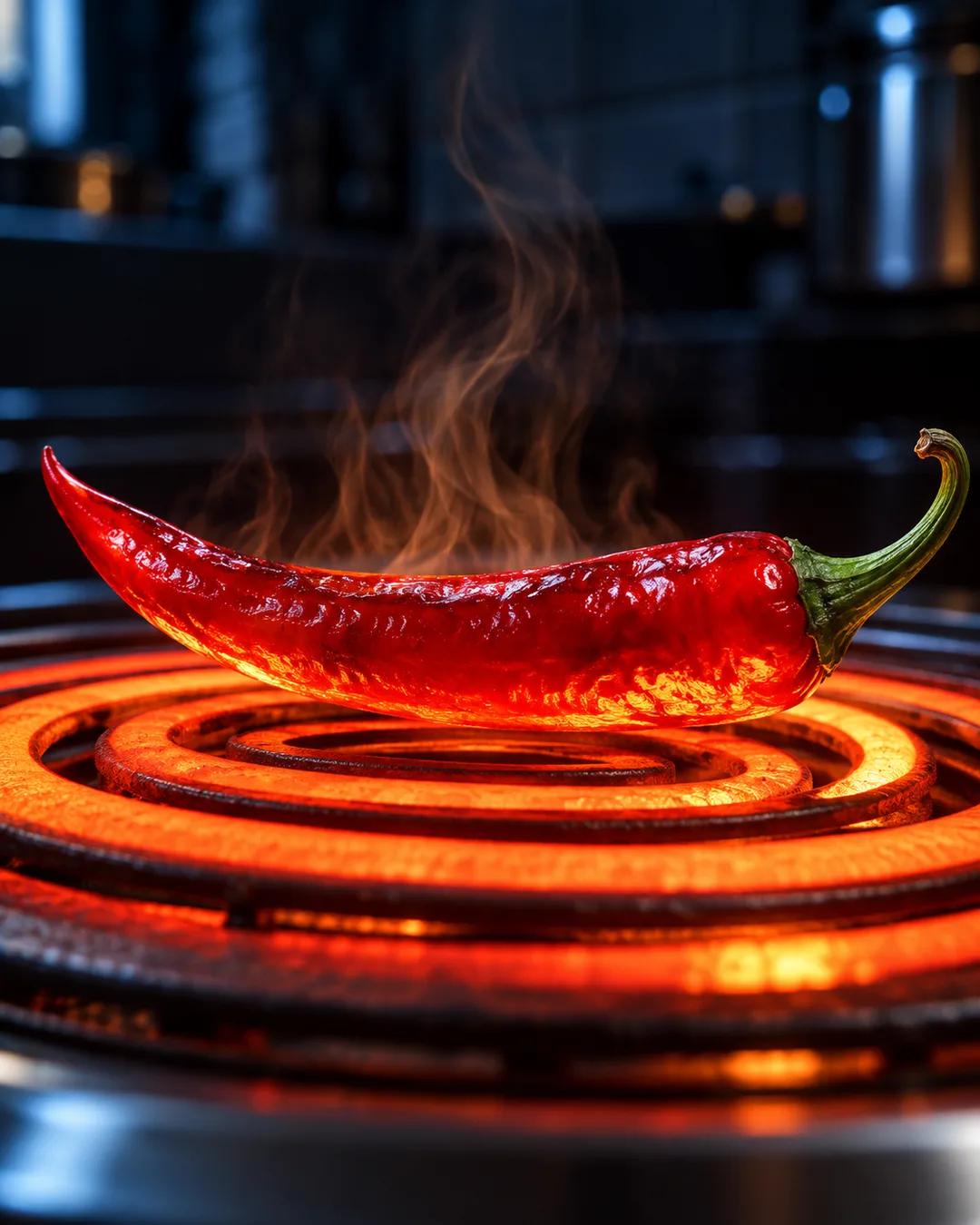
Spiciness is pain, not taste
Pain, not flavor
Spiciness isn't a taste like sweet, salty, or sour. Certain compounds in spicy foods activate a type of sensory neuron called polymodal nociceptors. You have these all over your body, including your mouth and nose, and they're the same receptors that extreme heat activates.
Menthol works the same way in the other direction. The cool, minty compound activates your cold receptors, so the sensation comes from the nerves and not from the flavor.
The body's alarm
Once the heat-sensitive receptors fire, your body thinks it's in contact with a dangerous heat source and reacts accordingly. You start to sweat, and your heart starts beating faster. The peppers set off the same fight-or-flight response your body uses for most threats.
How does capsaicin trick heat receptors?
Capsaicin binds to a protein channel called TRPV1 on pain-sensing neurons. This channel normally opens when temperatures climb past about 43 degrees Celsius. Capsaicin makes it open at much lower temperatures, so ordinary body warmth can set it off. David Julius of the University of California, San Francisco, identified the channel in 1997, and the work earned him a share of the 2021 Nobel Prize in Physiology or Medicine.
Why does menthol feel cold?
Menthol activates a channel called TRPM8, which opens as temperatures fall below roughly 25 to 28 degrees Celsius. Menthol shifts that threshold upward, so the channel opens at normal temperatures and the brain reads the signal as cold. Research groups led by David Julius and Ardem Patapoutian each identified TRPM8 in 2002.
Why doesn't water put out the burn?
Capsaicin does not dissolve in water, so a drink of water mostly spreads the molecules around the mouth. It does dissolve in fat and in alcohol. Milk contains casein, a protein that binds capsaicin molecules.
More from TED-Ed