Korva is a scroll of the internet’s best ideas.
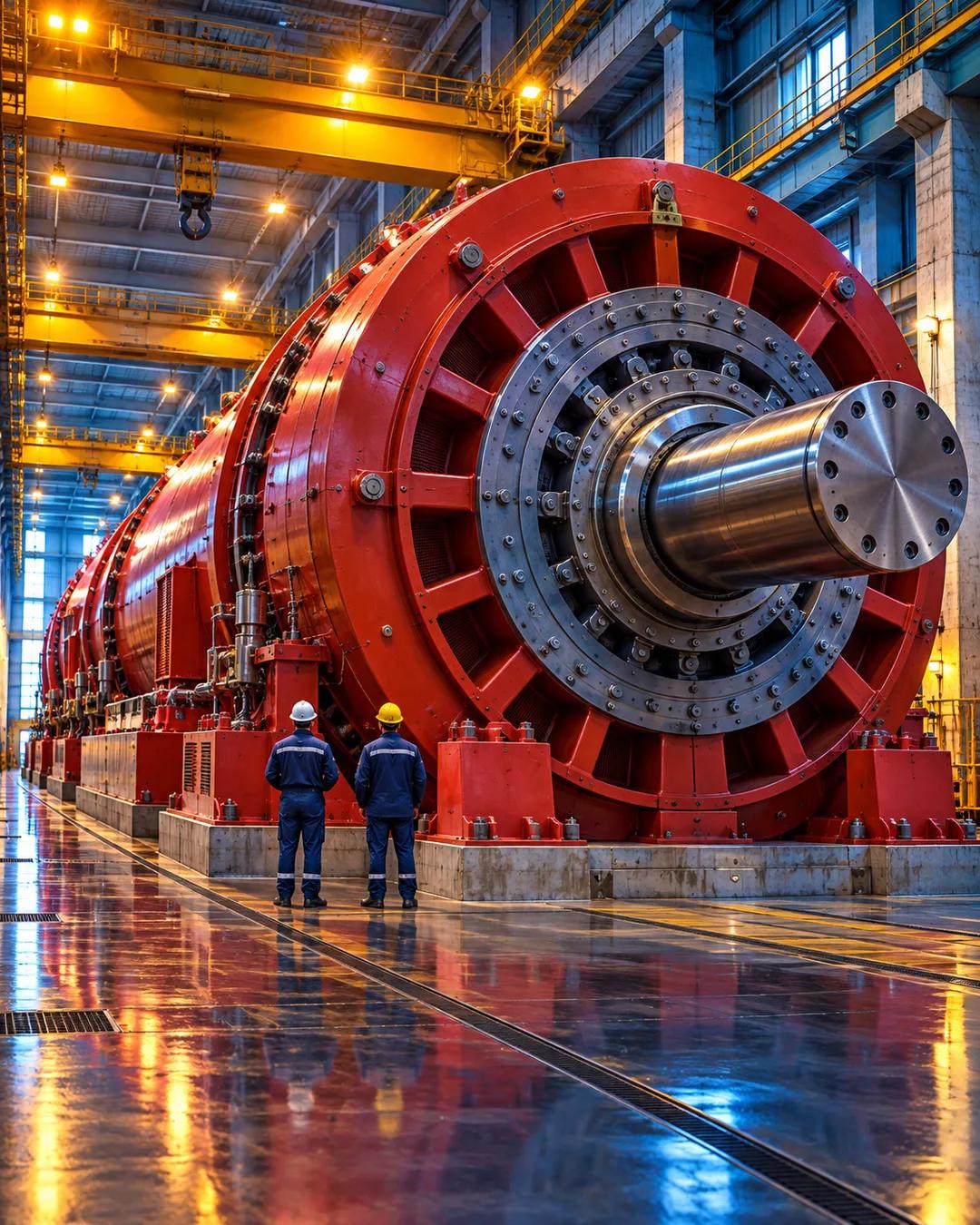
Spinning generators keep the grid steady
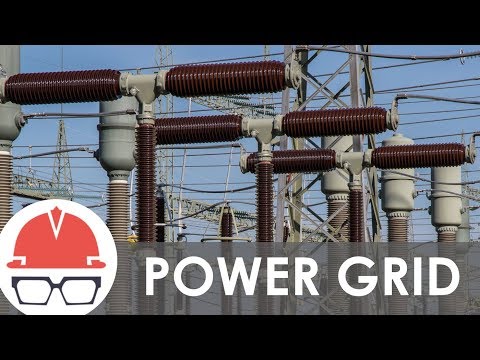
Frequency and voltage
Electrical devices are designed around power with the right voltage and a stable frequency. Some devices count the oscillations of the AC power to keep track of time, so the grid's frequency can't be allowed to drift. Voltage changes cause brownouts or surges that damage connected equipment.
Strength in size
Size is what protects all of it. Every generator tied into the grid adds its spinning momentum to the whole, so a fault in one piece of equipment or a quick jump in demand gets smoothed out before it becomes a disturbance.
Substations and redundancy
Substations add their own layer: they carry equipment that regulates the quality of the electricity and breakers that isolate potential faults. When equipment goes out of service, planned or otherwise, electricity can be rerouted around it. Much of the grid's complexity comes from managing faults and building in redundancy, which is why most people rarely face a blackout.
Why does a big grid resist sudden changes?
A spinning generator stores energy in its rotation, the same way a heavy flywheel does. When demand jumps, the generators briefly give up a little of that stored motion to cover the gap, and they slow only slightly. The more generators connected, the more total rotating mass there is, and the more slowly the frequency can move. A single large generator rotor can weigh well over 100 tons.
How can a clock count grid oscillations?
Synchronous clocks use a small motor that turns in step with the alternating current. Each cycle of the power advances the motor a fixed amount, and gears turn that motion into the movement of the hands. If the grid averages exactly 60 cycles per second over a day, such a clock stays accurate. Mains-driven clocks were common in kitchens through much of the twentieth century.
Why does low voltage damage equipment?
Many appliances contain induction motors, such as those in refrigerators and air conditioners. When the voltage sags, a motor draws more current to deliver the same work. The extra current heats the windings, and sustained heating can break down their insulation. Compressors are especially vulnerable because they are hard to start under reduced voltage.
How do breakers isolate a fault?
A fault, such as a line touching ground, sends current surging to many times its normal level. Protective relays at the substation sense the surge and signal the circuit breakers to open. The breakers trip within a few cycles, which is a small fraction of a second. At 60 hertz, one cycle lasts about 17 milliseconds.
More from Practical Engineering