Korva is a scroll of the internet’s best ideas.
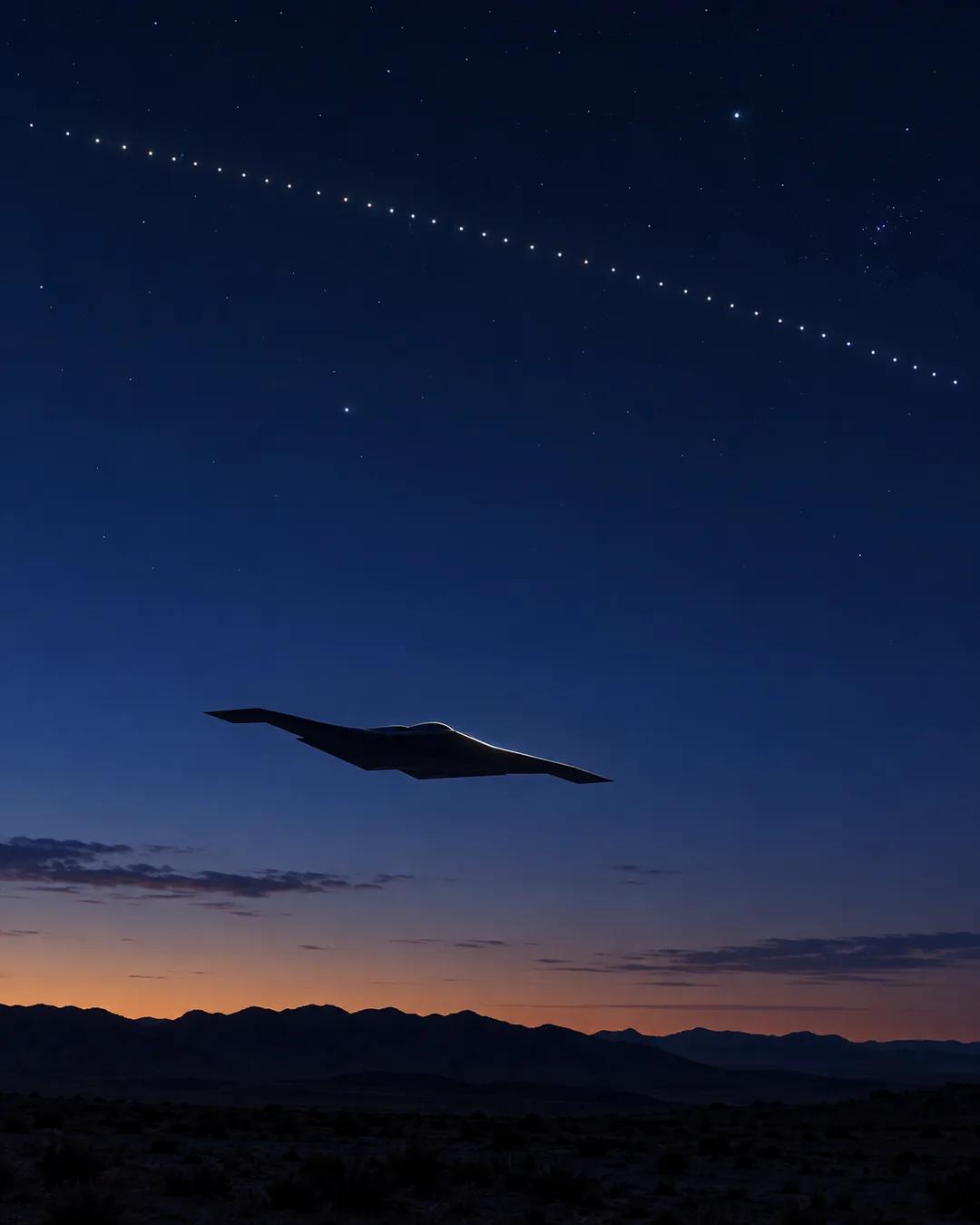
Starlink doubles as stealth radar

Each satellite puts out radio waves, and the same satellite can pick up radio waves. With so many of them overhead, the whole network works as a single instrument pointed at the planet.
Aircraft that count as stealth from the surface of the Earth show up when the network looks down on them from above. The result is a radar system that sits above the Earth and sees things a ground-based radar would miss. Its role as a detector of stealth aircraft is only now coming to light.
How does a phased array steer without moving?
A phased array is a flat antenna made of many small elements, each of which can send or receive a signal. By adjusting the timing, or phase, of the signal at each element, the waves reinforce one another in a chosen direction and cancel in others. Changing those timings redirects the beam in microseconds with no moving parts. The US Navy's Aegis combat system uses a phased array radar, the SPY-1, built on this principle.
How can radar catch a stealth aircraft?
Stealth design relies on shaping and coatings that scatter radar energy away from the source that sent it. That shaping is tuned mainly for radars that sit near the ground and look toward the aircraft from the front. Bistatic radar, in which the transmitter and receiver are in different places, has long been studied as a way to catch energy scattered in other directions. A receiver high above the Earth sees an aircraft from an angle that its designers weighted differently.
More from All-In with Chamath, Jason, Sacks & Friedberg