Korva is a scroll of the internet’s best ideas.
Steam heat under Manhattan

What steam does
About 1,500 customers receive steam through those lines. It heats buildings and supplies hot water, and it also sterilizes equipment in hospitals, cleans dishes at restaurants, and runs the presses in dry cleaning facilities. It can even drive air conditioning through steam-powered compressors.
Burying hot pipes
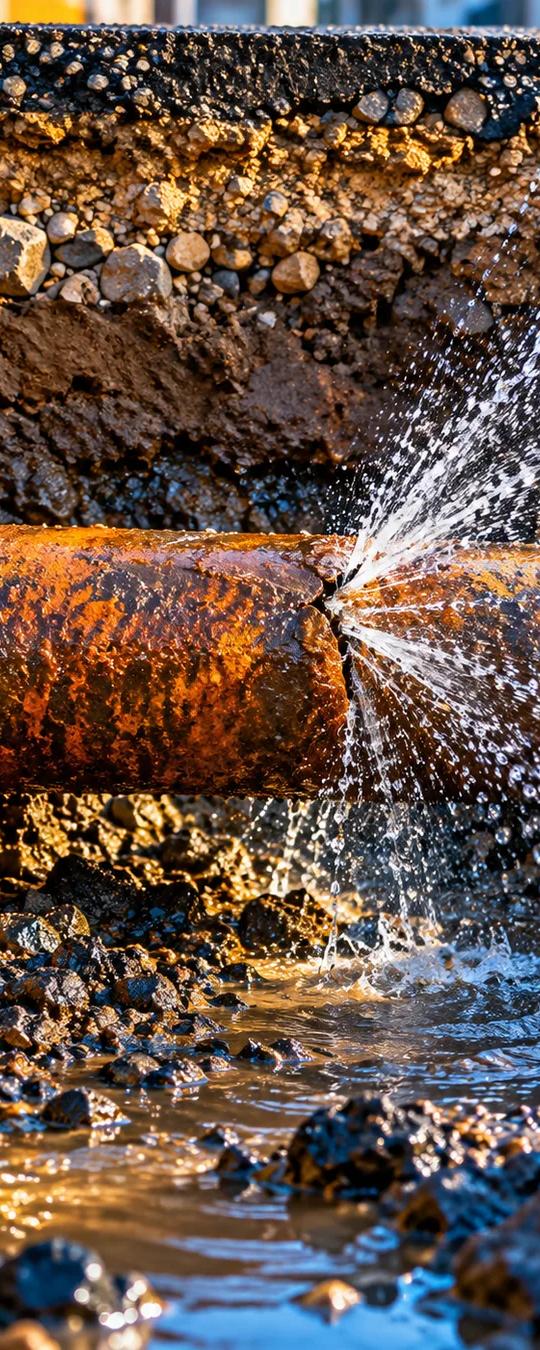
Burying steam pipes brings its own problems. A line that gets shut down changes in temperature by roughly 300 degrees Fahrenheit, or 170 degrees Celsius, so the pipes need expansion loops or heavy-duty slip joints to absorb the movement. Some of the steam condenses into water, and that liquid can act like bullets inside the high-speed flow, so steam traps discharge the condensate while keeping the steam inside the pipe.
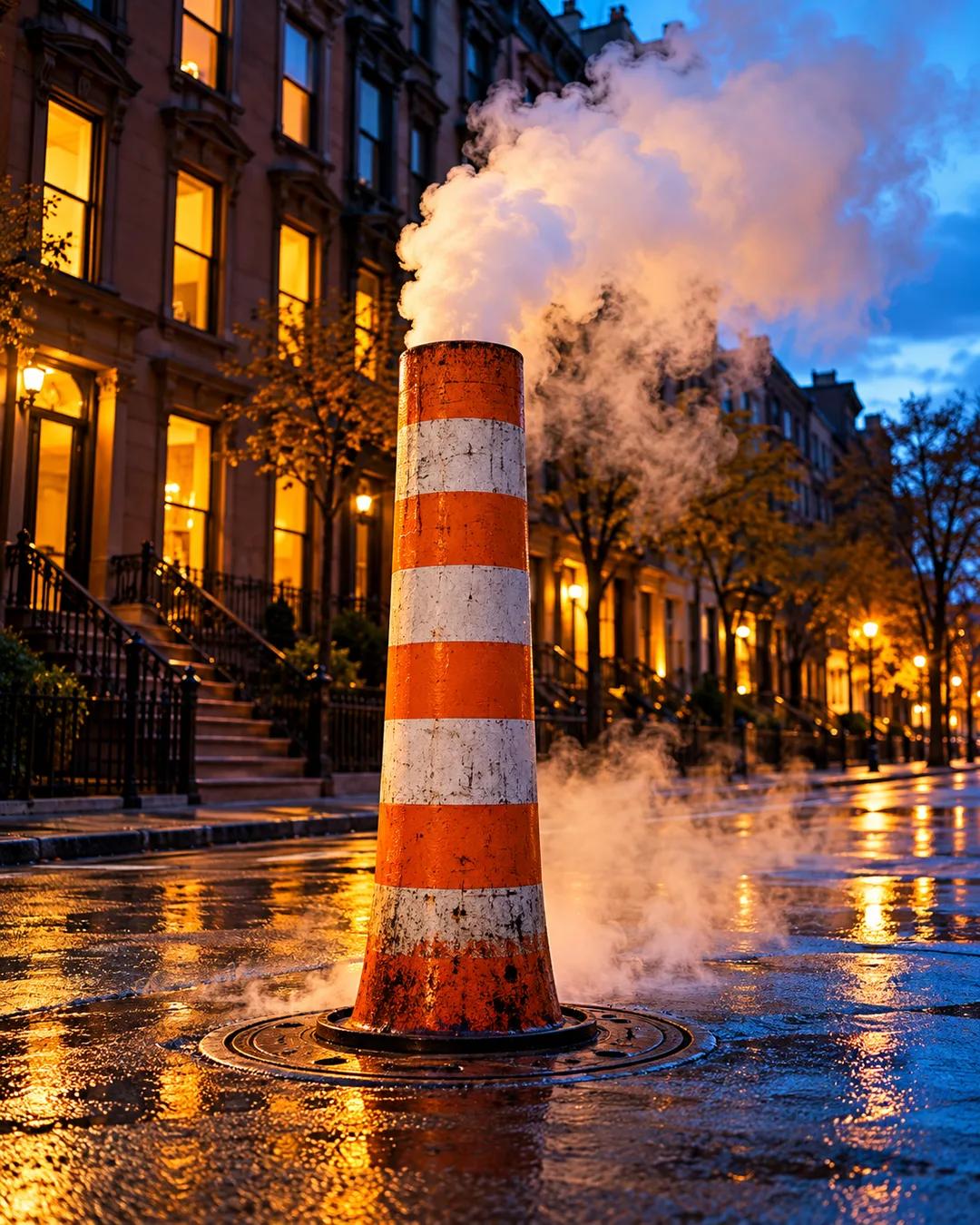
When a leak sends a cloud of steam up through a manhole, ConEd places orange smokestacks to divert the vapor away from the public until the underlying problem is fixed. The lines are insulated and usually run deeper than other utilities, so they don't heat up the surface or the neighbors, natural gas lines above all.
Why does New York pipe steam to buildings?
The system dates to 1882, when Wall Street's first steam customers were connected from a central plant. A central boiler was more efficient than a coal furnace in every basement, and it took the fire risk and smoke out of individual buildings. Customers pay for steam by volume, so they need no boiler of their own. Con Edison now makes the steam at several plants around the city, some of which also generate electricity.
How does steam drive air conditioning?
An absorption chiller uses heat instead of a mechanical compressor to produce cold water. Steam heats a solution of lithium bromide and water, which drives off water vapor that is then condensed and evaporated to absorb heat from the building's chilled loop. The result is cooling from heat alone. This lets a building use steam in summer, when heating demand would otherwise be nearly zero.
Why do steam pipes need expansion loops?
Steel expands with temperature, roughly 0.0000065 inches per inch for every degree Fahrenheit. Across a swing of 300 degrees, a long run of pipe grows by several inches. Without a loop or a slip joint to absorb that growth, the pipe pushes against its anchors and fittings until something bends or cracks. Engineers space the loops according to how far a given pipe run can stretch.
What happens when steam cools inside a pipe?
Steam condenses into water on any surface cooler than itself, and a long buried pipe always loses some heat to the ground. The condensed water collects at low points and can be swept up by fast steam into a slug of liquid. That slug hits pipe bends and valves with enough force to cause water hammer, a loud shock that can damage fittings. Steam traps drain condensate at regular spacing to prevent it.
More from Practical Engineering