Korva is a scroll of the internet’s best ideas.
Water mains leak outward on purpose

Pressure pushes outward
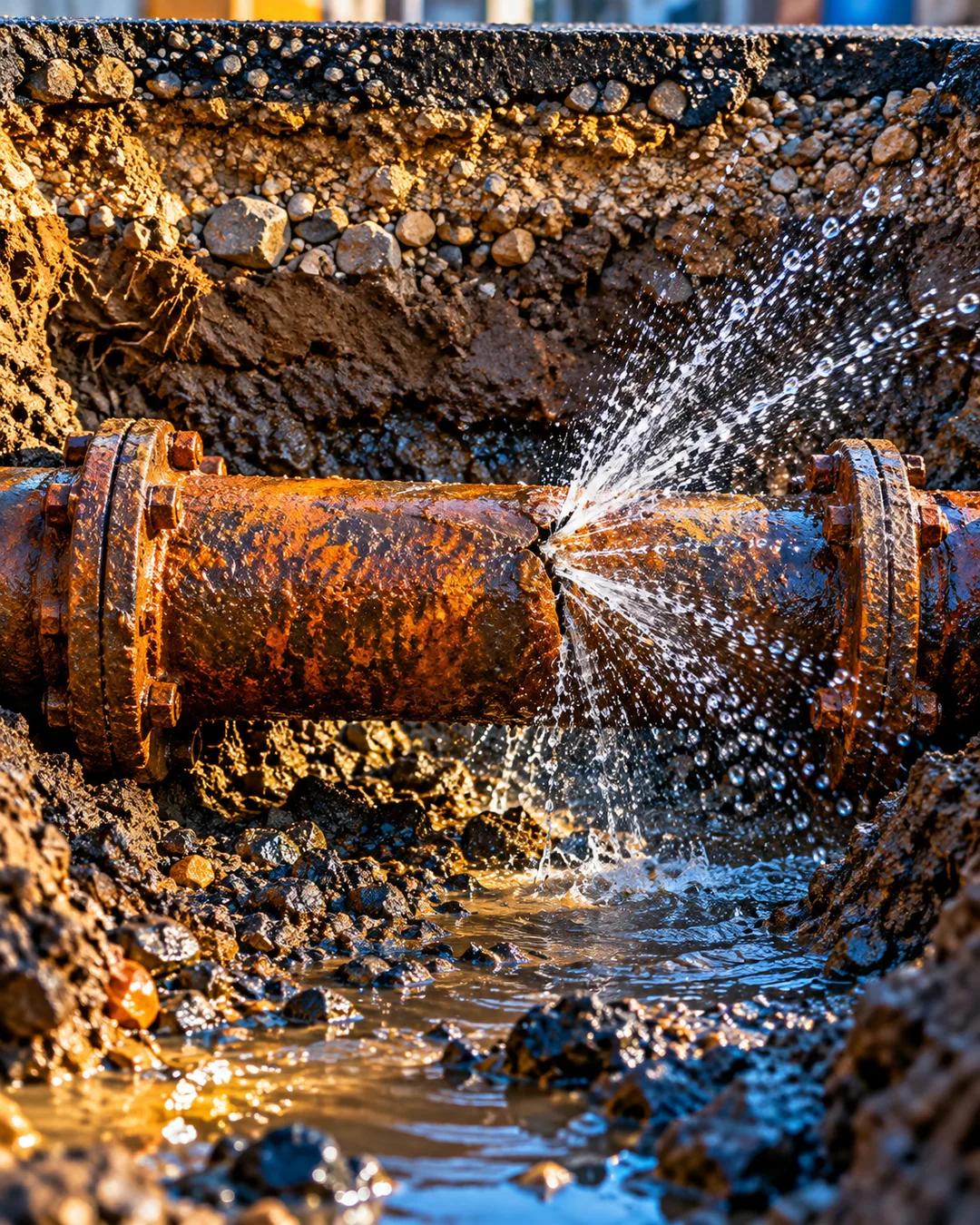
Pressure does help move water to every place in the city that needs it. The more important job is the push outward: a crack, hole, or break in a main should be a one-way street, with anything crossing the pipe wall moving from inside to outside.
Grids over branches
Water lines typically run in a grid, which gives water several paths to any destination, so taking one line out of service doesn't cut off residents. A grid also keeps the water flowing constantly. A system shaped like the branches of a tree ends in dead ends where water can slow down or stagnate, making it unsafe to drink.
Gravity and sampling
New York's system is famously gravity fed, with most of the source water coming from upstate at a higher elevation. It needs no filtration because the source watersheds are fiercely protected. Even so, more than 900 sampling stations dotted through the streets let officials test the water at the end of the distribution system.
How can a pipe pull contamination in?
When pressure inside a pipe drops below the pressure of the groundwater outside, flow reverses at any crack, joint, or loose fitting. Groundwater or nearby sewage seepage then enters the main. Engineers call this a negative pressure event, and it can happen during a large main break or a surge of demand. Regulations in many countries set a minimum pressure that mains must hold for this reason.
Why does stagnant water become unsafe?
Chlorine added for disinfection gradually breaks down as water sits in a pipe. Once the residual drops, bacteria can grow in the pipe walls and in the water. Warm temperatures speed this up. Utilities flush dead-end mains on a schedule to push fresh water through them.
Why can New York skip filtering its water?
The US Environmental Protection Agency allows an unfiltered supply when the source water meets strict quality standards and the watershed is protected. New York City's Catskill and Delaware reservoirs hold a filtration avoidance determination under that rule. The city has bought or restricted land across the watershed to keep pollution from reaching the reservoirs. Its Croton system, which has a more developed watershed, is filtered at a separate plant in the Bronx.
More from Practical Engineering