Korva is a scroll of the internet’s best ideas.
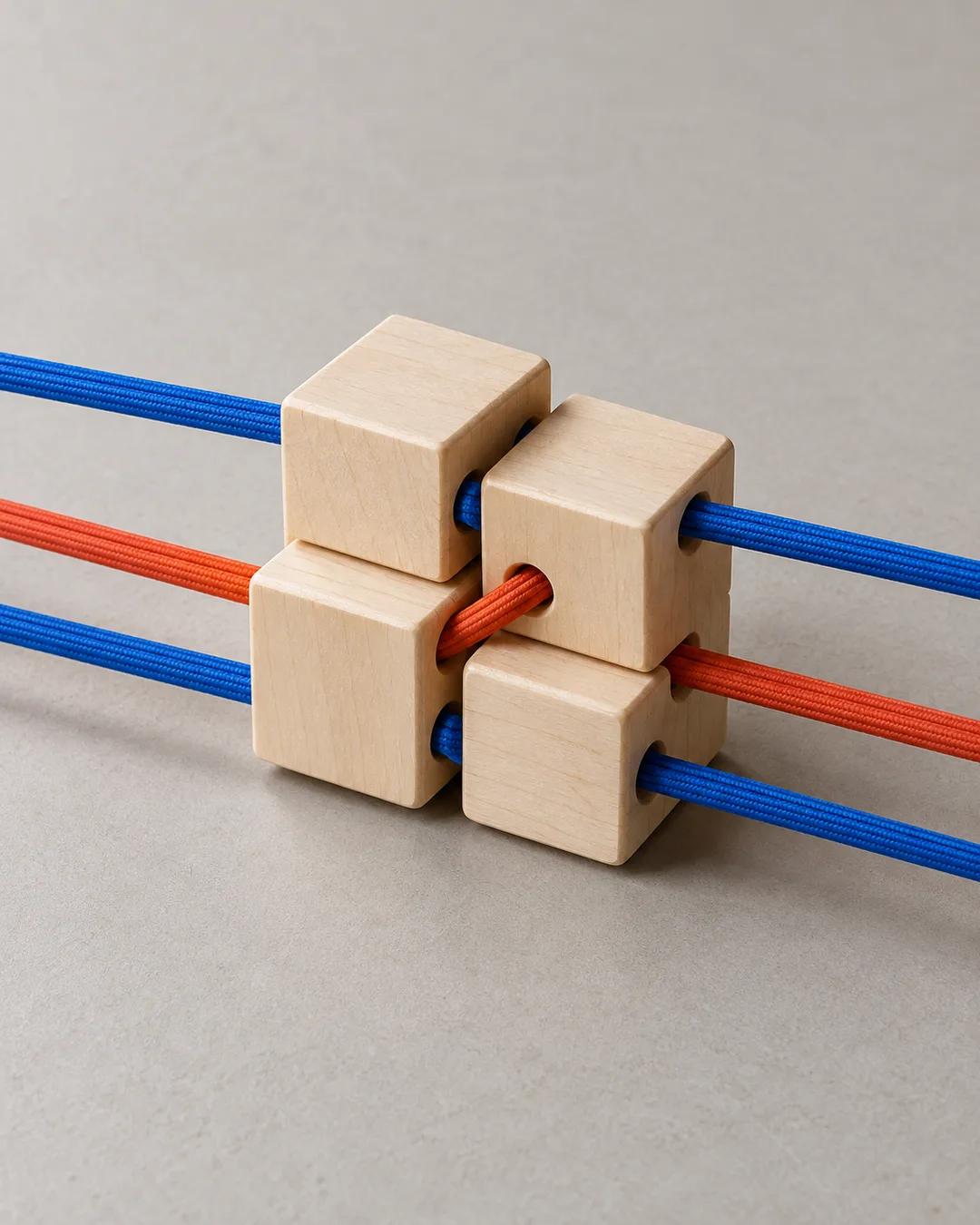
Stiff blocks tied with stretchy cords
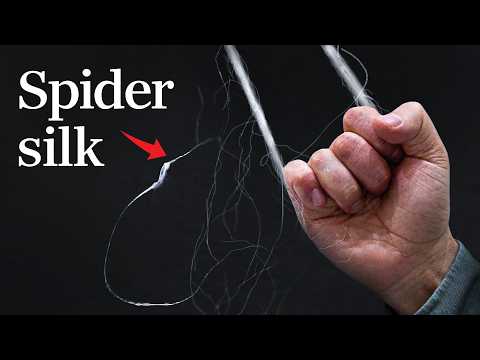
Inside a silk fiber, proteins called spidroins are arranged in two ways. In some regions they share a similar size and shape and line up closely along the fiber's length, like stacked egg trays. These are nanocrystals. In other regions they are less ordered and can move and change shape freely. These are the amorphous regions.
Together they act like rigid blocks tied by elastic cords. When the network is pulled, the cords stretch and absorb energy. The blocks barely stretch, but each one connects to several cords, which spreads the pull across the whole network. The amorphous regions let the silk stretch, and the nanocrystals let it withstand a much larger pull.
Spiders make all of this at room temperature, inside a living body, from the same basic building blocks that make hair and skin, without the high temperatures or caustic solvents most of the polymer industry uses.
Do other natural materials use this design?
Mother-of-pearl, or nacre, is built from hard platelets of calcium carbonate glued together by thin layers of soft organic material. Bone is made of hard mineral crystals embedded in flexible collagen fibers. In each case the stiff part gives strength and the soft part spreads the load and stops cracks from running through. Nacre is roughly 95 percent aragonite by volume.
Why does room temperature spinning matter?
A spider spins from a water-based protein solution at the temperature of its own body. Kevlar, by contrast, is spun from a solution of its polymer in concentrated sulfuric acid, which must be handled and recovered. Many synthetic fibers are made from petroleum with heat or harsh solvents. Spider silk is made from amino acids, the same family of building blocks as the keratin in hair and the collagen in skin.
More from Veritasium