Korva is a scroll of the internet’s best ideas.
Taiwan scatters missiles across tiny boats

The porcupine strategy
By 2017 the Chinese military had amassed too many soldiers, fighter jets, missiles, and drones for Taiwan to match head-on. The answer was an asymmetric strategy, often called the porcupine: buy less capable but cheaper platforms, get more of them, and destroy costly Chinese equipment for a fraction of the price.
Boats, mines, and missiles
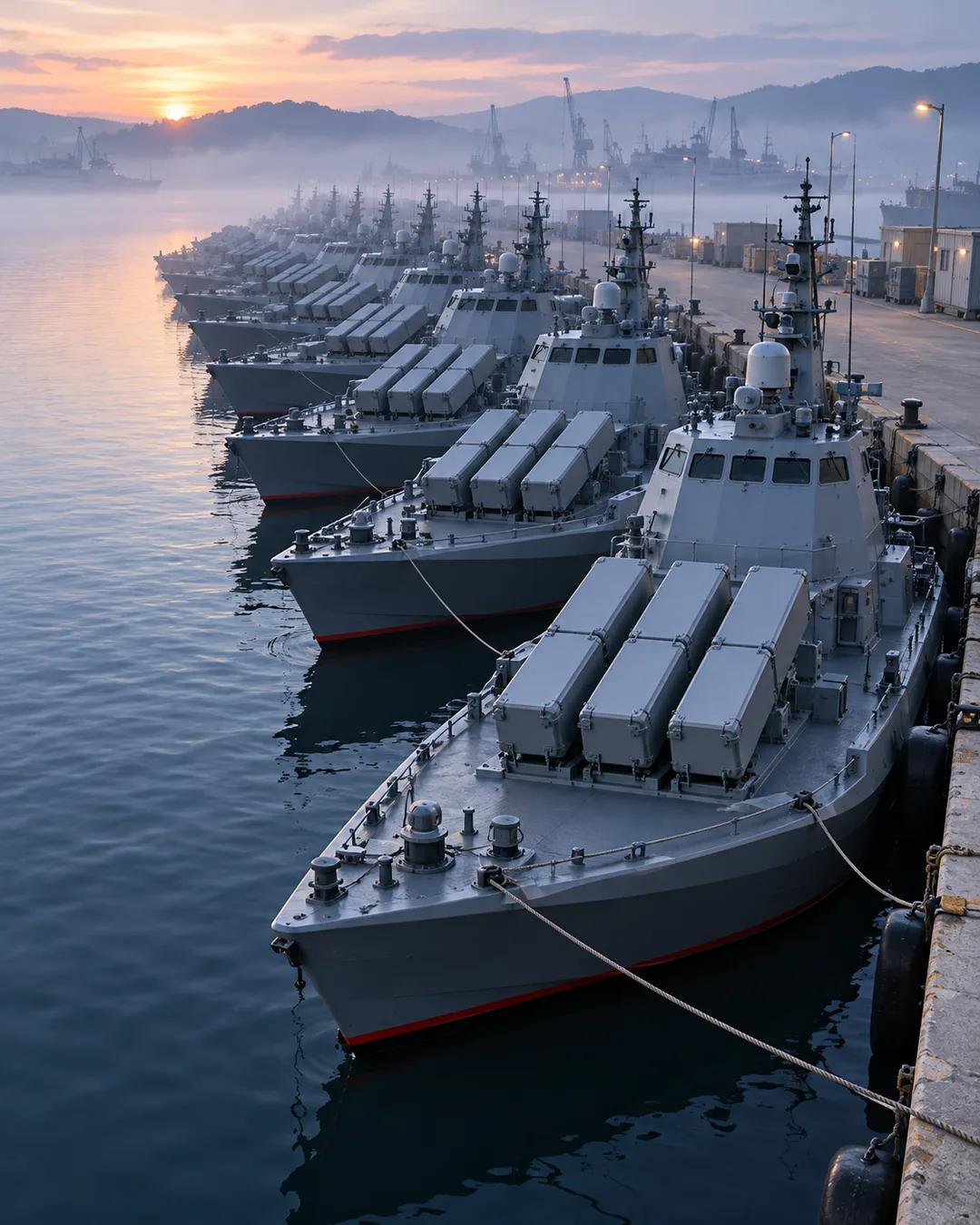
Before that shift, the navy bought four capable former US Navy destroyers for $732 million, ships that would quickly become prime targets for Chinese jets and missiles. Taiwan then equipped 42 far smaller vessels with four missiles each. Each boat is easier to destroy, but there are so many that the Chinese military would struggle to sink them before they fire. The navy has also invested in mine laying, an inexpensive and relatively effective defense.
The missile build-out is the core of it. Once a large order of US-made Harpoon missiles arrives, Taiwan will have over 1,400, the highest concentration of anti-ship missiles in the world. They are meant to hit the landing force before it arrives and push its numbers below the threshold needed to take the island.
Where critics push back
Critics say the strategy is right but not followed far enough. Taiwan had a prototype for an even smaller, fast catamaran missile boat with a crew of three and planned to order 60, until the program was delayed indefinitely. It spent $8 billion on 66 new F-16 fighter jets and $1.28 billion on 108 Abrams tanks instead, both capable machines that are sure to draw Chinese missiles.
Why are many small boats harder to stop?
A defender who spreads weapons across many cheap platforms forces the attacker to find and hit each one, and every shot spent on a small boat is one not spent on something else. In the 2002 Millennium Challenge war game, a retired Marine general commanding the opposing force used swarms of small boats and missiles to sink much of the simulated US fleet. The exercise was then restarted under new rules.
Why are sea mines such a cheap defense?
A mine costs a small fraction of the ship it can disable, and the attacker has to find and clear each one before ships can pass safely. Clearing is slow because it relies on special ships and divers working in the water. In October 1950, mines off Wonsan, Korea, held up a US amphibious landing for about a week.
How does a Harpoon missile find its target?
The Harpoon is a sea-skimming missile that flies just above the waves to stay under enemy radar for as long as possible. Near the target, it switches on its own radar and homes in on the ship. It can be launched from ships, aircraft, submarines, and truck-mounted coastal batteries. It entered US Navy service in 1977.
Why do big warships draw missiles first?
Large ships carry the most valuable crews and weapons and are easy to detect on radar, so an attacker ranks them as the highest-value targets. In 1967, Egyptian missile boats firing Soviet-made Styx missiles sank the Israeli destroyer Eilat, the first sinking of a warship by anti-ship missiles. The boats that fired were a small fraction of the destroyer's size.
More from Wendover Productions