Korva is a scroll of the internet’s best ideas.
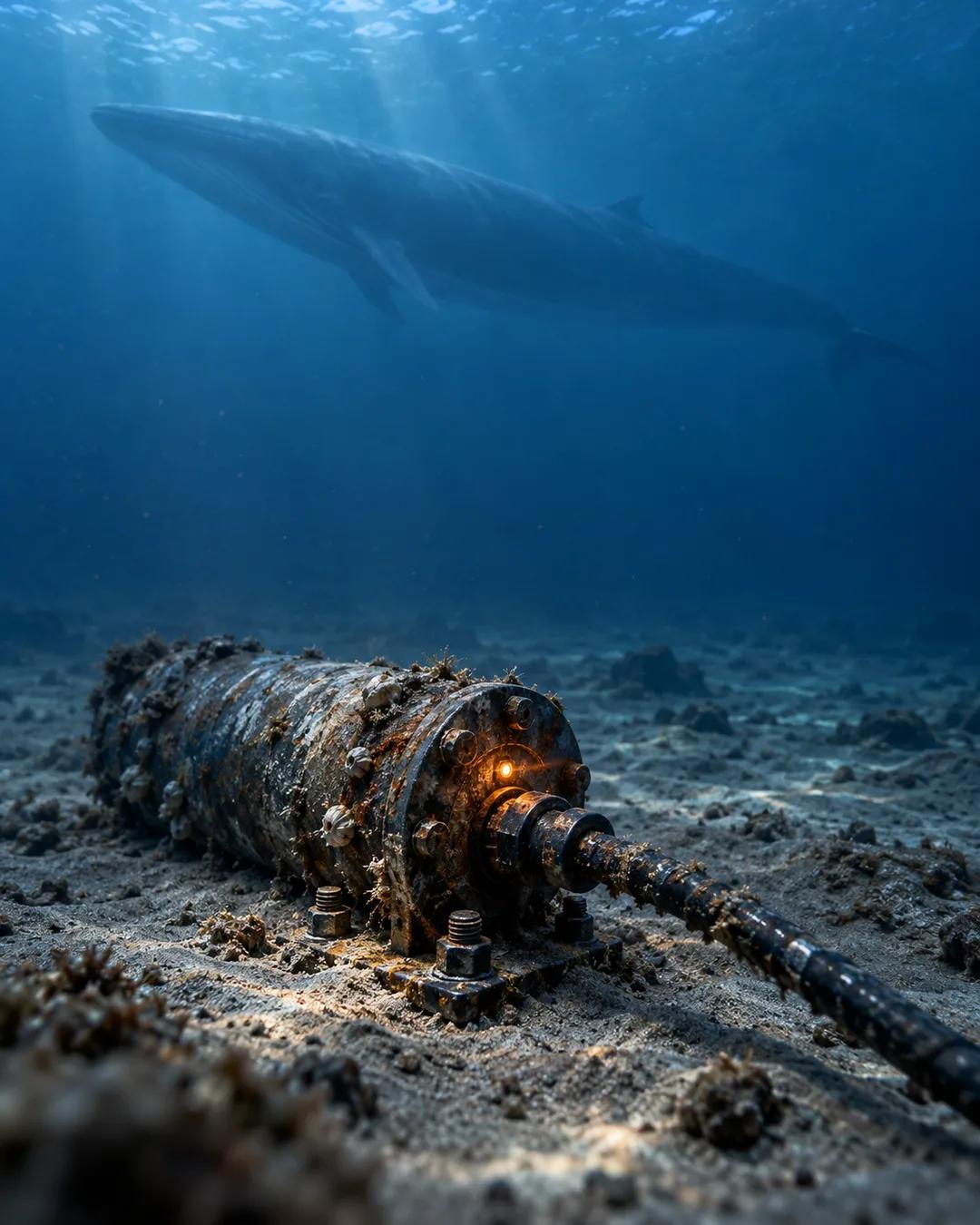
The Jezebel Monster was a whale

The Navy's listening network
In the 1950s, during the Cold War, the US Navy built the Sound Surveillance System, known as SOSUS: arrays of hydrophones laid on the seafloor of the Atlantic and Pacific and wired to shore. It was originally code-named Project Jezebel, and its purpose was to track Soviet submarines by their low-frequency sound signatures. That part of the plan held up.
The assumption that the ocean would otherwise be quiet did not. Sailors operating the system detected many unknown sounds, including the one they attributed to the Jezebel Monster.
Whales behind the sounds
It took some years and the detective work of marine bioacousticians to identify it as the 20 Hz call of fin whales. More mysteries followed, among them a "boing" sound and a "lightsabre" sound, and both were eventually traced to minke whales.
Whales and dolphins use sound for their day-to-day activities, from the low-frequency songs of blue whales to the whistles and high-frequency echolocation clicks of bottlenose dolphins. Before passive acoustic sensors, data on animals that cross vast stretches of ocean came from sightings made from land or boats. Hydrophones let researchers follow those animals as they move through the water.
Why can fin whale calls travel so far?
A 20 Hz call sits at the low end of what the ocean carries well, because seawater absorbs low frequencies far less than high ones. Deep water also has a layer where sound travels slowest, called the SOFAR channel, and sound bends back toward that layer instead of escaping. Trapped there, a call can spread across a whole ocean basin. SOSUS arrays were laid to take advantage of that channel.
How does a hydrophone pick up sound?
Most hydrophones contain piezoelectric ceramic, a material that produces a small electrical voltage when pressure waves squeeze it. The voltage follows the pressure changes, so the signal is a direct electrical copy of the sound. Many hydrophones strung along a cable form an array, and comparing when a sound reaches each one reveals the direction it came from. Sound moves through seawater at about 1,500 meters per second, more than four times faster than through air.
How did researchers trace the boing to minke whales?
Linking a sound to a species requires a recording made while the animal is identified. A 2005 study by Shannon Rankin and Jay Barlow, published in the Journal of the Acoustical Society of America, tied the North Pacific boing to minke whales. Minke whales are among the smallest baleen whales and are hard to spot at sea, which helps explain why the sound stayed a mystery for so long.
More from Ella Browning