Korva is a scroll of the internet’s best ideas.
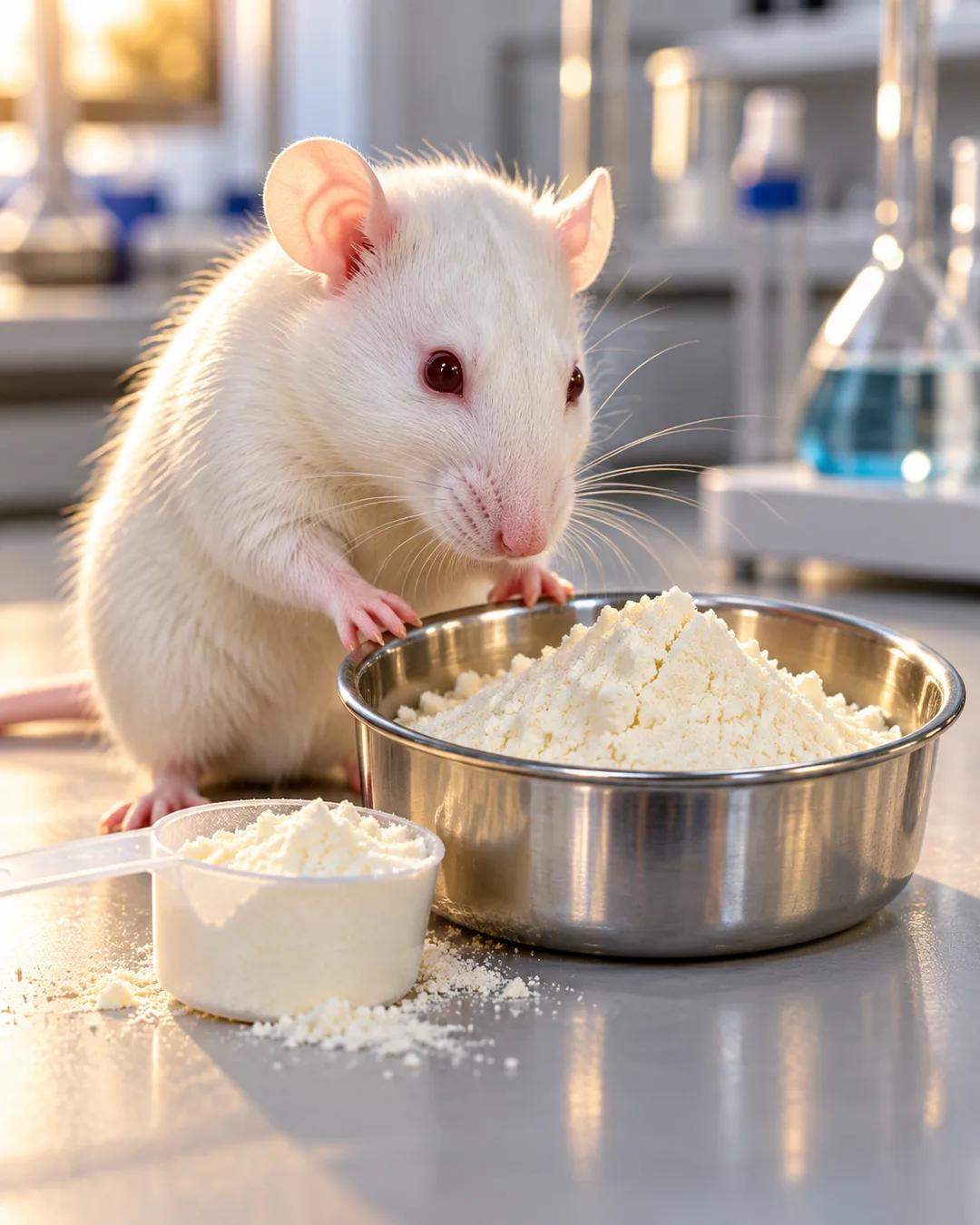

The rat experiment
Before graduate school, Layne Norton ate eight meals a day, every two hours, to keep an amino acid drip going. For his first study, he fed rats whey protein and expected muscle protein synthesis to last as long as plasma leucine stayed up. Synthesis peaked from 45 to 90 minutes and was back to baseline by 180 minutes, while plasma leucine was still plateaued at three hours.
Rechecking the data
Targets of mTOR signaling that speed up translation initiation stayed plateaued too. He reran the plasma data for about six months, sure it was wrong, until his advisor asked about his technique and his standard error and told him the data sounded good: he was trying to make it fit his conclusion when the conclusion had to change.
The refractory period
The effect is called the muscle protein synthetic refractory period, or the muscle full effect. Once the system fires, it runs for a defined time and then needs time to reset. AMP kinase rose and intracellular ATP fell around the time synthesis dropped off, which may mean the process uses enough energy to cut itself off, though those rats are the only evidence so far and it is a finding he would bet only the end of a little toe on. He cut back on how often he ate.
How does the body sense that muscle is full?
Muscle protein synthesis is switched on by a signaling complex called mTORC1, which responds to amino acids, especially leucine. In a 2001 study led by Marie-Pierre Bohé in the Journal of Physiology, human volunteers received a steady amino acid infusion. Muscle protein synthesis rose, peaked, and fell back to baseline within a few hours even though blood amino acids stayed high. The result matched the idea that the pathway fires and then resets rather than running as long as supply lasts.
Why would AMP kinase shut down muscle building?
AMP kinase is the cell's energy sensor. It is activated when the ratio of AMP to ATP rises, a sign that fuel is running low. Once active, it switches off energy-hungry processes, including mTORC1 signaling, by phosphorylating regulators such as TSC2 and raptor. Building protein is one of the most expensive jobs a cell does, so it is among the first to be paused.
More from Andrew Huberman