Korva is a scroll of the internet’s best ideas.
The ocean's buffet line

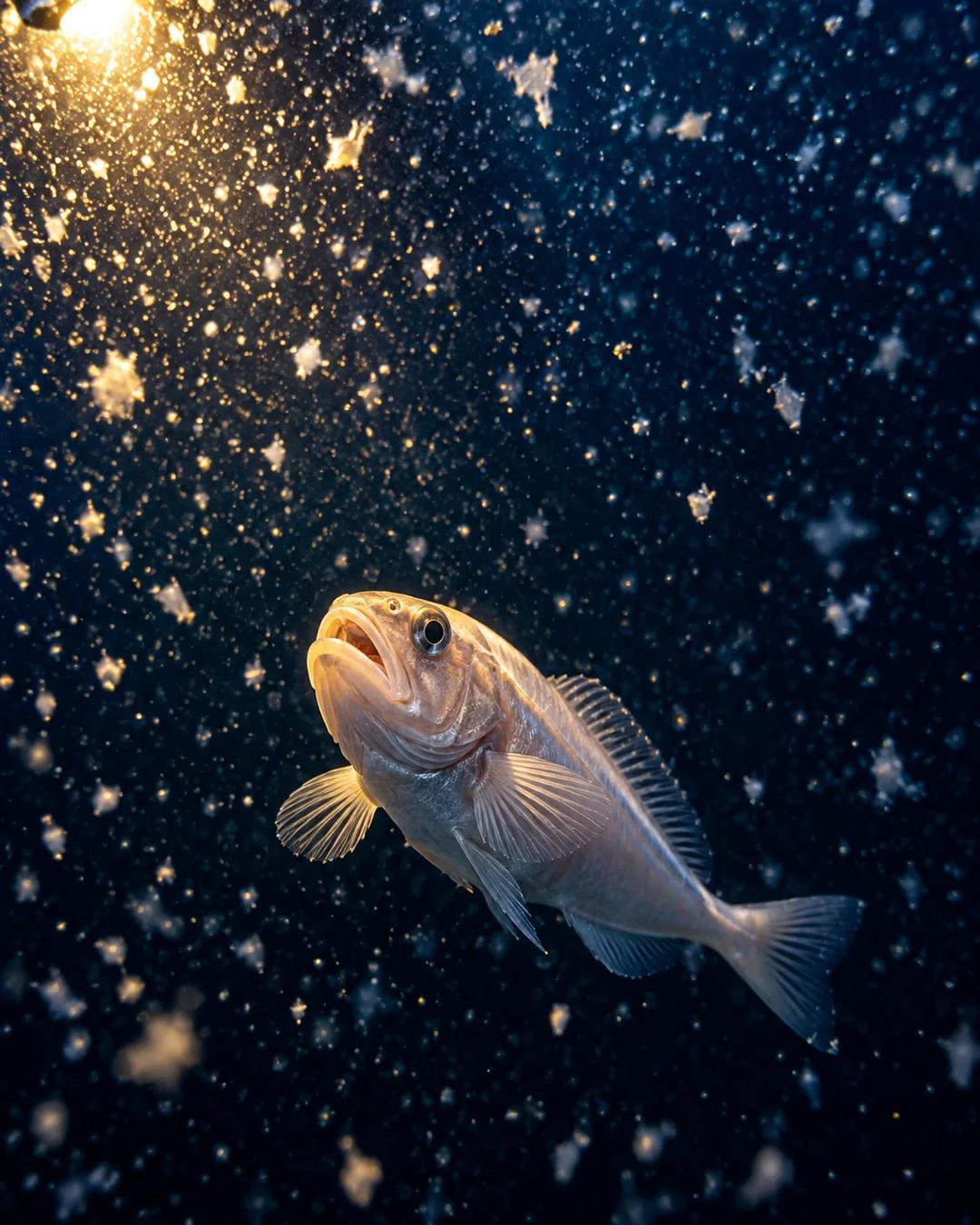
Snow from above
The food rains down as marine snow: fish poop, snot, flakes of scales and plants, and more poop. On video it looks like a star field, straight out of a sci-fi show. One fish's poo is another fish's meal.
The buffet line
Surface food is the freshest and best tasting, and surface animals compete for it. Animals a little deeper get slightly worse food, and animals deeper still get worse again. At a wedding buffet, the first people at the line take the shrimp and lobster, the middle of the line gets tenderloin or a veggie burger, and anyone who shows up late gets chicken fingers and kale. By the time food sinks 1,000 or 2,000 meters, a lot of the good stuff is gone.
Whale falls
A whale fall is a whole turkey or a seafood tower arriving at the last minute. Tuna and great white sharks sink when they die too. When a big carcass hits the bottom, giant isopods, roly polies the size of a person's head, walk out of the darkness, and hagfish seem to come from nowhere. They keep chomping for decades.
How much surface food reaches the bottom?
Only a small fraction of what is made at the surface reaches the deep sea floor. Sediment trap studies, which catch falling particles in funnels moored at different depths, show the amount dropping steeply with depth. Small particles sink slowly and are eaten or decomposed on the way. Larger clumps and fecal pellets sink faster, reaching the bottom in days to weeks.
How does one whale feed life for decades?
Researchers led by Craig Smith described three stages of life at a whale fall. Scavengers like hagfish and sharks strip the flesh in the first months. Then worms and crustaceans colonize the remaining bones and surrounding sediment. Finally, bacteria break down fats inside the bones and produce sulfide, which supports chemosynthetic communities for decades.
How do scavengers find a carcass in the dark?
Animals follow odor plumes that drift with the current from the carcass. Researchers use the same effect by lowering baited cameras to the sea floor, and amphipods, isopods, and hagfish often arrive within minutes to hours. Chemical senses carry much farther in the dark than vision does. Some deep-sea scavengers can sense a plume from kilometers away.
More from Ologies with Alie Ward