Korva is a scroll of the internet’s best ideas.
The rental car clerk wanted a battery
Dana Paz's plane diverted to Indianapolis to refuel, and by the time she reached Chicago she had missed the rental car window and her car had been canceled. At midnight she asked the clerk to find her a car rather than leave her with an hour-long Uber to her hotel. He said he didn't like that and would see what he could do.
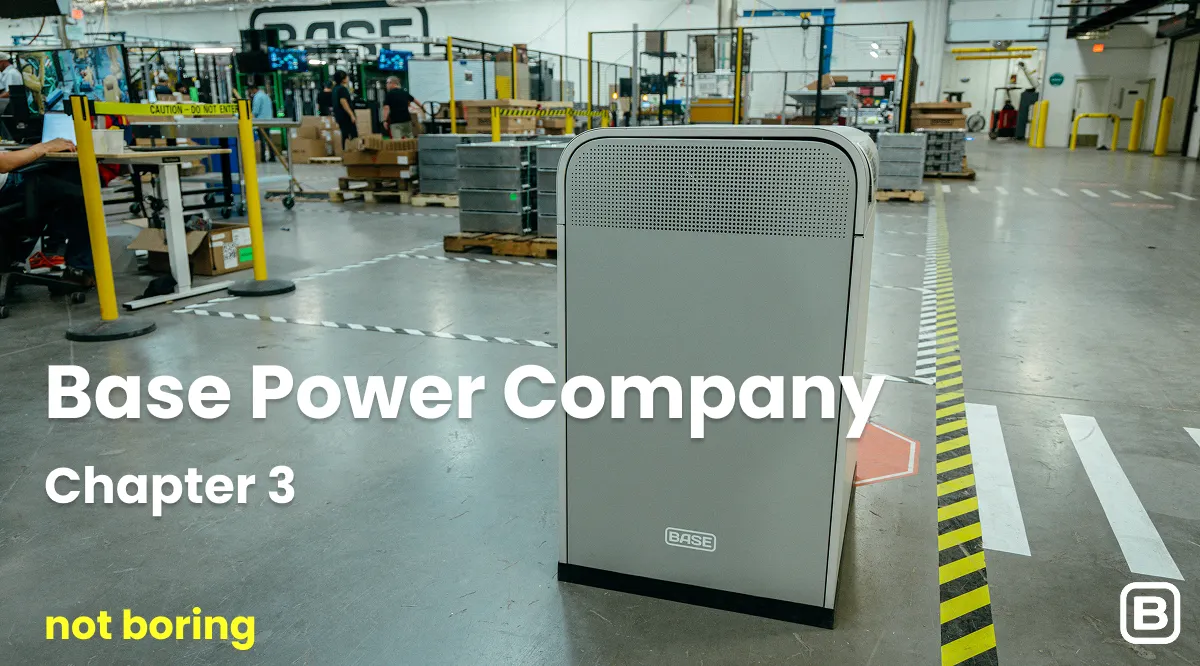
Then he asked for her email, and when she gave an address at basepowercompany.com, he told her he had just applied to get a battery and Base was reviewing his site survey. He installs solar when he isn't at the counter. She handed him the recruiter's email, and he is now applying to be an installer.
Base plans to hire about 50 people in Chicagoland by year-end. When Dana was trying to hire in Dallas with no warehouse and no footprint, candidates assumed Base was a scam. In Chicago, more people have already heard of it.
Why do planes divert to refuel?
Airliners carry fuel for the trip plus a reserve, and weather delays or holding patterns can eat into it. A crew may land at a nearby airport to refuel rather than press on with a thin margin. Under US federal rules for domestic airline flights, a plane must carry enough fuel to reach its destination, then an alternate airport, and then fly for 45 minutes more. A refuel stop usually means the crew is restoring that margin.
Why do familiar brands feel more trustworthy?
Psychologist Robert Zajonc showed in a 1968 paper that people rate things more favorably the more often they have seen them, even when they don't recall seeing them. The effect, known as mere exposure, appears with words, faces, and images. Familiarity lowers the sense of risk attached to something new, which is why an unknown employer can read as suspicious next to a known one. Zajonc's paper appeared in the Journal of Personality and Social Psychology.
More from Packy McCormick