Korva is a scroll of the internet’s best ideas.
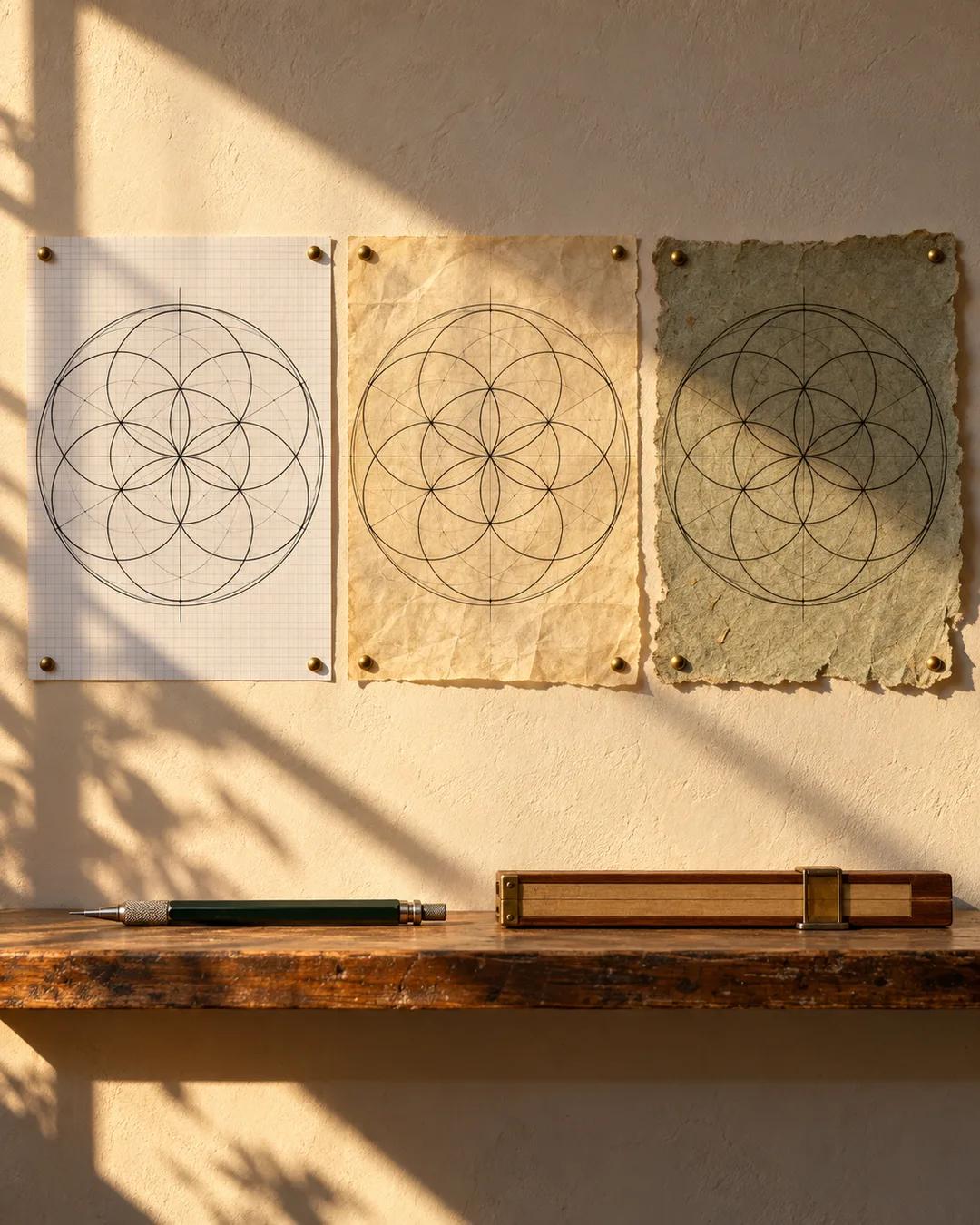
Three countries invented the same chart

A strategic problem
In the 1930s, matching impedances became a strategic problem. As political tensions rose, sending clear signals across oceans meant being able to coordinate ships and aircraft in a war. The math existed, but using it to remove reflections meant working through long expressions with a slide rule.
A cold reception
All three engineers wanted a simple graphical system that made matching quick and reliable, and all three converged on the same solution. Smith's version met a cold reception. It took about two years of slow responses and rejections from technical magazines before Electronics published it, since engineers already had their own methods and this one needed a completely different way of thinking.
War changes everything
World War II changed that. German U-boats were sinking Allied ships faster than they could be replaced, and at the MIT Radiation Laboratory, scientists were building microwave radar that could detect submarines on the surface in complete darkness. With no time for trial and error, Smith's chart was used constantly to fix those systems. After the war, those engineers carried it into industry, universities, and textbooks, while the Japanese and Soviet versions were used locally and spread less widely. That is why today it is called the Smith Chart.
Why could microwave radar spot a surfaced submarine?
Shorter wavelengths can be focused into narrower beams by an antenna of manageable size, and they bounce off small objects such as a conning tower or a periscope. Radar also carries its own radio waves, so darkness does not matter to it. The cavity magnetron, invented at the University of Birmingham in 1940, was the first tube able to produce high power at those short wavelengths. Britain shared the design with the United States that same year, and the MIT Radiation Laboratory was founded to develop it.
How did radar win against surfaced U-boats?
U-boats had to surface to recharge their batteries and to travel at speed, which is when aircraft and ships could hunt them. Early Allied radar worked at wavelengths of about 1.5 meters, and German crews learned to carry a receiver called Metox that warned them when a set was sweeping their way. The newer microwave sets worked at about 10 centimeters, a wavelength Metox could not hear, so the warning went silent. Aircraft began catching submarines on the surface with no alert beforehand.
Why do inventors keep arriving at the same idea?
When a problem becomes urgent and the needed mathematics is already available, several people tend to reach the same answer around the same time. Sociologist Robert Merton catalogued many such cases in a 1961 paper on multiple discoveries. Newton and Leibniz both developed calculus in the seventeenth century. Alexander Graham Bell and Elisha Gray filed telephone documents at the US Patent Office on the same day in 1876.
More from Veritasium