Korva is a scroll of the internet’s best ideas.
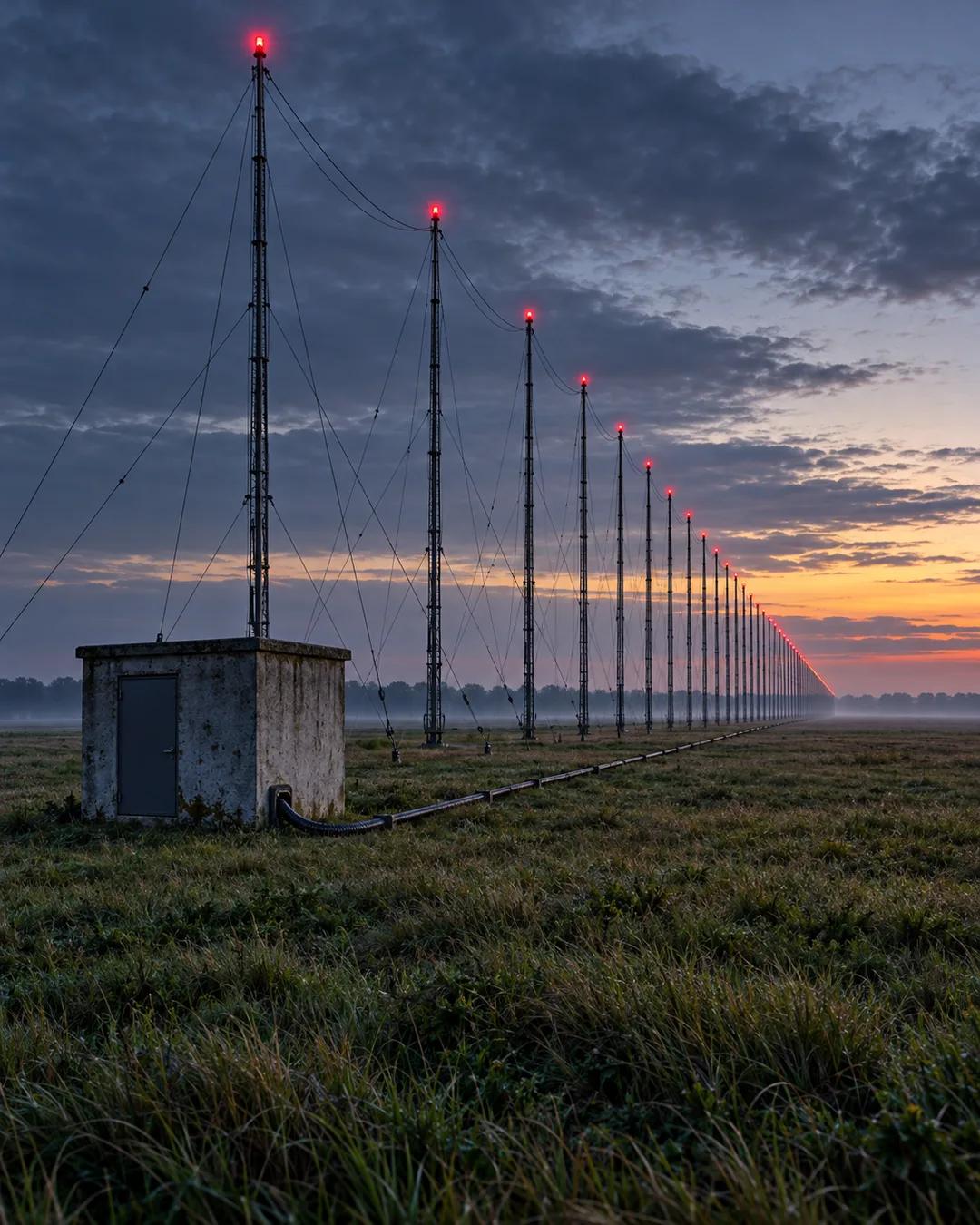
Two kilometers of transmission line

Calling across the Atlantic
Philip H. Smith started at Bell Labs in 1928, fresh out of electrical engineering school, while the telephone industry was booming. Americans were placing more than 65 million calls a day, but no telephone cables crossed the Atlantic, so the only way to call across continents was by radio. Smith's mission was to send radio signals from New Jersey to receiving stations thousands of kilometers away, one in England and one in Argentina.
Why arrays focus power
A single antenna sends its signal across the whole sky, and only a small portion of the power reaches the receiver. Two antennas make the waves combine, canceling in some directions and reinforcing in others, so the power in the middle doubles. With enough antennas to focus the beam to about 10 degrees across, the power in that direction is 400 times stronger.
The reflection problem
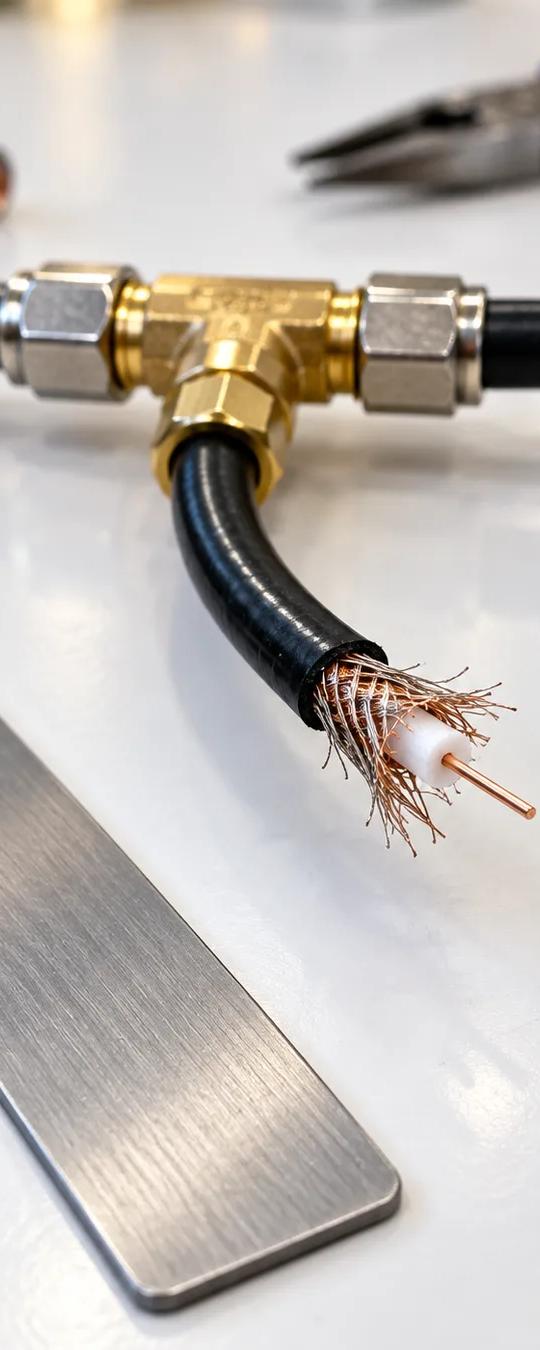
That is why Smith's team connected more than 20 smaller antennas into one directional array. When Smith tested it by sending a signal from the source down the line to an antenna, part of it was bouncing back, and a large portion of the power never reached the antenna. To send a signal across the planet, he needed all of the power to reach the emitting antennas, which meant minimizing the reflections.
How can many antennas steer a beam?
Each antenna in an array radiates its own wave, and the waves add up where they arrive in step and cancel where they arrive out of step. Feeding every antenna the same signal with a slightly different delay moves the direction where they line up. The more antennas spread across a given width, the narrower that direction becomes. Modern radar panels and cellular base stations use the same principle to aim beams electronically without moving anything.
How did shortwave radio cross the ocean?
Signals between about 3 and 30 megahertz are bent back toward Earth by the ionosphere, a layer of electrically charged gas high in the atmosphere. The wave can then bounce between the ground and the ionosphere several times, covering thousands of kilometers in a few hops. Sunlight changes how strongly the ionosphere is charged, so the best frequency for a given path differs between day and night. The first transatlantic telephone cable, TAT-1, did not open until 1956 and carried 36 simultaneous calls.
More from Veritasium