Korva is a scroll of the internet’s best ideas.
Touching bumps changed nothing

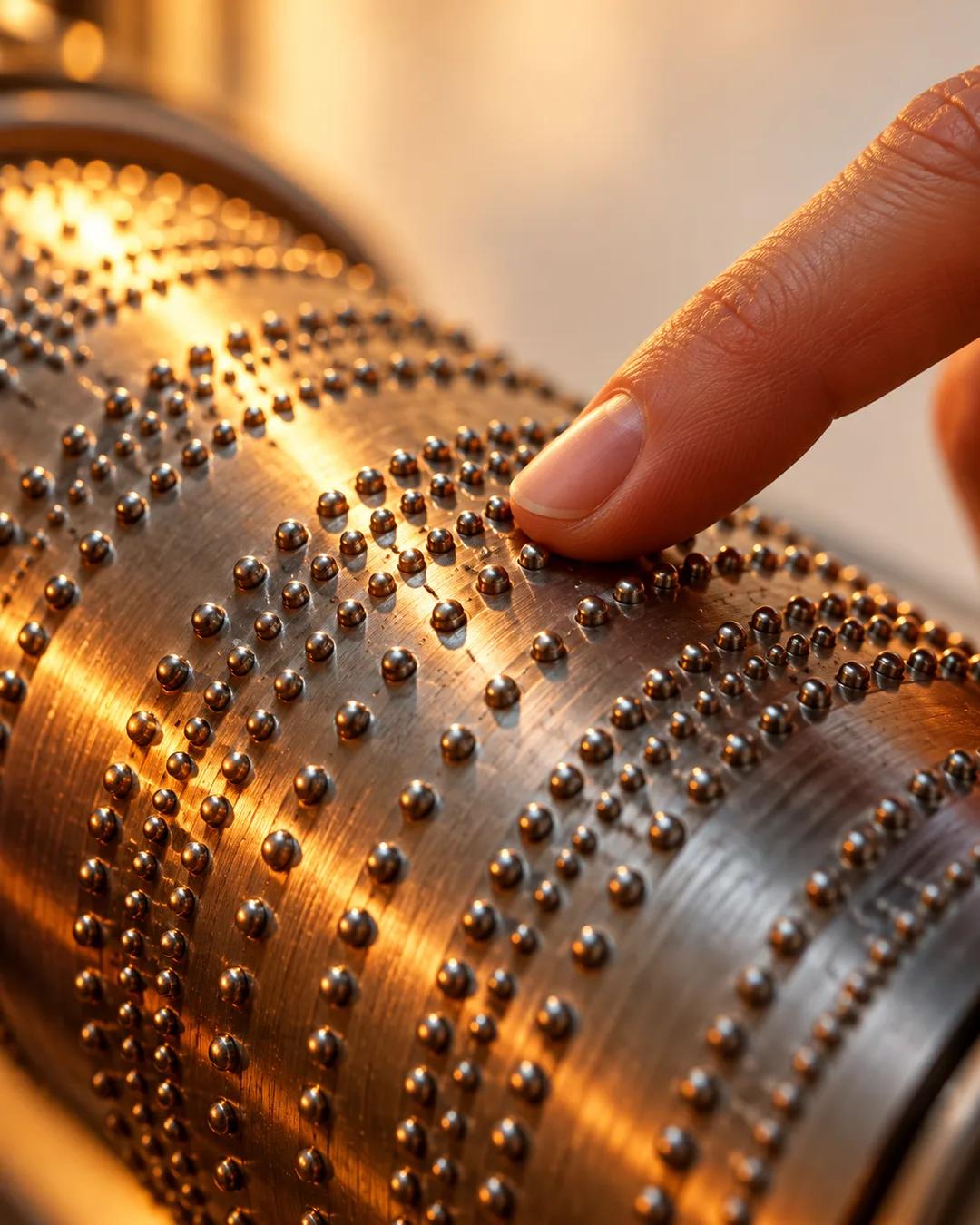
In the early 1990s, a graduate student named Gregg Recanzone worked in Mike Merzenich's lab at UCSF, testing the idea that the adult brain simply cannot change. Volunteers sat at a table in front of a spinning metal drum covered in small bumps, some spaced close together and some far apart. They pressed a lever whenever the spacing grew tighter or wider, a difference so subtle that it took real concentration. None of them were braille readers or practiced at anything like it.
As the volunteers focused on the spacing, the brain's map of their fingers changed quickly. It could shift in either direction, depending on whether they trained to notice bumps getting closer or farther apart. They were fully adult, took no drugs, and had no known impairments.
A control group touched the same bumps on the same drum but listened for a tone instead, pressing the lever when its pitch shifted. Their touch maps stayed as they were, and the plasticity showed up in the auditory part of the brain. The fingers did the same thing in both versions, and the change followed wherever attention went.
Why would attention gate brain change?
A brain that rewired itself to every touch would be unstable, because most of what the fingers feel is irrelevant. Attention acts as a filter that marks which inputs deserve a lasting change. Neuroscientists describe this as a way to separate signal from background noise, so only behaviorally important input reshapes a map. The somatosensory cortex, where each finger has its own strip of territory, is a classic place where this has been studied.
How is the finger map laid out in the brain?
The somatosensory cortex holds a body map first charted by the neurosurgeon Wilder Penfield in the 1930s and 1940s, using electrical stimulation in patients during surgery. Neighboring body parts usually sit next to each other on the map, with the fingers and lips taking up far more space than the back or legs. The space given to a region tracks how sensitive it is, not how large it is. Later work in monkeys by Merzenich and colleagues showed that these borders can shift with experience.
More from Andrew Huberman