Korva is a scroll of the internet’s best ideas.
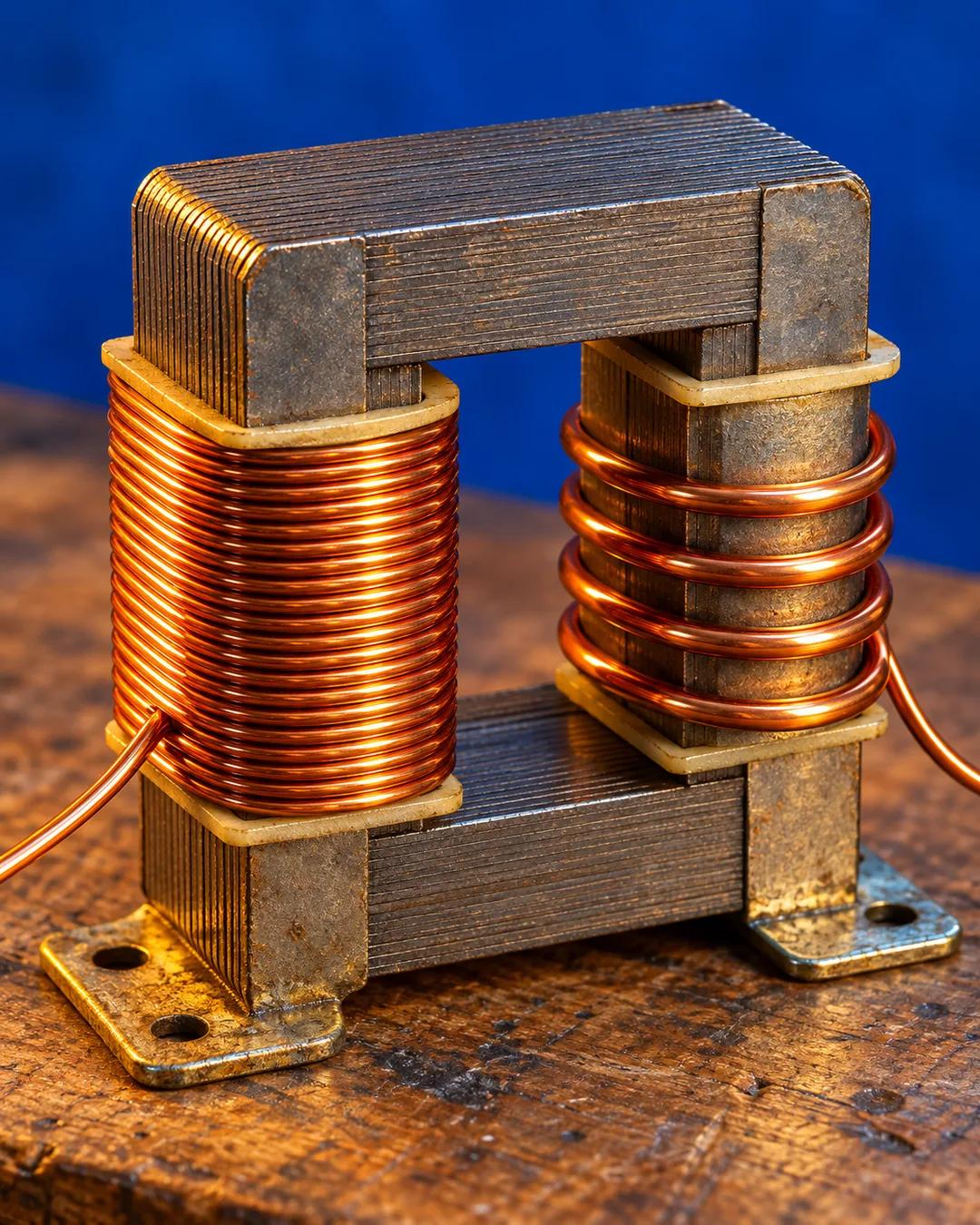
Transformers only work on AC
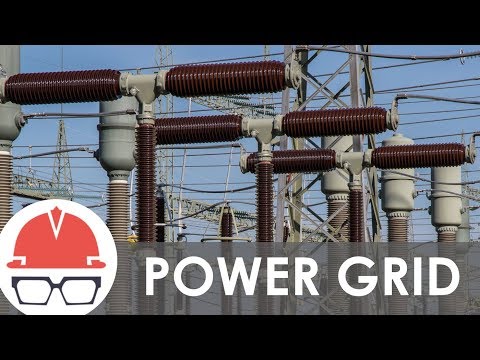
Why alternating current
Alternating current reverses direction constantly, 60 times per second in North America, where direct current flows one way. A transformer depends on that change: a varying voltage in one coil induces a voltage in the other, proportional to the number of turns in each. Hold the current steady, as in direct current, and the transformer can't do any transforming.
Plant to customer
That matters because most power plants sit away from populated areas. At the plant, transformers boost the voltage to minimize losses in the high-voltage transmission lines. Near cities, a substation steps the power back down to a safer and more practical voltage.
From the substation, feeder lines carry power through distribution, though some customers draw directly from transmission lines. Smaller transformers make the final step down to the level that industrial, commercial, or residential users need.
Why do higher voltages lose less power?
Power lost as heat in a wire grows with the square of the current flowing through it. For a given amount of power delivered, raising the voltage lowers the current in proportion, so the losses fall sharply. That is why long-distance lines run at tens or hundreds of thousands of volts instead of household levels. The highest-voltage lines in North America run at 765,000 volts.
Why did alternating current beat direct current?
Early direct current systems, such as the stations Thomas Edison built in the 1880s, could only serve customers within about a mile of the plant. Without an easy way to change voltage, direct current couldn't travel far economically. George Westinghouse backed alternating current and its transformers, and his company lit the 1893 World's Columbian Exposition in Chicago. A hydroelectric plant at Niagara Falls began sending alternating current to Buffalo in 1896.
How can direct current travel long distances now?
Modern power electronics can convert alternating current to direct current at one end of a line and back again at the other. For very long lines and undersea cables, direct current avoids some losses that alternating current suffers, including those caused by a cable's electrical capacitance. Converter stations at each end are expensive, so this approach pays off mainly on routes that run for hundreds of miles. The Pacific DC Intertie, which links Oregon and Southern California, carries power at 500,000 volts DC.
Why is North American power 60 hertz?
In the 1890s, Westinghouse settled on 60 cycles per second for its systems in North America. Around the same time, the German company AEG standardized on 50 cycles per second, and that choice spread across Europe. Neither number came from a law of physics, and each region built its equipment around the one its early suppliers chose. Many countries in Asia and the Middle East use 50 hertz as well.
More from Practical Engineering