Korva is a scroll of the internet’s best ideas.
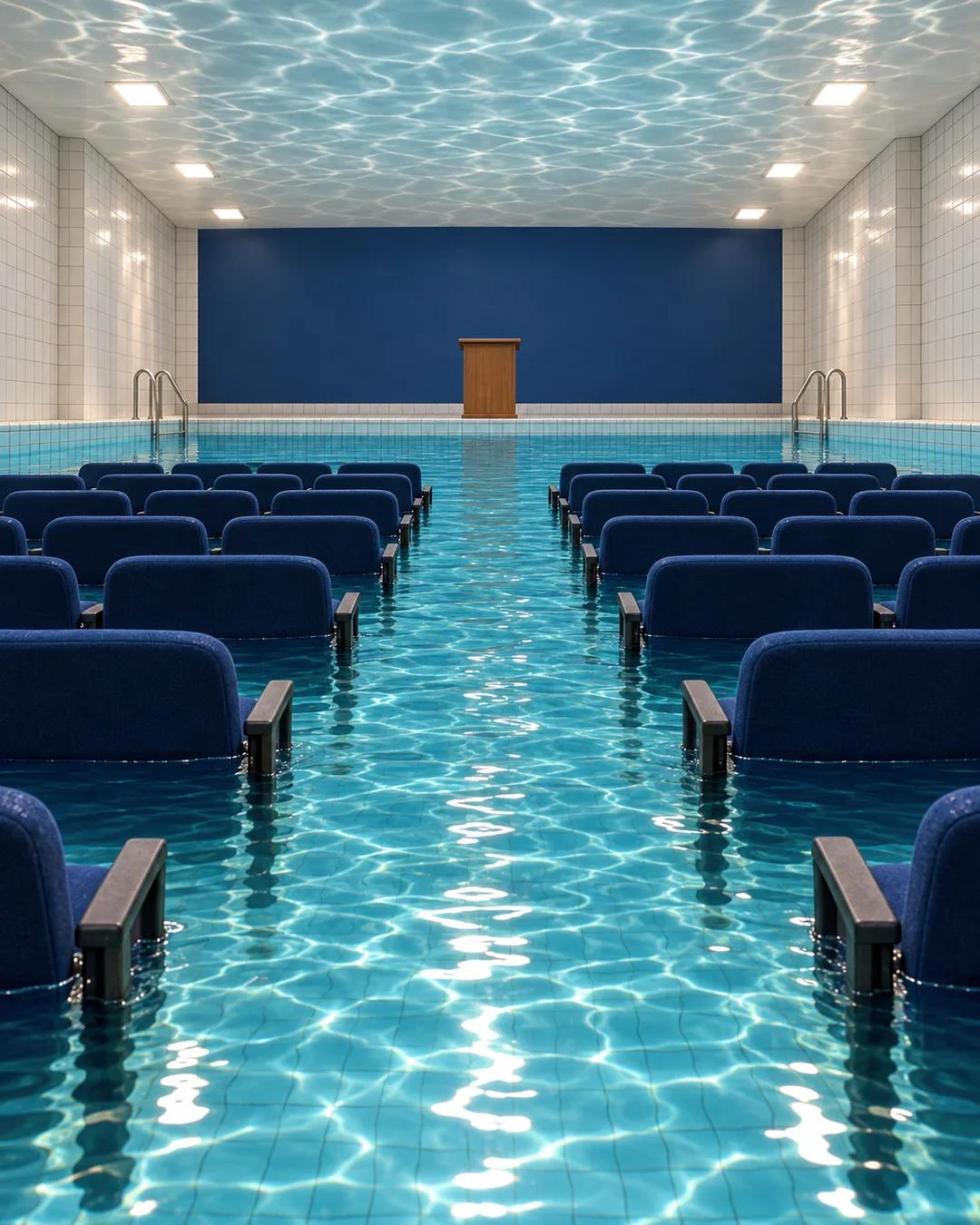
Trump pushes briefing room pool

The Pool Proposal
Three people with knowledge of the discussions say the topic has come up multiple times in just the past few months, and a growing number of people around the president favor moving the press across the street to another building in the White House complex. Trump has floated the idea for years.
A Hostile Stance
It comes as the administration has taken an increasingly hostile stance toward the media, subpoenaing journalists and barring some news organizations from the White House, among other things.
The Room's Past
The idea has a precedent in the room itself. The briefing room space used to be an indoor pool, installed in 1933 by President Franklin D. Roosevelt, who needed it as part of therapy for his legs, which were damaged by polio.
Why did Roosevelt swim for therapy?
Roosevelt contracted polio in 1921 at the age of 39, and it left his legs paralyzed. Warm water supports the body's weight, which let him exercise weakened muscles that he could not work on dry land. He had discovered this at Warm Springs, Georgia, where he began swimming in naturally warm mineral water in 1924. The White House pool was built in 1933 in the West Wing.
How did a pool become the press room?
Reporters had long worked out of a small lobby area in the West Wing, with no room of their own. In 1970, the Nixon administration covered the pool with a floor and turned the space into a press briefing room and workspace for reporters. The room was renamed the James S. Brady Press Briefing Room in 2000, after the press secretary who was wounded in the 1981 attempt on Ronald Reagan's life.
Why does polio paralyze the legs?
The poliovirus attacks motor neurons in the spinal cord, the nerve cells that carry movement signals to muscles. When those signals stop arriving, the muscles weaken and shrink. The virus spreads mainly through contaminated water and food. Jonas Salk's vaccine was licensed in the United States in 1955.
More from The Headlines