Korva is a scroll of the internet’s best ideas.
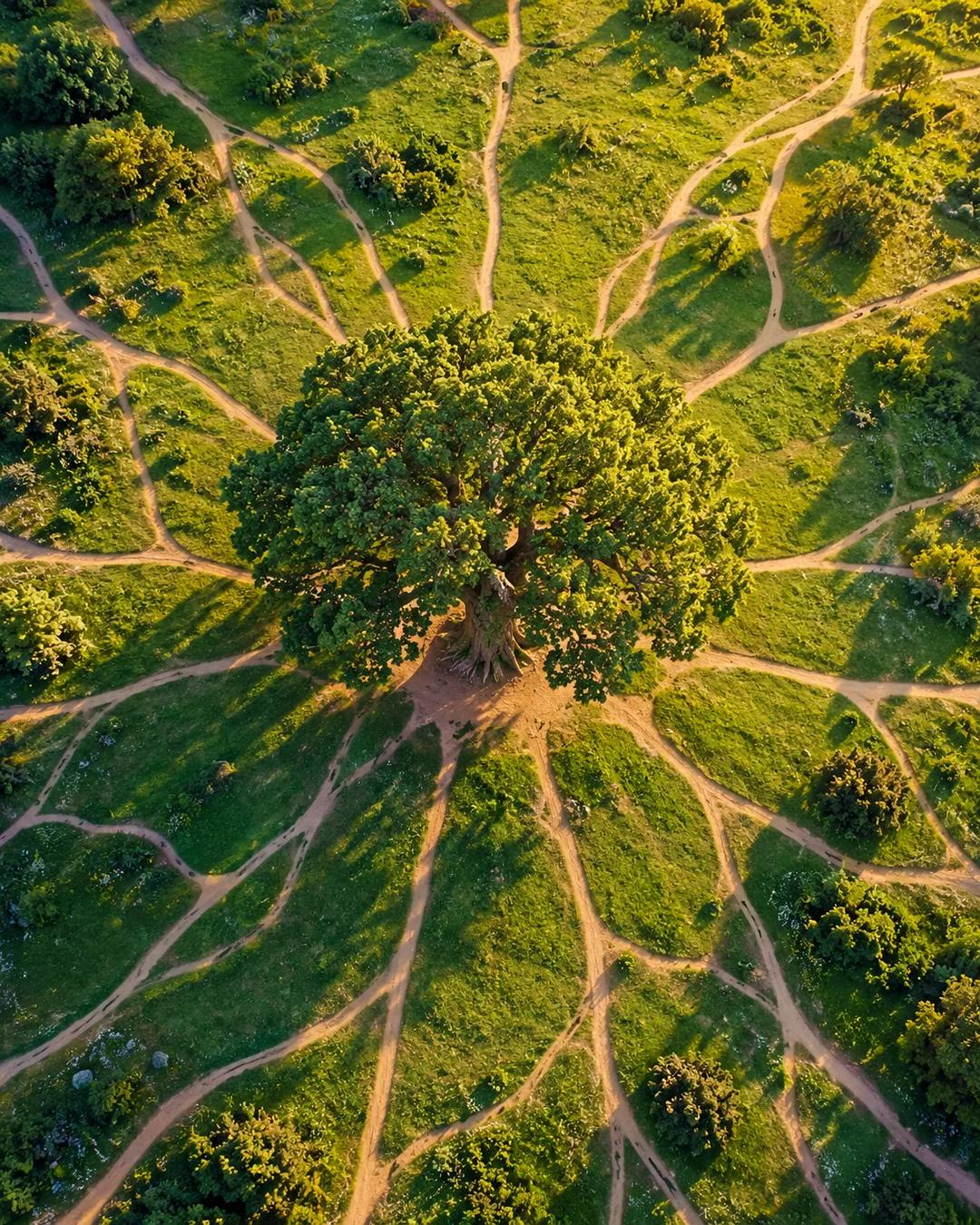
Trust compounds into a super node
Trust as Lower Friction
Trust works like lower friction in a physical system. When friction or entropy drops, more information flows through, and when more information flows, value gets created. A seamless web of deserved trust, Charlie Munger's phrase for the best culture, lets information move more easily and more fluidly.
The Berkshire Example
Berkshire Hathaway shows it. Twenty to forty thousand people show up to its annual meeting, carrying a feeling built over fifty years of doing the right thing when no one is looking. That feeling lets other things happen, like a founder choosing to sell a company to Berkshire over another buyer because he trusts it to honor the relationship he built with his employees.
Becoming a Super Node
Over a long time, a person who has done the right thing countless times becomes a stronger node in the graph of human relation. More responsibilities flow through them and more opportunities gather around them. At the far end sits a super node, a person or institution through which large amounts of coordination, goodwill, capital, and truth can move because the network has learned the flow won't be casually corrupted. The payoff is exponential and hard to trace step by step, and it shows up as moments of remarkable luck.
How does trust lower the cost of dealing?
Economist Kenneth Arrow wrote in 1972 that virtually every commercial transaction has within itself an element of trust. Without it, parties pay for lawyers, audits, and monitoring to guard against cheating. Oliver Williamson shared the 2009 Nobel Prize in economics for work on how firms exist partly to cut the costs of making and enforcing agreements.
Why do hubs form in networks?
Network scientists Albert-László Barabási and Réka Albert showed in 1999 that new nodes tend to attach to nodes that already have many links. This rich-get-richer pattern, called preferential attachment, produces a few huge hubs and many small nodes. The same structure appears in airline routes, the World Wide Web, and academic citations.
Why do founders sell to Berkshire?
Berkshire has described itself for decades as a permanent home for the companies it buys, and Warren Buffett has written that he leaves managers to run their businesses. A founder who sells to it gets a buyer that does not plan to resell the company. Berkshire's annual meeting in Omaha has long been nicknamed Woodstock for Capitalists.
More from We Study Billionaires - The Investor’s Podcast Network