Korva is a scroll of the internet’s best ideas.
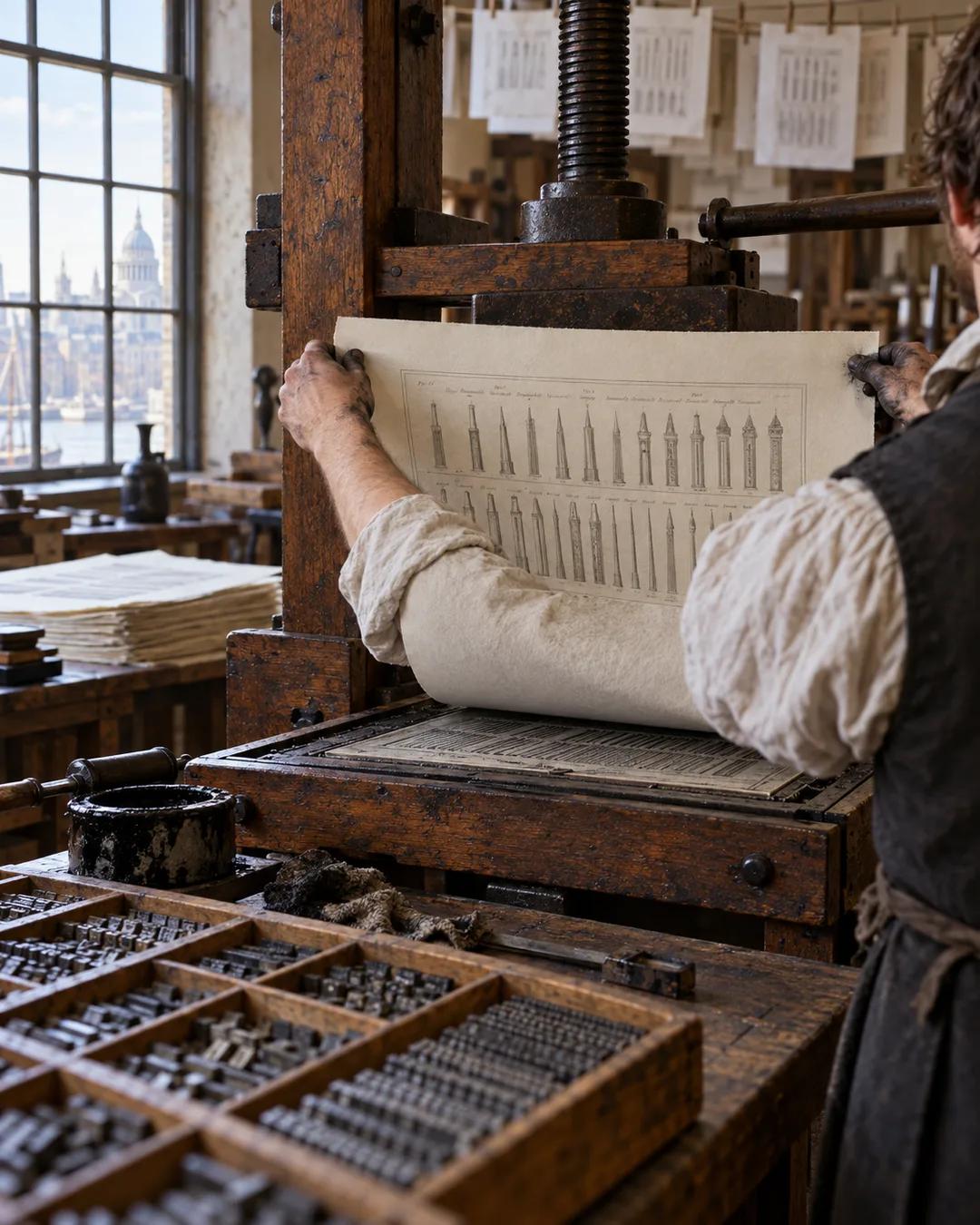
Twelve men in a printing shop

The twelve and their tools
The group came out of the Anglican Church and saw slavery as a stain on conscience, on the British name, and on Christianity. Most members of Parliament had investments in the slave trade or profited from sugar. The twelve won anyway, using tools that social justice movements still use: viral images, authentic testimony, investigative journalism, and consumer boycotts.
The Brooks diagram
Slave owners claimed captives had plenty of room on the ships and were given cordials and games of chance. The abolitionists answered with the schematic of the Brooks slave ship and asked where the ample room and the cordials were. None of the abolitionists ever set foot in Africa, and only a couple had been to the Caribbean.
Clarkson's journeys
Thomas Clarkson was the only one of the twelve still alive on August 1, 1838. He had ridden a horse 35,000 miles up and down England gathering evidence for Parliament. Frederick Douglass later crossed the Atlantic to meet him and asked him to teach everything the group had done, what had worked and what had not, so that enslaved people in America could be freed.
How did the Brooks diagram spread?
The Plymouth abolition committee first printed the diagram in 1788, and the London committee reprinted it as a poster in 1789. Thousands of copies went up in homes, coffeehouses, and taverns. The drawing was based on measurements of the actual Liverpool ship Brooks. Versions were also printed in America, including one in Philadelphia.
How did the sugar boycott work?
Abolitionists in the early 1790s urged households to stop buying sugar grown on West Indian plantations. William Fox's 1791 pamphlet argued that every family giving up sugar would reduce the number of people enslaved to supply it. Thomas Clarkson later estimated that about 300,000 people took part. Shops advertised East India sugar as produced without slave labor.
How did Clarkson gather evidence?
In Bristol and Liverpool, Clarkson collected the muster rolls of slave ships, which showed how many sailors died on each voyage. He used them to argue that the trade killed seamen at a far higher rate than other trades, which undercut the claim that it trained sailors for the navy. He also gathered objects from slave ships, including shackles and thumbscrews, and showed them to Members of Parliament. Parliament's hearings on the trade ran from 1788 to 1791.
More from The Joe Rogan Experience