Korva is a scroll of the internet’s best ideas.

Two interns knocked doors in El Paso
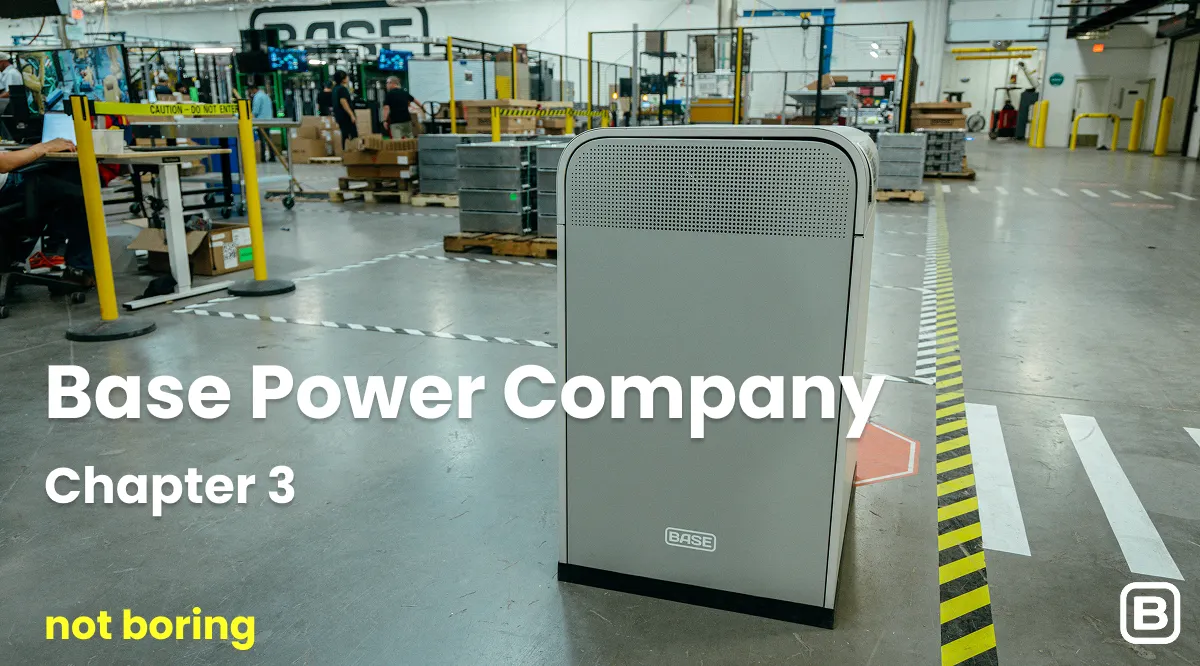
The partnership with El Paso Electric aimed at specific, constrained parts of the grid to defer capacity upgrades. Installing 10 MW behind one substation meant getting roughly 10% of all the homes behind it installed. That was a higher and more targeted penetration rate than Base had ever attempted, and Base had signed thousands of Texans, many through utility partners, without needing that kind of geographic precision.
Prithika Devarajan, a University of North Carolina student on the marketing team, and Olive, another marketing intern, flew to El Paso for two weeks. Their instructions from Tim Pianta, Base's Head of Utility Partnerships, were to figure it out. They knocked on doors, hosted happy hours at coffee shops, and showed up at farmers markets.
They finished two weeks ahead of schedule. One-third of the neighborhood signed up and 10% got installed, with many homes failing to qualify.
How do batteries defer grid upgrades?
Utilities size wires and transformers for the few peak hours each year when demand is highest. Batteries placed behind a substation discharge during those hours, which lowers the peak the equipment has to carry. If the peak stays low enough, the utility can postpone buying larger equipment. Regulators in states such as New York and California require utilities to consider these non-wires alternatives before approving big upgrades.
Why can a home fail to qualify for a battery?
A battery needs a suitable spot, a compatible electrical panel, and a service connection that can handle the added equipment. Fire codes also limit where lithium-ion systems can be mounted, including near doors, windows, and living spaces. A site survey checks these conditions before anyone installs anything. The National Electrical Code requires clear working space in front of electrical equipment, at least 3 feet deep for typical residential panels.
Why do utilities partner with battery companies?
A utility that signs up thousands of customer-owned batteries gets grid capacity without building or owning it. The batteries can be called on together during peaks, a setup often called a virtual power plant. The customer gets backup power, and the utility spreads its costs across a fleet of small devices. Green Mountain Power in Vermont has run programs that dispatch customers' home batteries as a group.
More from Packy McCormick