Korva is a scroll of the internet’s best ideas.
Two nuclear reactors in 30 years

A stalled industry
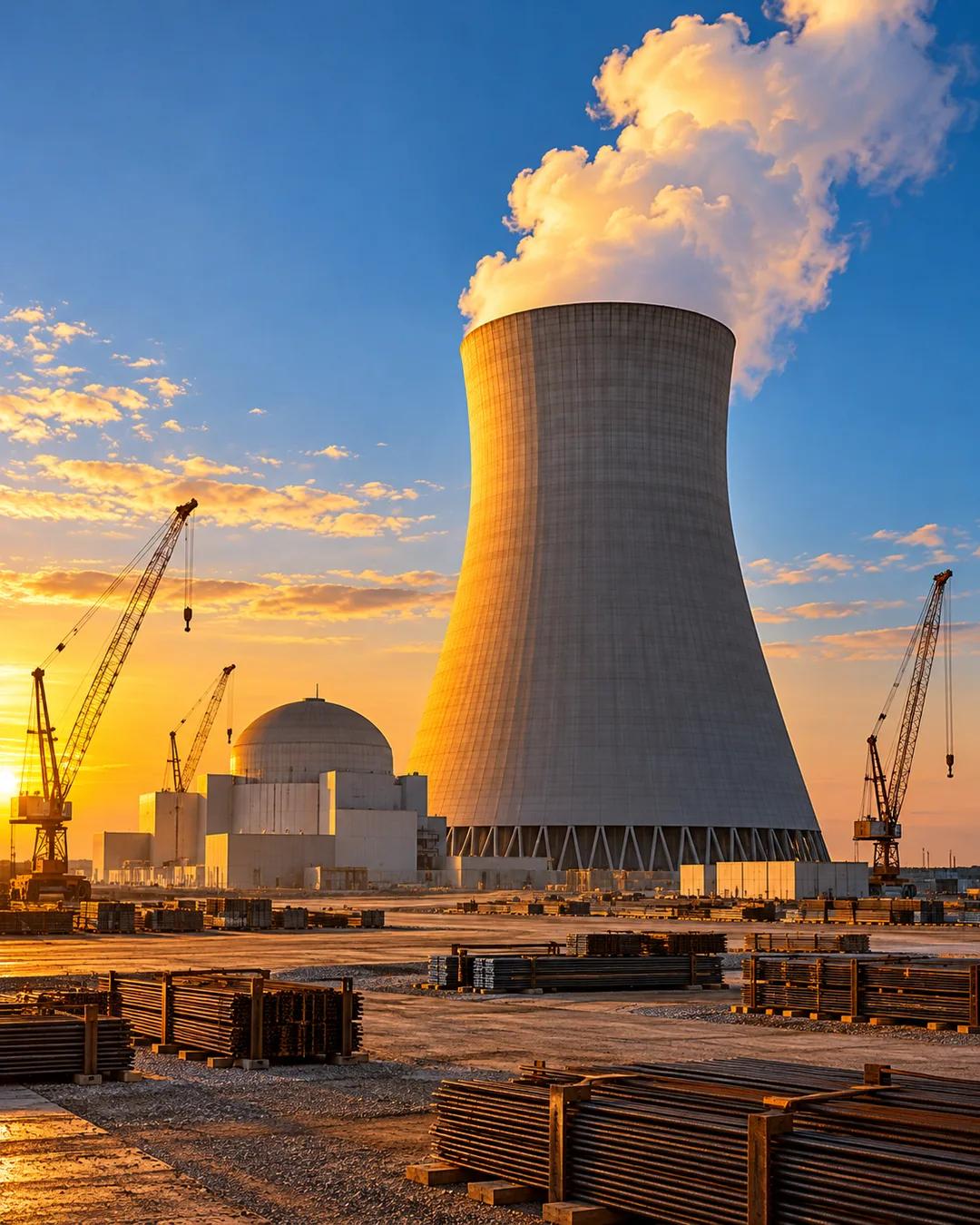
Vogtle took roughly 15 years from birth to commercial service. Around the same time a South Carolina project called VC Summer was shut down after nearly bankrupting its owner, SCANA. For three decades, after Chernobyl, Three Mile Island, and Fukushima in 2011, nuclear engineers, scientists, and companies had moved on to other work.
China builds on
Vogtle 4 improved a great deal on Vogtle 3, and China is now building around 39 reactors, 34 of them a gigawatt or larger. About a third are modeled on the Westinghouse AP1000, the same design used at Vogtle. The projection is that the gas deficit only gets worse in 2031, 2032, and beyond, which would put large reactors needed online by 2033 or 2034, the soonest they can arrive.
Paths for new reactors
Small modular reactors are less likely to fill the gap: many are still science experiments, and many of the companies aren't set up to manufacture at the scale of tens of gigawatts. One proposed way to get large reactors moving is for the US government to build two to four AP1000s from beginning to end. Between 10 and 20 reactors are envisioned through various groups, but no one wants to be first, and a first few would de-risk the supply chain.
Why did Vogtle cost so much more than planned?
Vogtle units 3 and 4 were the first new reactors the US had built in decades, and the supply chain, workforce, and regulatory experience had thinned out. Design changes during construction and the bankruptcy of lead contractor Westinghouse in 2017 added delay and cost. Georgia Power reported that the total project cost far exceeded its original estimate.
What happened at VC Summer?
VC Summer was a South Carolina project to build two AP1000 reactors, begun in 2013. Cost overruns and delays followed Westinghouse's bankruptcy, and the owners abandoned construction in 2017. The failure led to lawsuits and criminal charges against former executives of SCANA, the parent of the utility that led the project.
Why are small modular reactors hard to scale?
Small modular reactors aim to cut costs by building identical units in factories rather than on site. That advantage only appears after a manufacturer has built many units and refined its production line. Most designs have not yet reached that point, and each still needs regulatory approval, supply chains, and trained operators.
More from Invest Like the Best with Patrick O'Shaughnessy