Korva is a scroll of the internet’s best ideas.
Two weeks on Windows, then Linux

Leaving the Mac
DHH quit Apple after it angered him enough that he could no longer spend money on its products in good conscience. Linux had always been a server tool to him, something that ran every server the company had ever used. Then he found r/unixporn, a subreddit where people spend hundreds of hours restyling their Linux desktops until they look like something out of a hacker movie.
Discovering Hyprland
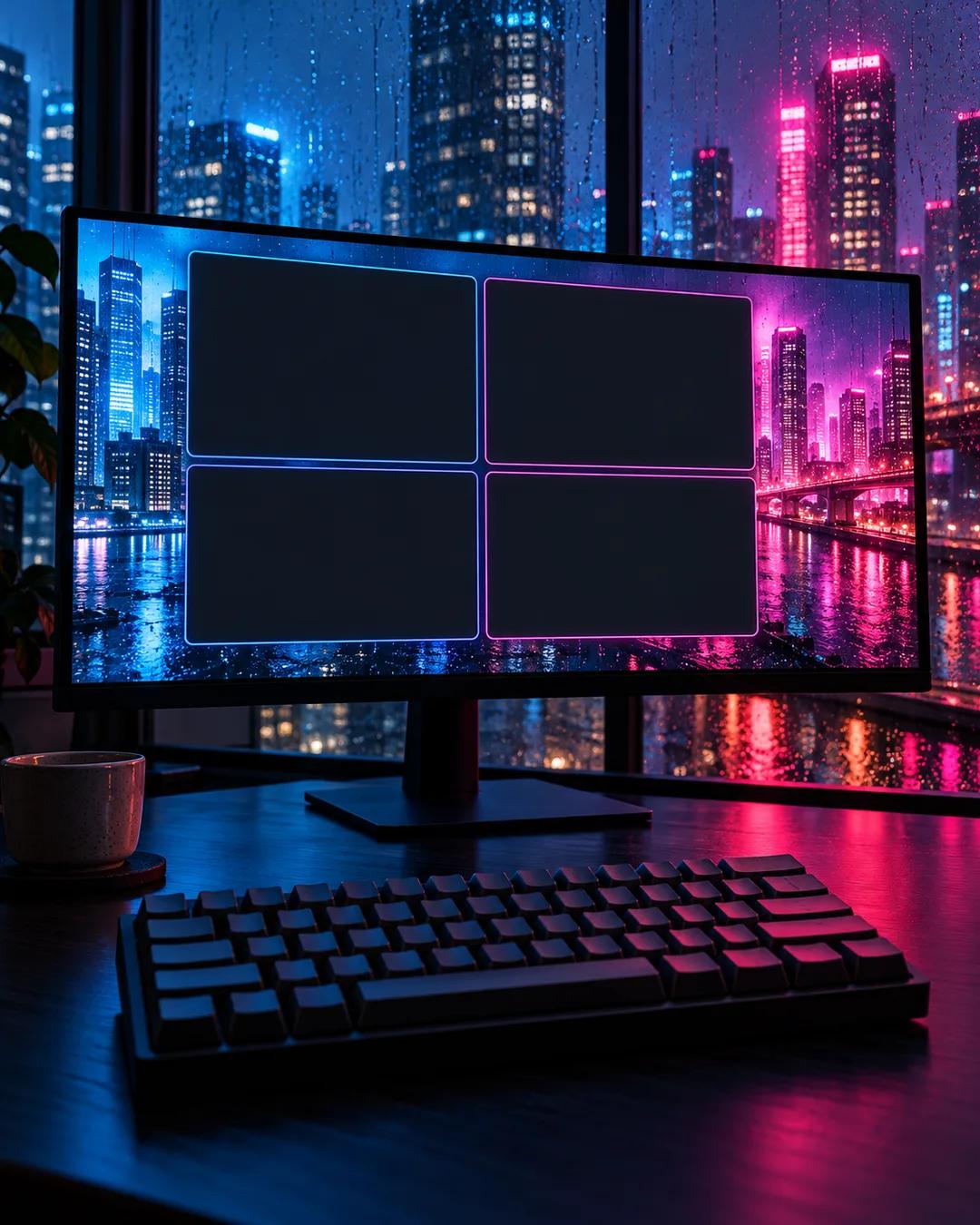
About three quarters of that subreddit used a tool called Hyprland, a tiling window manager built by a Polish developer who goes by the handle Vaxry and has an anime avatar. Vaxry was around 22 now and had been 18 or 19 when the first version came out. Windows on Hyprland open and rearrange themselves, and the whole system runs from the keyboard instead of the mouse, so it can be fast and still look beautiful.
Building Omarchy
He took half of the subreddit's styling, added Hyprland, and put it all on top of Arch Linux. The result is Omarchy. It grew out of picking up the system, finding 75 things wrong, fixing five, and picking it up again, over thousands of hours across a year, until it felt better than anything he could buy.
How do tiling window managers arrange windows?
A tiling window manager divides the screen into non-overlapping regions and fills them automatically. Opening a new window splits an existing region, and closing one lets the others expand to fill the gap. Keyboard shortcuts move focus and swap positions, so the mouse is optional. Earlier tiling managers such as dwm, xmonad, and i3 followed this model, and Hyprland adds animated effects as a Wayland compositor.
Why do Linux users share desktop setups?
A Linux desktop is assembled from separate parts, such as the window manager, the status bar, the fonts, and the color themes, and each one is configured through plain text files. Because those files are small, users publish them online as dotfiles, and others copy and modify them. A look created by one person can be reproduced on another machine in minutes. The same modularity is why two Linux desktops can look nothing alike.
Why do so many servers run Linux?
Linus Torvalds released the first version of the Linux kernel in 1991. Its license lets anyone use and modify it for free, which made it attractive for web hosting companies and data centers. Android, which is built on the Linux kernel, powers most of the world's smartphones. Since November 2017, every system on the TOP500 list of the world's fastest supercomputers has run Linux.
More from David Senra