Korva is a scroll of the internet’s best ideas.
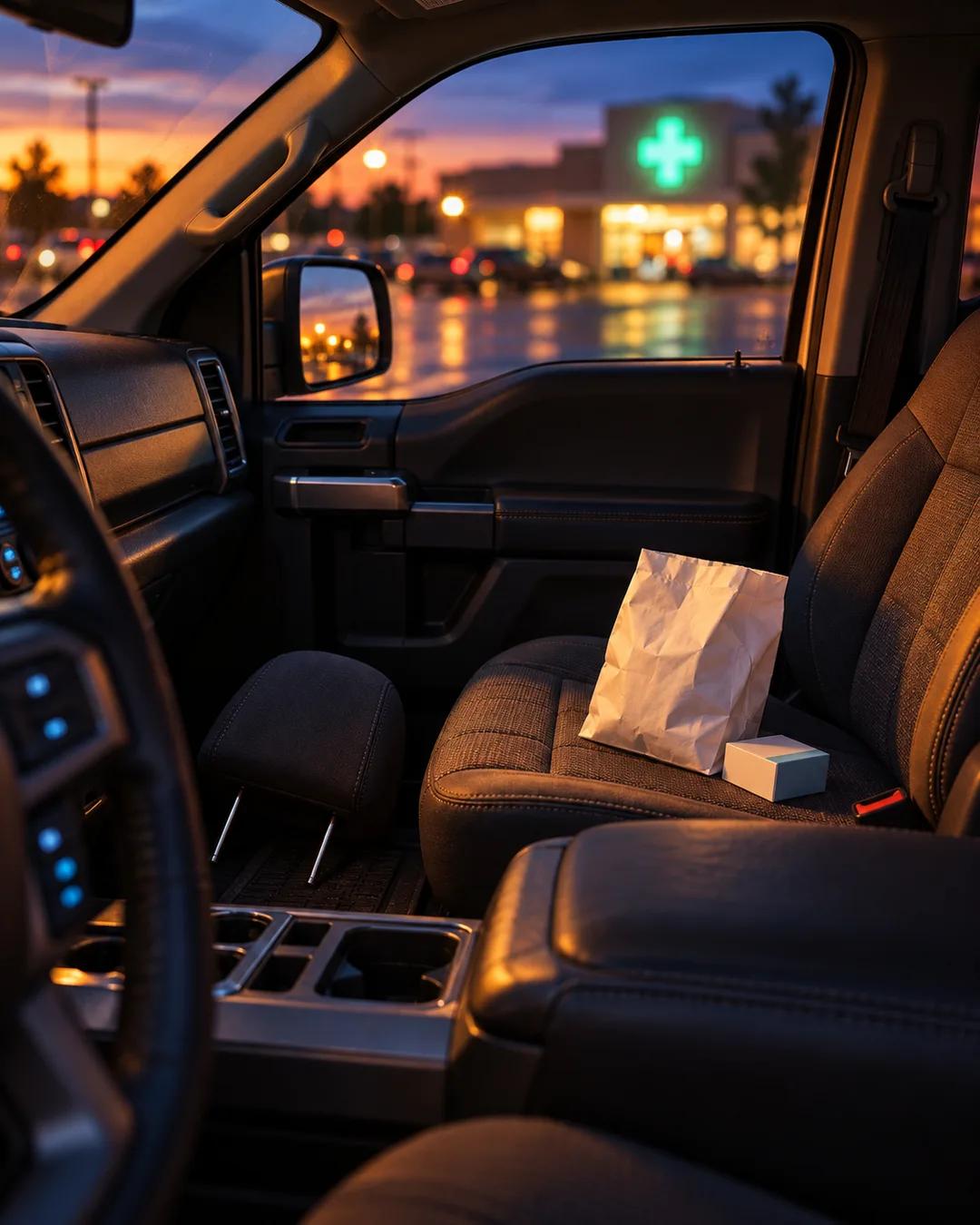
Upside down in a car seat

Hiding the pain
Retired Navy SEAL Andy Stumpf took a sip of coffee during a podcast recording and felt his stomach shift. He figured it was a gas bubble. His wife was teaching a jiu-jitsu seminar south of Salt Lake City, and he sat slouched in a chair, unable to stand up straight, then put his gear on and rolled for 90 minutes anyway.
On the way home to Montana, his wife stopped at a Walgreens for gas pills. She came back to find him fully inverted in the passenger seat, head down by the footwell, trying to dislodge the bubble. He told her he was fine and asked her to start driving. She looked up the nearest hospital and drove straight there, and keeping it quiet had bought him nothing but a few more hours of suffering.
The emergency room
In the emergency room he lay on the floor because it was cool, sweating. Imaging showed an intestinal blockage: a piece of intestine had slipped through a loop of scar tissue on the inside wall of his stomach, and it had cinched. It was the worst pain of his life, worse than being shot. He and his sister have a genetic blood abnormality that keeps them from processing opiates the way most people do, which he first learned in Baghdad when morphine did nothing after he was shot.
He had told his wife not to call his sister, a nurse on vacation in another country, but she went outside and called anyway, to learn how to talk to the staff in their language. In the ICU, ketamine finally worked, and it came close to what he called the K hole, with a silent room that sounded unbearably loud. Surgery came the next day.
How can scar tissue trap an intestine?
Bands of scar tissue called adhesions can form after surgery, injury, or inflammation inside the abdomen. They can stretch between loops of bowel or between the bowel and the abdominal wall. A section of intestine can slip through a gap in one and become pinched, which blocks the passage of food and gas. Adhesions are among the most common causes of small bowel obstruction in adults in developed countries.
Why can opiates fail to dull pain?
Opioid drugs work by binding to the mu opioid receptor, which is encoded by the OPRM1 gene. Variants in that gene are linked to differences in how strongly people respond to opioids. Separately, variation in the CYP2D6 liver enzyme changes how codeine and tramadol are converted into their active forms. Researchers study these differences under the heading of pharmacogenomics.
How does ketamine ease severe pain?
Ketamine blocks NMDA receptors, a type of glutamate receptor involved in how the nervous system amplifies pain signals. It was developed in the 1960s as an anesthetic and has been used on battlefields and in emergency medicine ever since. At higher doses it produces a dissociated state in which people feel detached from their bodies. The slang term K-hole refers to that deep dissociation.
More from Andrew Huberman