Korva is a scroll of the internet’s best ideas.
Use AI only where you're strong

A simple rule
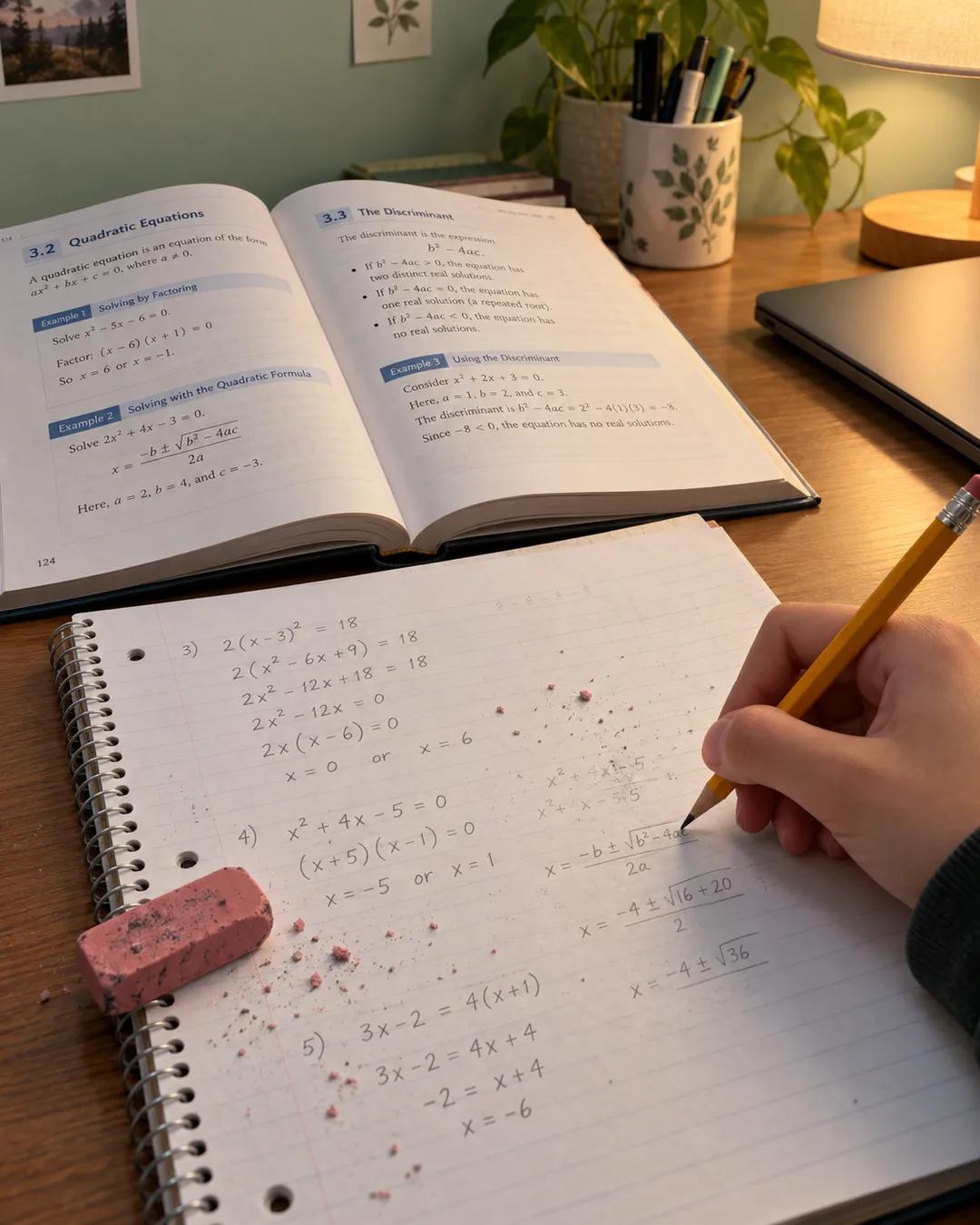
A student at the Tallinn school uses chatbots only sometimes, and he skips them for the subjects he cares about most. In mathematics the AI is often wrong, very wrong. The rule he follows covers more than math: when he feels strong at something, he uses AI, and when he feels weak at something, he learns it himself.
Where practice happens
That rule is a decision about where to practice. Skills grow where the learner does the work, so the subjects he keeps away from AI are the ones where he is still building strength.
Skipping AI altogether
Other students at the school go further and skip AI altogether. One is afraid of becoming lazy. Another finds it easy to think you don't need to do the job anymore, and asks who does the job for you then, and at what cost.
Why is AI so often wrong at math?
Language models generate answers one piece at a time by predicting likely text, rather than running a calculation. That works well for patterns seen often in training and poorly for long chains of exact steps, where one slipped digit carries through to the final answer. Connecting a model to a calculator or code tool avoids the problem, since ordinary software then does the arithmetic.
Why does AI sound sure when it's wrong?
A language model produces text that reads smoothly whether or not the content is right, because smooth text is what it is trained to produce. Models are often tuned further on human ratings, which can favor answers that sound complete and helpful. In 2025, OpenAI researchers argued in a paper on hallucinations that common benchmarks score a guess higher than an admission of not knowing. Under that scoring, a model that always guesses beats one that sometimes says it doesn't know.
How does practice build real skill?
Psychologist Anders Ericsson and colleagues studied violin students at a Berlin music academy in a 1993 paper. The students judged best had averaged more than 10,000 hours of practice by age 20, while the group training to be music teachers had averaged about 4,600. The study separated practice done alone with full concentration on weak spots, which Ericsson called deliberate practice, from simply playing through pieces.
More from The Journal.