Korva is a scroll of the internet’s best ideas.
Van Ronk took him for a janitor

Playing the dens
In New York he played anywhere, in dark, dingy, chaotic dens where talent scouts never showed up and a full weekend of joints from dusk until dawn might bring in $20. He kept his sights on the Gaslight, and the man he needed to know was Dave Van Ronk.
Meeting Van Ronk
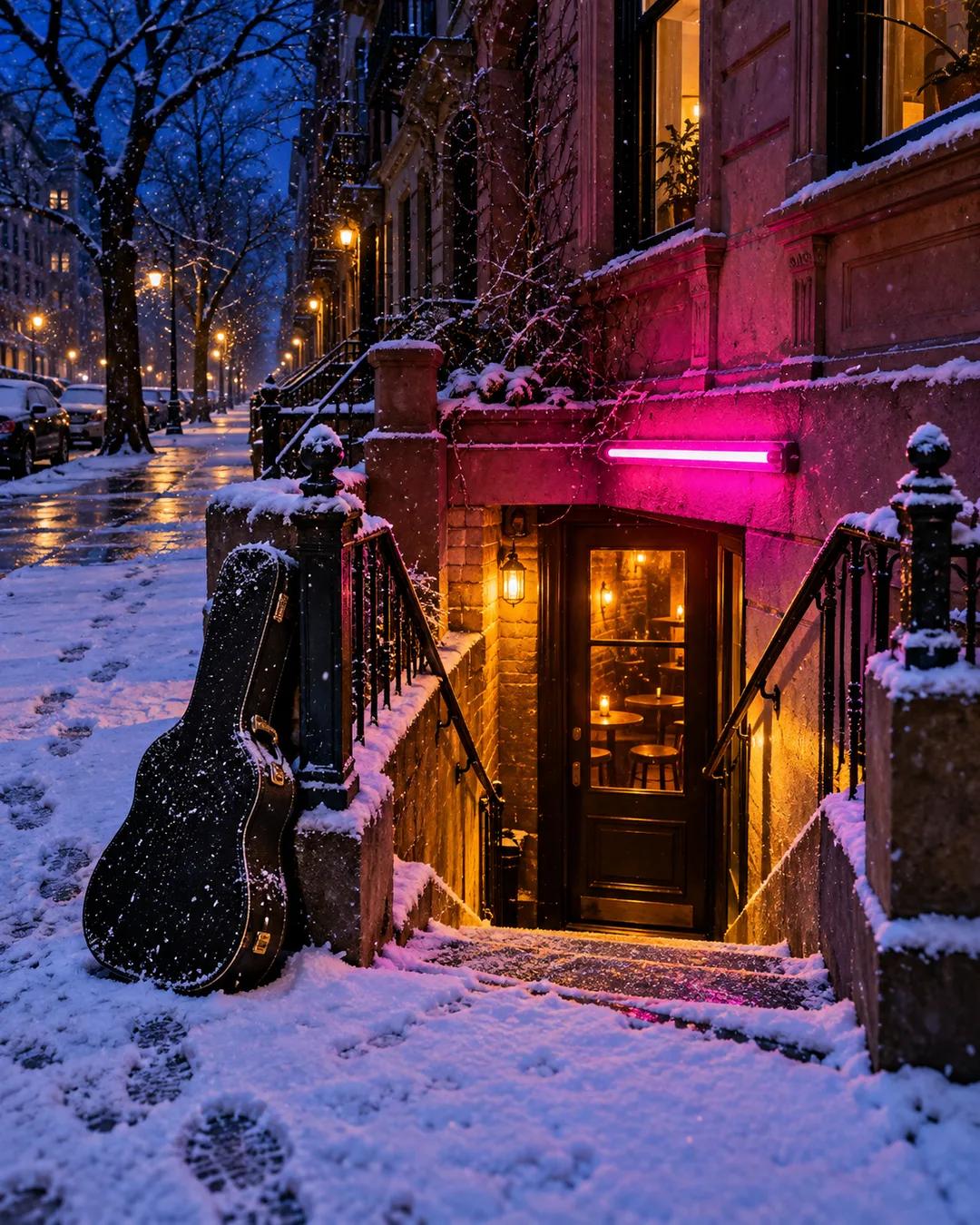
One winter day, a big, burly, gruff man stepped in off the street into Izzy's, one of the dens where Dylan played. Dylan walked over and asked how someone gets to work at the Gaslight and who you have to know. Van Ronk looked at him curiously, snippy and surly, and asked if he was a janitor. Dylan told him no, that he could drop that thought, and that he could play something for him instead.
The Gaslight job
Van Ronk listened, liked what he heard, and asked who he was. Then he told Dylan to come down around eight or nine that night and play a couple of songs in his set. Dylan was soon hired to play at the Gaslight. The temperature outside was about 10 below, and he walked toward the lights without feeling the cold.
Why did musicians want to play the Gaslight?
The Gaslight Cafe was a basement coffeehouse on MacDougal Street in Greenwich Village. It opened in the late 1950s as a spot for poets and later became one of the main stages of the Village folk scene. Unlike the smaller dens, it had a regular audience and a reputation that reached beyond the neighborhood. Dylan played there in 1961.
How did Greenwich Village become a folk hub?
In the 1950s and early 1960s, cheap rents and a long tradition of bohemian artists and political radicals drew musicians to Greenwich Village. Folk singers gathered on Sunday afternoons in Washington Square Park to trade songs. Coffeehouses and clubs on and around MacDougal Street gave them places to perform for tips or a passed basket. Record labels began scouting the neighborhood, and Dylan signed with Columbia Records in 1961.
How did Van Ronk shape the Village scene?
Dave Van Ronk was a Village fixture for decades, performing and mentoring younger singers. He mixed blues, jazz, and folk, and his guitar arrangements were widely copied. His central place in the neighborhood earned him the nickname Mayor of MacDougal Street. He died in 2002.
More from Founders