Korva is a scroll of the internet’s best ideas.

Firsts along the coast
The same warm water has brought a string of firsts to the California coast. A longfin bigeye fish appeared for the first time, and sea turtles were found nesting in California for the first time ever. A hammerhead shark cruised off Santa Barbara, schools of giant devil rays glided near Catalina Island, and a whale shark, the largest fish on Earth, turned up off Southern California.
A stronger El Niño
El Niño comes around every few years as a natural phenomenon, but this one arrived after an extended marine heatwave and is running stronger than the average. Boats out of Dana Wharf Sport Fishing and Whale Watching landed 5,000 yellowfin tuna this summer, compared with only two last year. Now they are catching dorado, which jump out of the water and are caught off kelp paddies.
Beaches washing away
The water has also taken ground. Rising sea levels and beach erosion have damaged or destroyed homes right on the beach and stripped some beaches of their sand. Tamarack State Beach has pretty much disappeared, and all that is left is rocks.
How does El Niño bring tropical animals north?
During an El Niño, the trade winds that normally push warm surface water west across the Pacific weaken, and that warm water spreads back east toward the Americas. Along the coast it raises sea surface temperatures and strengthens warm northward currents. Tropical fish, sharks, and turtles that track warm water follow it into places they rarely go. NOAA describes El Niño as a pattern that returns every two to seven years.
Why do sea snakes rarely reach California?
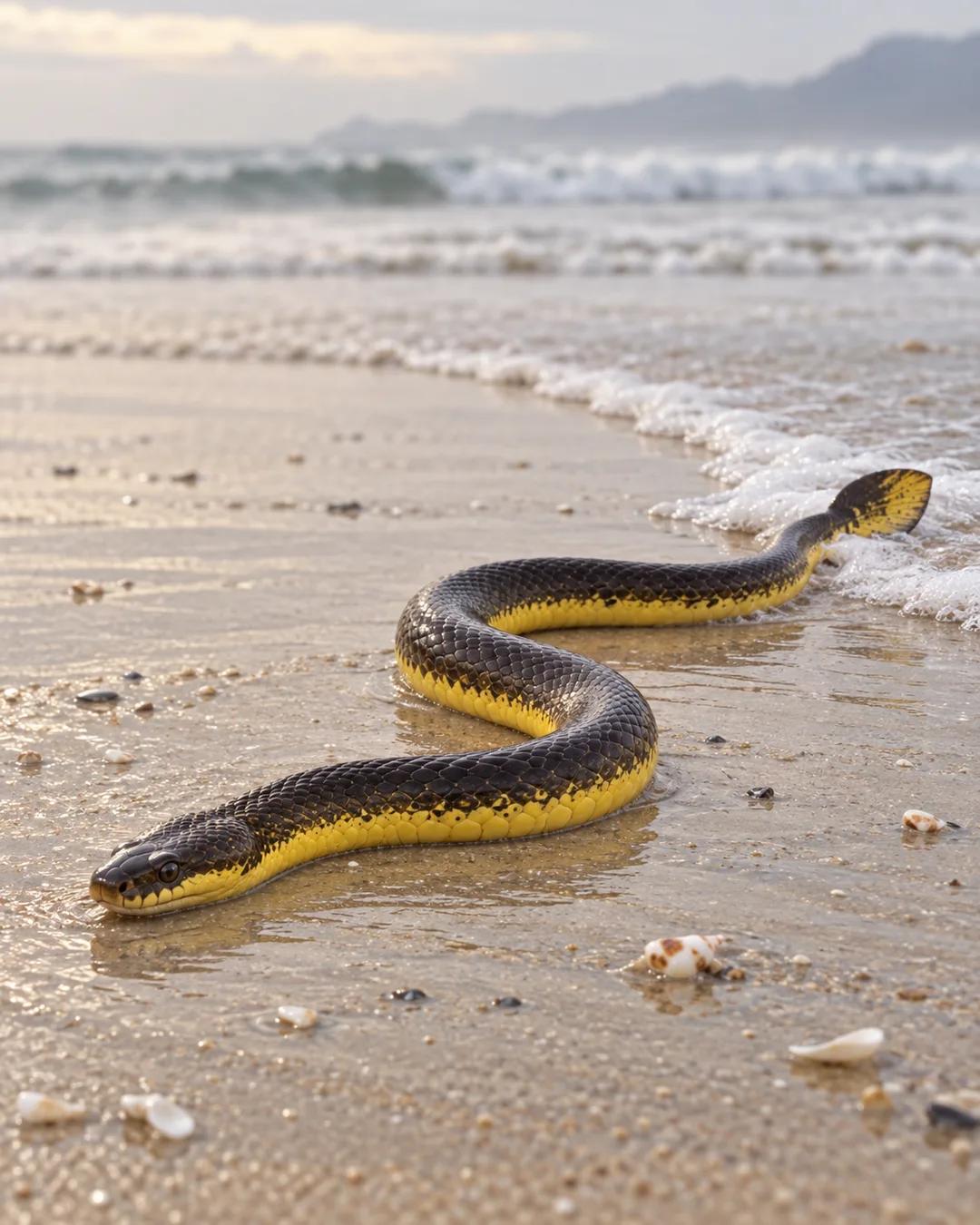
Sea snakes are air-breathing reptiles that depend on warm water to stay active, and the cold California Current keeps most Southern California water too cool for them. The yellow-bellied sea snake is the most widely spread sea snake, living across the tropical Pacific and Indian oceans. It drifts passively on the surface where currents meet and form slicks, which can carry it far from its usual range. Occasional strandings on California beaches have been recorded during past El Niño years.
Why does rising sea level strip sand from beaches?
A higher sea level lets waves reach farther up the beach, where they pull sand back out to deeper water. Storm waves during an El Niño winter, on top of higher seas, do this far faster. California beaches also receive less sand than they once did, because dams and development have cut the sediment that rivers carry to the coast. A 2017 study led by the U.S. Geological Survey, published in Scientific Reports, projected that up to two thirds of Southern California beaches could be fully eroded by 2100 under high sea-level rise.
Why do warm years bring so much tuna?
Yellowfin tuna favor warm blue water and chase schools of bait fish, so a warm current pushes both closer to the Southern California coast. Dorado, also called mahi-mahi, gather under floating kelp paddies because small fish shelter in the shade there. Anglers look for the paddies for that reason. Dorado are among the fastest-growing fish, and many reach spawning age within their first year.
More from Reuters World News