Korva is a scroll of the internet’s best ideas.
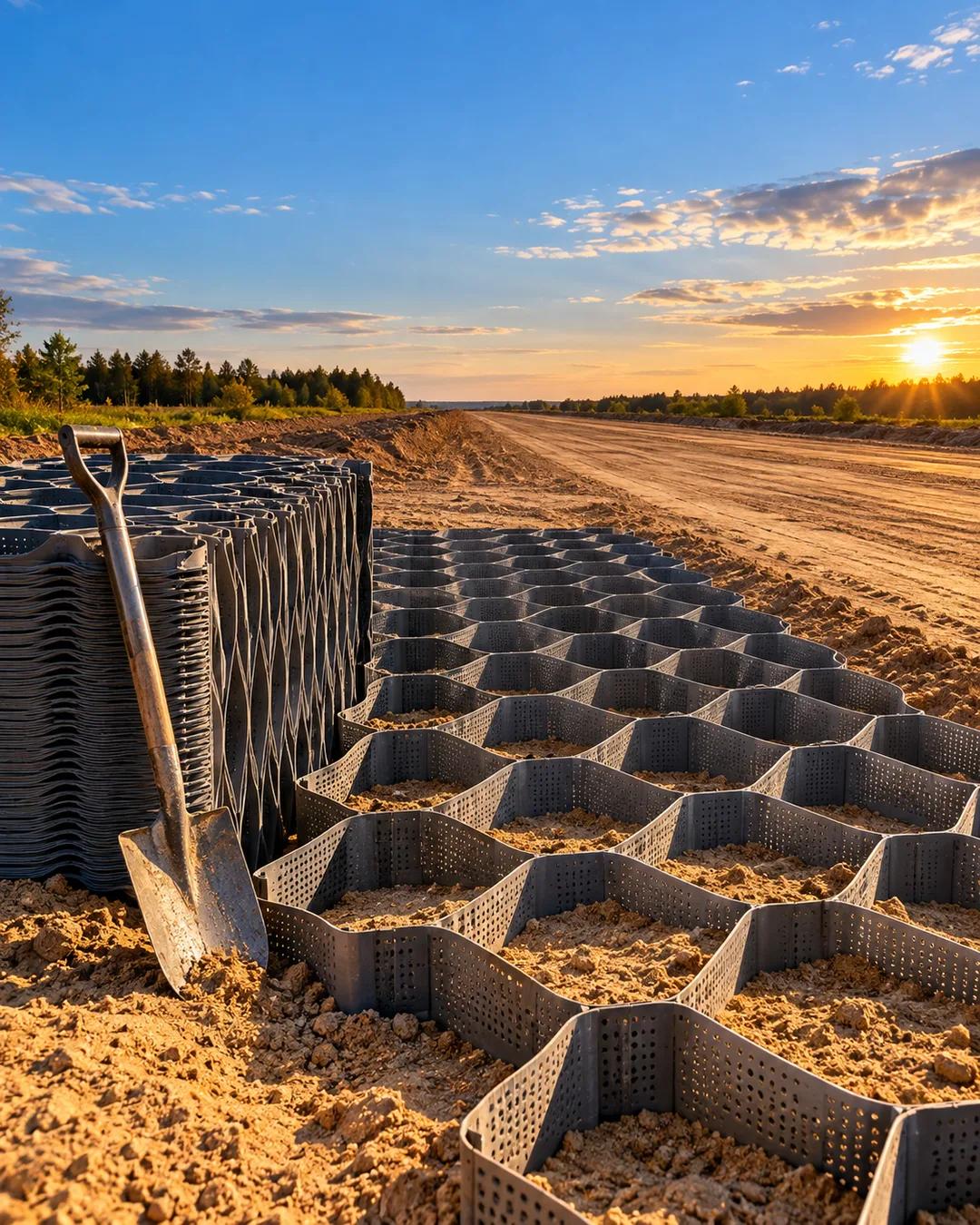
Vietnam landing strips on soft ground

Built for Vietnam
Geocells are plastic strips welded together into a honeycomb shape that holds fill inside each cell. The need was speed: landing strips and roads had to go up quickly on soft soils, and a grid of plastic that could be carried in and filled on site answered it.
Plans for the moon
NASA has researched similar technology for building on the moon. One idea is filling sandbags with regolith and using them as building blocks, and research is happening right now on the use of actual geocells. The material is light and compact for transport, which suits extraterrestrial infrastructure.
Uses on Earth
Back on Earth, geocells go under roadways and inside retaining walls, onto steep slopes that need protection from wind and rain erosion, and beneath shipping terminals.
Why use plastic instead of metal landing mats?
Military engineers in World War II surfaced soft ground with interlocking steel panels such as the perforated steel plank, and aluminum panels followed. Panels like these are heavy and had to be shipped in great numbers for each runway. A folded plastic grid ships compact and is filled with soil or sand already at the site. That moves most of the weight of the runway from the cargo hold to the ground nearby.
How would geocells work on the moon?
Moon dust, called regolith, is made of sharp, jagged grains that interlock well, which suits filling cells. Lifting mass off Earth is the dominant cost of any lunar project, so hauling light plastic and filling it with local material avoids shipping heavy construction supplies. Landing pads are a particular concern, since the engine of the Apollo 12 lander blew regolith hard enough to sandblast the Surveyor 3 probe parked nearby.
Why do plastic grids stop slope erosion?
Rain strikes bare slopes and washes loose soil downhill. Cells filled with topsoil break the slope into small compartments that hold the soil in place and slow the water running down. Roots of grass planted in the cells grow through the fill and bind it further. Where water flows faster, such as in drainage channels, cells are filled with gravel or concrete instead.
More from Practical Engineering