Korva is a scroll of the internet’s best ideas.
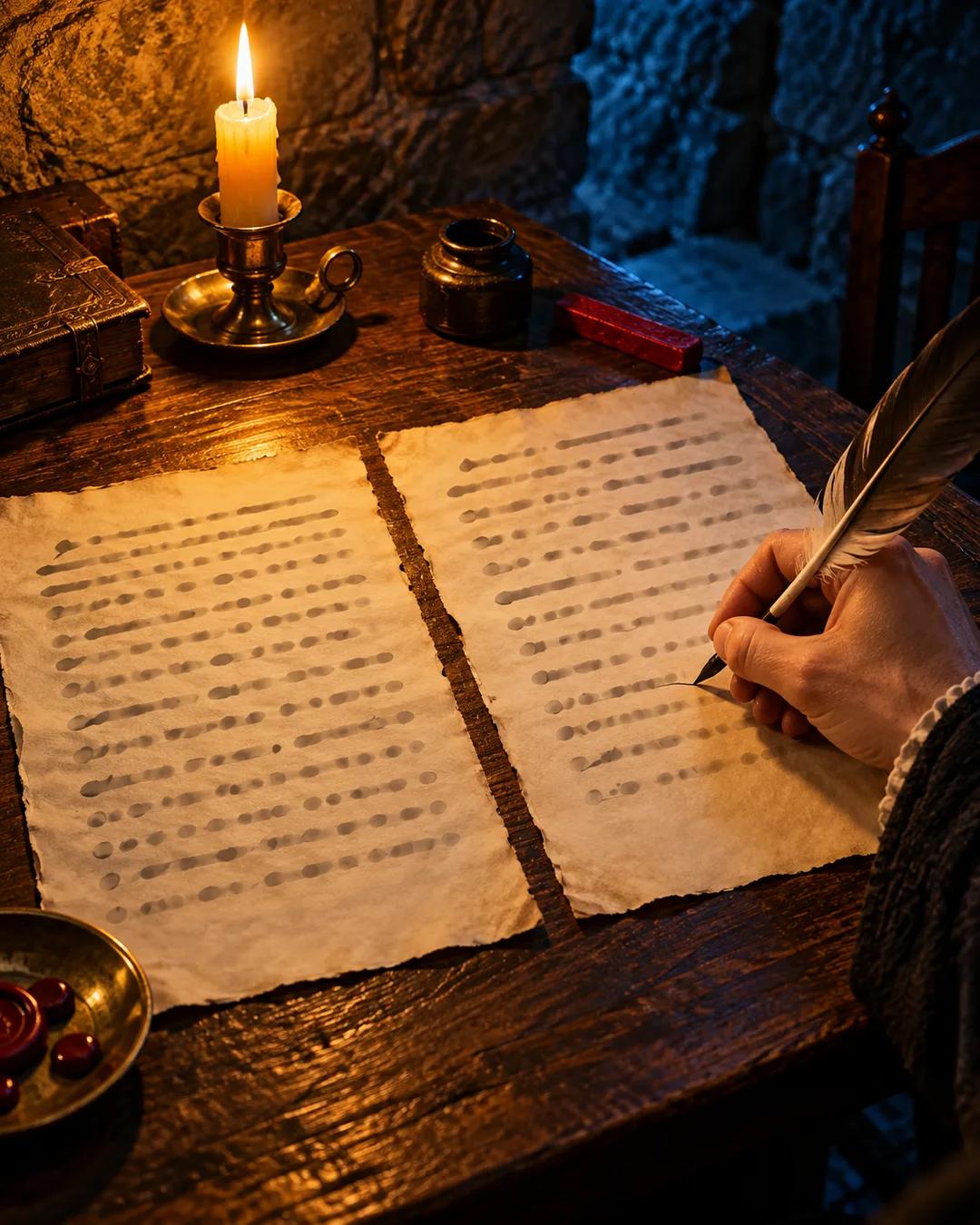
Walsingham read the plotters' letters

The Paris conspirators
The conspirators met in Paris: Guise, the cousin of Mary, Queen of Scots; William Allen, who led the English Catholics in exile; the Pope's nuncio; and James Beaton, who served as Mary's ambassador. With backing from the Pope and from Mendoza, the Spanish ambassador in London, they planned for 12,000 troops to sail from France to Lancashire, the most Catholic region of England, while a smaller force landed in Sussex to join the Earls of Northumberland and Arundel.
Francis Throckmorton linked Mary, who was under house arrest in Yorkshire, to the conspirators in London and Paris. His father had died in 1580 under accusations of corruption and a heavy fine, and his mother had raised him in secret as a Catholic. He was skint and a Catholic, exactly the kind of man Guise could use.
Mary's letters
Mary wrote in cipher to the French ambassador, Michel de Castelnau. A cache of her letters found in the Bibliothèque Nationale de France as recently as 2024 shows that she was an active conspirator.
Walsingham had moles in the French embassy, and one supplied copies of the letters between Mary and Castelnau. He waited until November 7, then burst in as Throckmorton was encoding a letter to Mary. On the rack Throckmorton refused to talk, and Walsingham predicted he would break. Three days later the sight of the rack made him fall to his knees and confess everything, including Mary's part.
How did Walsingham's men read sealed letters?
Walsingham ran an intelligence network that intercepted letters, copied them, and resealed them so recipients suspected nothing. His codebreaker Thomas Phelippes solved ciphers by counting how often each symbol appeared. In 1586 Phelippes decoded Mary's letters in the Babington plot, the evidence that led to her trial.
How did Mary's cipher letters work?
Mary's correspondence used a nomenclator, a cipher that combined substitution symbols for letters with special symbols for common words and names. A single page could look like a string of unrelated marks. The system was meant to be secure against anyone who intercepted a letter in transit. Walsingham's decoders still cracked them.
Why was Lancashire seen as so Catholic?
Lancashire sat far from London and had many gentry families who kept to the old religion after the Reformation. Priests could travel and hide in remote manor houses, and local officials were often slow to enforce the law against them. In 1569 the Rising of the North, a Catholic revolt against Elizabeth, showed how much support the old faith still had in the north.
More from The Rest Is History