Korva is a scroll of the internet’s best ideas.
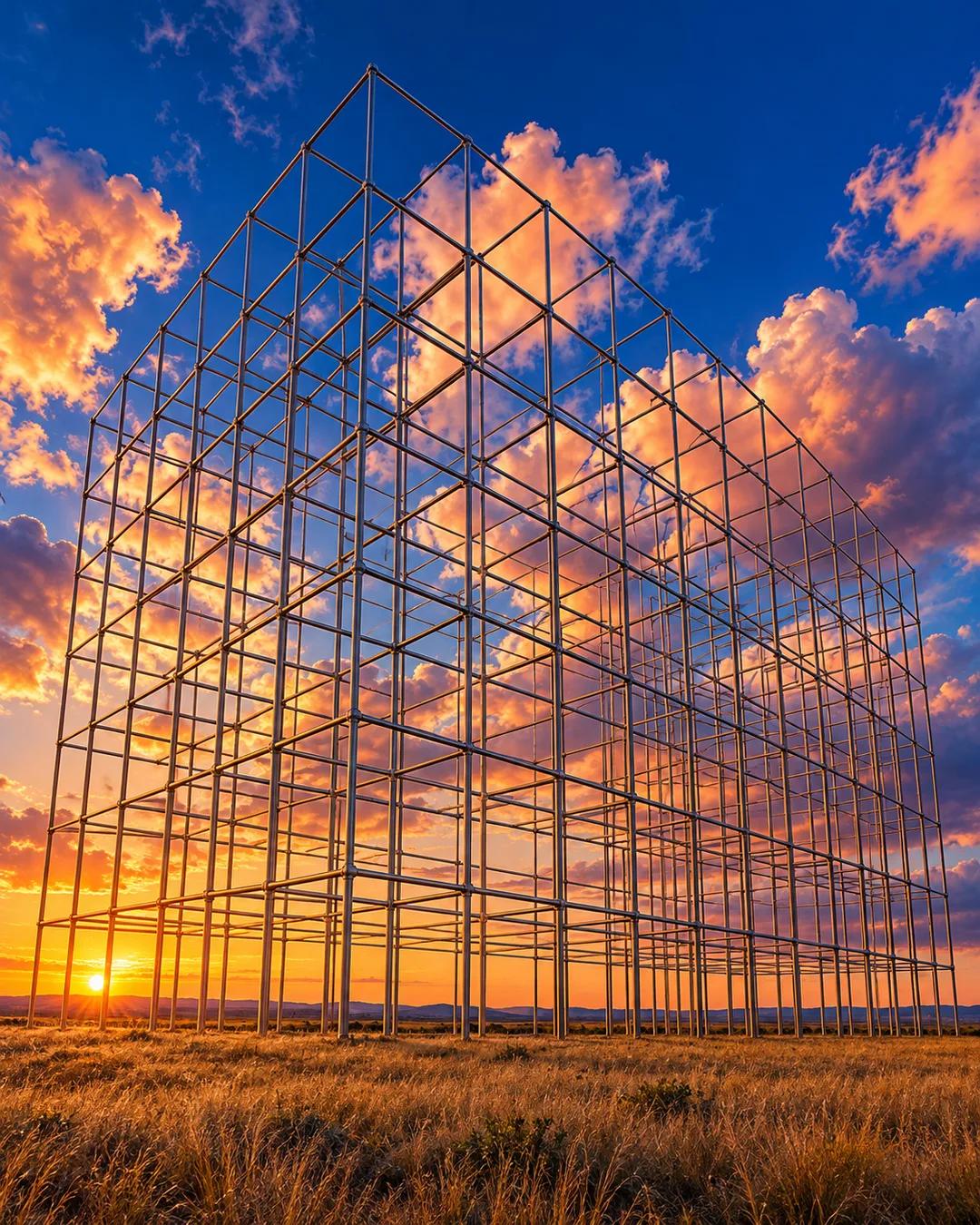
Weather-style grid cleared the muon
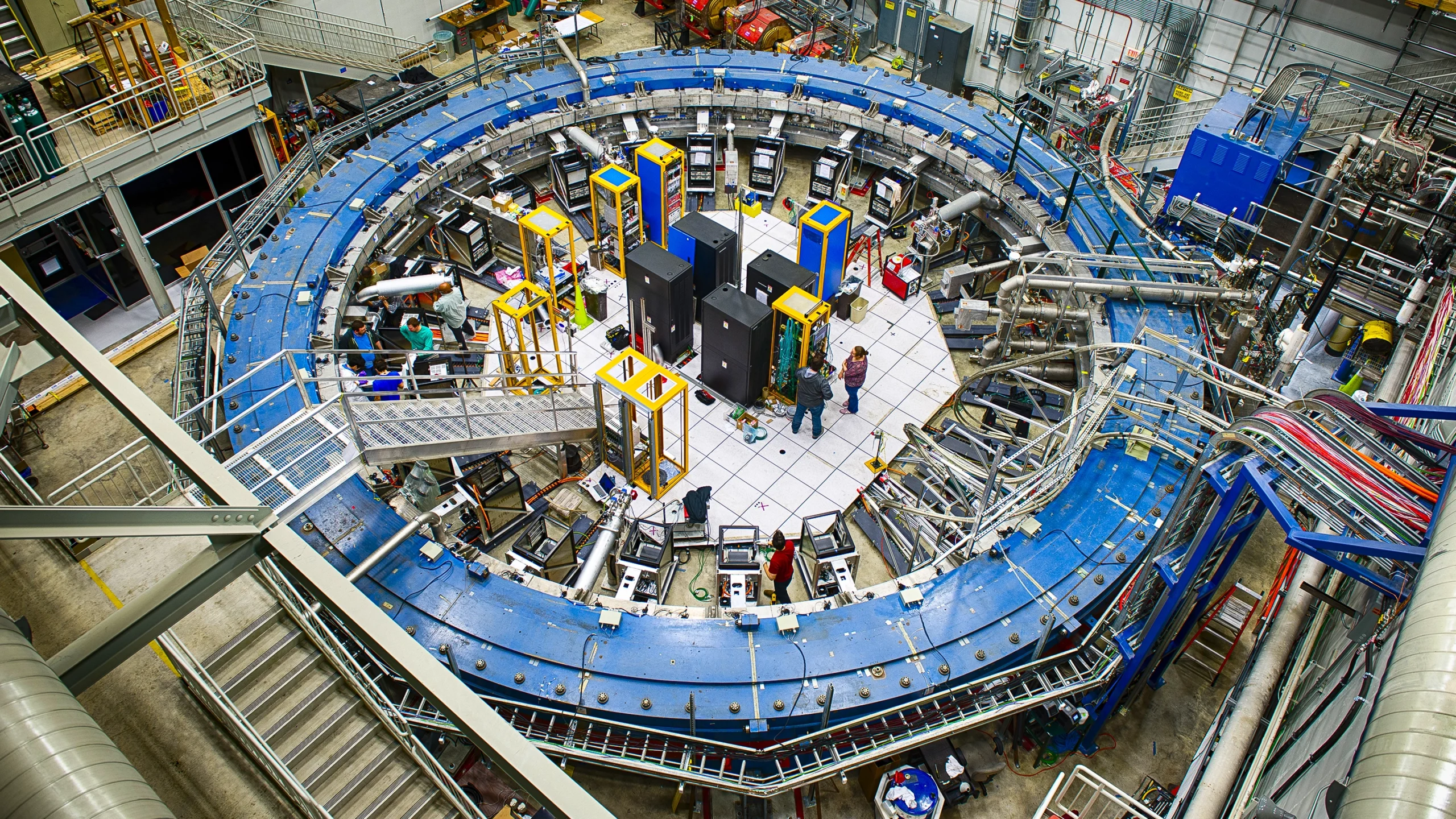
Modeling the strong force
Weather could in principle be tracked breeze by breeze, but in practice that task is absurd. Meteorologists divide the atmosphere into big boxes in a 3D grid and calculate how each box changes on average over time. Physicists facing the strong force do the same: tracking every interaction between every pair of quarks is too hard, so a technique called lattice QCD uses a big grid to simulate the overall behavior of quarks.
The BMW calculation
In 2014, the BMW group, a collaboration among researchers in Budapest, Marseille, and Wuppertal, started using it to calculate the muon's g-factor. Their first predictions were 10 times fuzzier than the data-driven ones. Low-energy particles spread out, so capturing their positions takes a huge lattice, while high-energy particles need a smaller grid with an extremely fine mesh. A decade of clever computational techniques and growing computing power finally produced grids both big enough and fine enough.
The 2021 result
In 2021, on the same day Fermilab released its updated muon measurement, the BMW result appeared in Nature. The lattice calculation had Fermilab's muons wobbling exactly as they should, and independent lattice groups have since published matching calculations. In these simulations, the extra wobble is explained entirely by known particles obeying the known laws of the known forces.
Why is the strong force so hard to calculate?
Electromagnetism is weak enough that physicists can calculate it as a series of ever-smaller corrections, each easier than the last. The strong force at low energies is too powerful for that series to work, since the later terms stop shrinking. In 1973, David Gross, Frank Wilczek, and David Politzer showed that the strong force actually weakens at very high energies, work that earned the 2004 Nobel Prize in Physics. At the low energies inside a proton, it stays strong.
How does a computer simulate quarks on a grid?
Kenneth Wilson proposed putting the strong force on a space-time lattice in 1974. Supercomputers then generate many random but physically weighted snapshots of the quark and gluon fields on that grid. Physicists average a quantity such as the muon's wobble over thousands of these snapshots. Shrinking the spacing between grid points and enlarging the grid both multiply the computing cost enormously.
Why does a finer mesh help with high energies?
A particle with high energy has a very short wavelength, and a grid can only describe features larger than its spacing. A coarse grid therefore blurs high-energy behavior into errors. Physicists reduce those errors by repeating the calculation at several spacings and extrapolating toward zero spacing. The extrapolation tells them what an infinitely fine grid would give.
More from Matt von Hippel