Korva is a scroll of the internet’s best ideas.
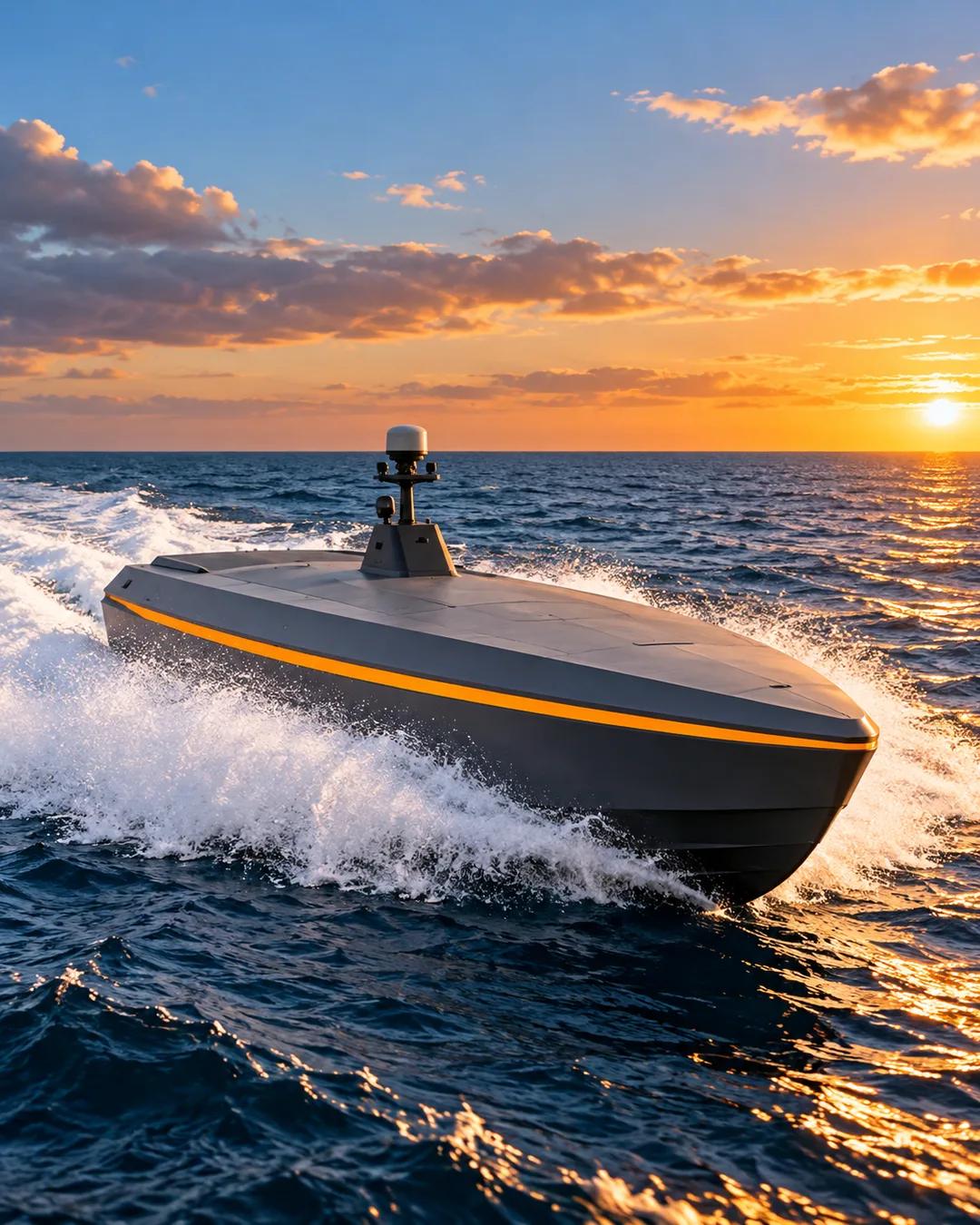
Without a crew, boats go farther

The cost of a crew
A significant share of a ship's components, cost, and labor goes toward catering to human beings on board: a separate electrical system for people, doors, bathrooms, stairs. Take them out and the whole product gets much simpler.
Range and control
A commercial 24-foot boat is unlikely to go 1,000 nautical miles, and unlikely to give its operator the control authority that Corsair has, because a commercial boat has to be built around a person riding in the middle of the ocean. Without that constraint, the naval architecture, speed, range, and payload can be optimized together.
Hybrid fleets
Navies are heading toward a hybrid fleet, with no one sure of the mix of crewed and uncrewed ships. Crewed ships carry forward-deployed decision makers, while uncrewed ships go into combat areas and conflict zones, keeping those people safe.
Why does keeping people aboard add so much?
A ship that carries people must also carry what keeps them alive and working: berthing, a galley, fresh water production, air conditioning, medical spaces, and extra fire and escape systems. Each of those adds weight, fuel burn, and maintenance. A Navy destroyer typically carries a few hundred sailors, and every one of them needs a bunk and meals.
Why does a person aboard limit speed in rough seas?
Small boats at speed slam into waves, and repeated shock and vibration injure the spines and joints of people riding in them. Standards for whole-body vibration and shock exist because of that harm. Crews slow down in rough water to protect themselves long before the hull reaches its limit. A hull with nobody aboard faces only the limit of its own structure.
Have uncrewed boats been used in combat before?
Beginning in 2022, Ukraine used explosive-laden uncrewed boats against Russian warships in the Black Sea. Russia moved parts of its Black Sea Fleet away from its base at Sevastopol afterward. The boats were small, cheap, and built quickly, which let Ukraine threaten a much larger navy.
More from All-In with Chamath, Jason, Sacks & Friedberg