Korva is a scroll of the internet’s best ideas.
Words and pictures beat either alone
The multimedia effect
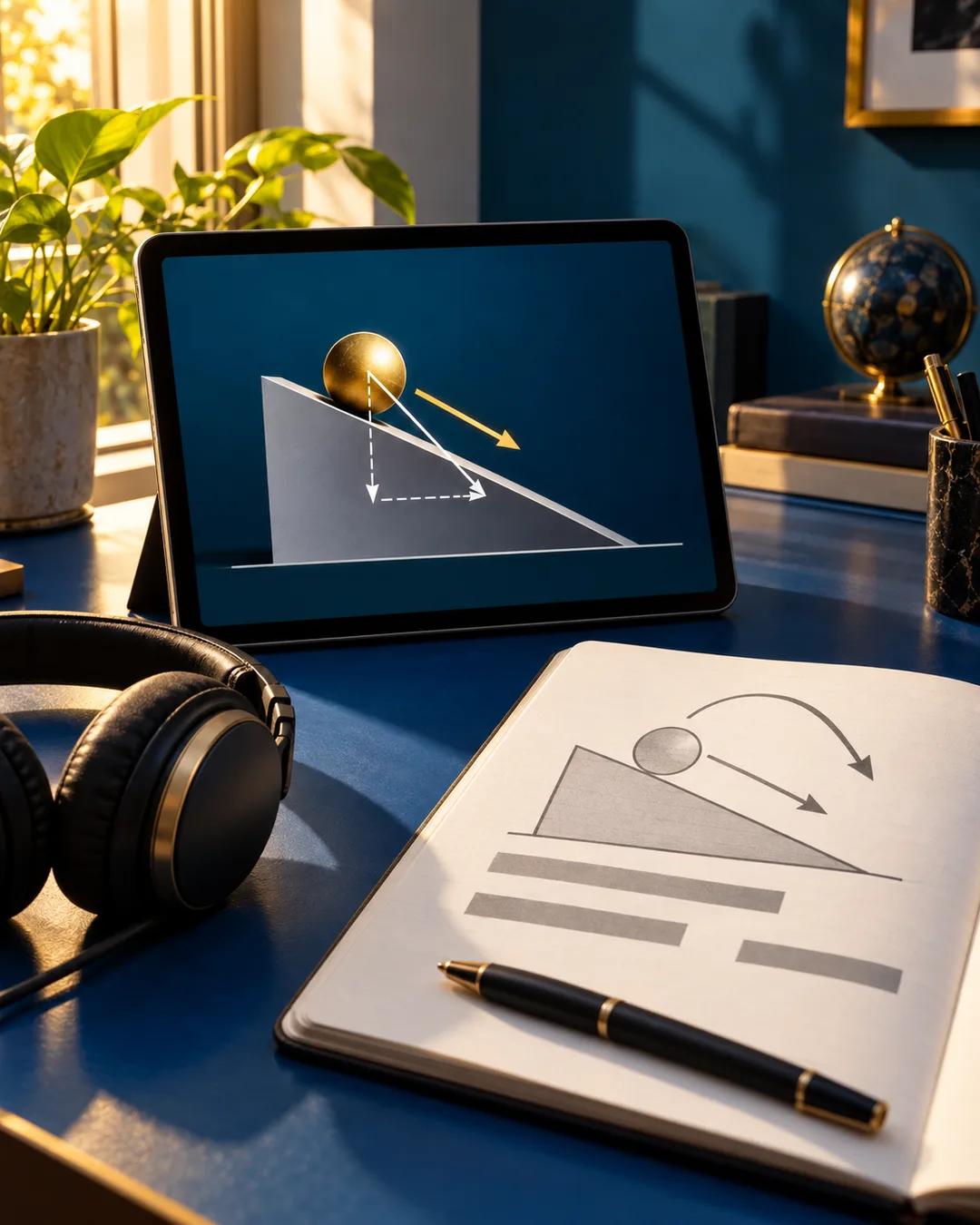
A large body of literature supports the claim that everyone learns better with multimodal approaches, where words and pictures are presented together. That is the multimedia effect, and it explains in part why videos can be such powerful tools for learning when the narration complements the visuals.
Misconceptions in physics
The best learning experiences involve multiple ways of understanding the same thing, because a person is every kind of learner at once. In research on introductory physics teaching, explicit discussion of misconceptions turned out to be essential in multimedia lessons.
What the learner does
What matters most is what is happening inside the learner's head. People learn best when they are actively thinking about the material, solving problems, or imagining what happens if different variables change.
Why do words and pictures work together?
Richard Mayer's cognitive theory of multimedia learning builds on Allan Paivio's dual coding theory from the 1970s. It holds that people process words and images through two separate channels, and that each channel can hold only a limited amount at once. When a lesson uses both, the learner builds a verbal model and a visual model and links them. Two linked representations give memory more routes back to the idea.
When can pictures hurt learning?
Mayer's experiments identified conditions in which adding material lowered scores. In his redundancy principle, learners did worse when identical words were both narrated and printed on screen next to graphics than when the graphics came with narration alone. His coherence principle found that decorative extras, such as interesting but unrelated details, also reduced learning. Both findings were reported in his book Multimedia Learning.
Why are physics misconceptions so stubborn?
In 1992, David Hestenes and colleagues published the Force Concept Inventory, a test of basic ideas about motion and force. Students in introductory physics often answered with intuitive but incorrect ideas, such as that a moving object needs a continuing force to keep moving. Many students kept those answers even after finishing a conventional course. Classes built around confronting these ideas directly later showed larger gains on the same test.
More from Veritasium