Korva is a scroll of the internet’s best ideas.
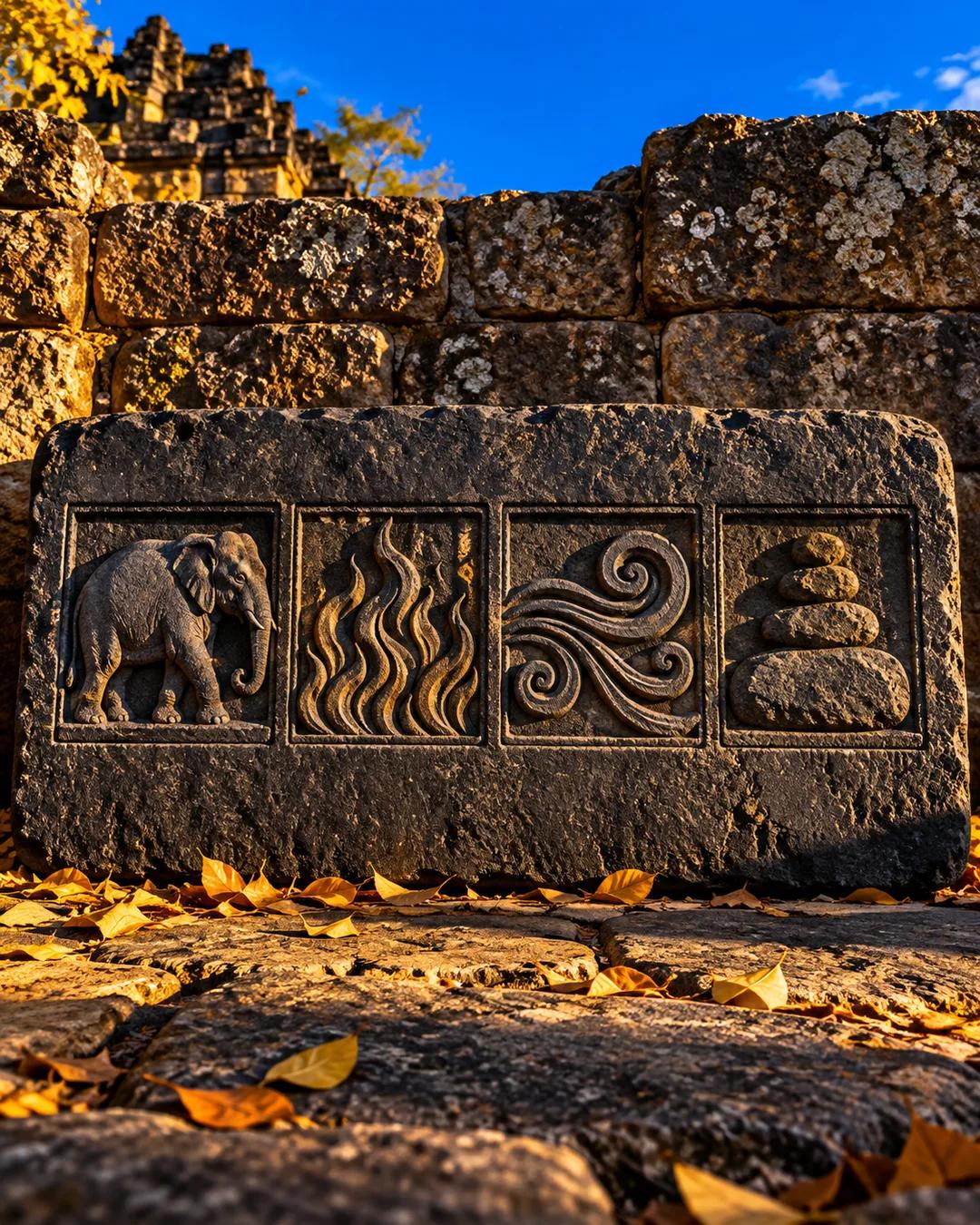
Years named like poems

How the names work
The Shaka calendar numbers years the way we do, like 1066 or 2026. The Javanese gave each number from 0 to 10 an array of possible symbols, such as the sun, the moon, and fire, and chose whichever combination made the year's name fit best. These names are called moon chronograms, or candrasangkala.
Names and moods
An 18th century Balinese chronicle names one year elephant, fire, wind, stone, for a violent eruption of Mount Agung in East Bali. Another year, in which a fierce battle took place, was named the force of violence moving upon the earth. The names let historians sense the mood of a kingdom, sometimes joy and celebration, sometimes despair and sorrow.
Prambanan's year
In 856, the kings of Mataram completed the Prambanan temple, a great temple to Shiva with eight main shrines, and named the year in its honor. In the Shaka calendar it was eight mountains of the holy monks. An inscription from the temple records that the statue of the god was finished and inaugurated that year, after the course of the river had been changed so that it rippled along the grounds.
How did the Shaka calendar reach Java?
The Shaka calendar began in India and counts years from 78 CE. It traveled to Java along with Hindu and Buddhist culture in the early centuries CE. Javanese inscriptions used it for dating from the first millennium onward. Balinese Hindus still use the Saka calendar to set Nyepi, their day of silence.
Why did Javanese poets hide years in words?
Each word stood for a number, so a short phrase could carry a date and fit inside a line of verse. Writers could also pick words whose meanings suited the event. Chronograms follow a rule that numbers are read from right to left. The phrase for the year would therefore be decoded in reverse order.
Why does Prambanan honor three gods?
Prambanan has three main temples, dedicated to Shiva, Vishnu, and Brahma, the Hindu trinity known as the Trimurti. Shiva's temple is the largest and stands about 47 meters tall at the center. Smaller shrines face the main temples and held the gods' mounts. UNESCO inscribed Prambanan as a World Heritage Site in 1991.