A Brick Through The Windshield Turned A Teenage Prank Into Police And TV News
She invented a caravan of strangers to explain the damage to her angry parents, then had to repeat it to officers and a camera crew.
 Armchair Expert with Dax Shepard · Armchair Anonymous: Out of Hand Lie
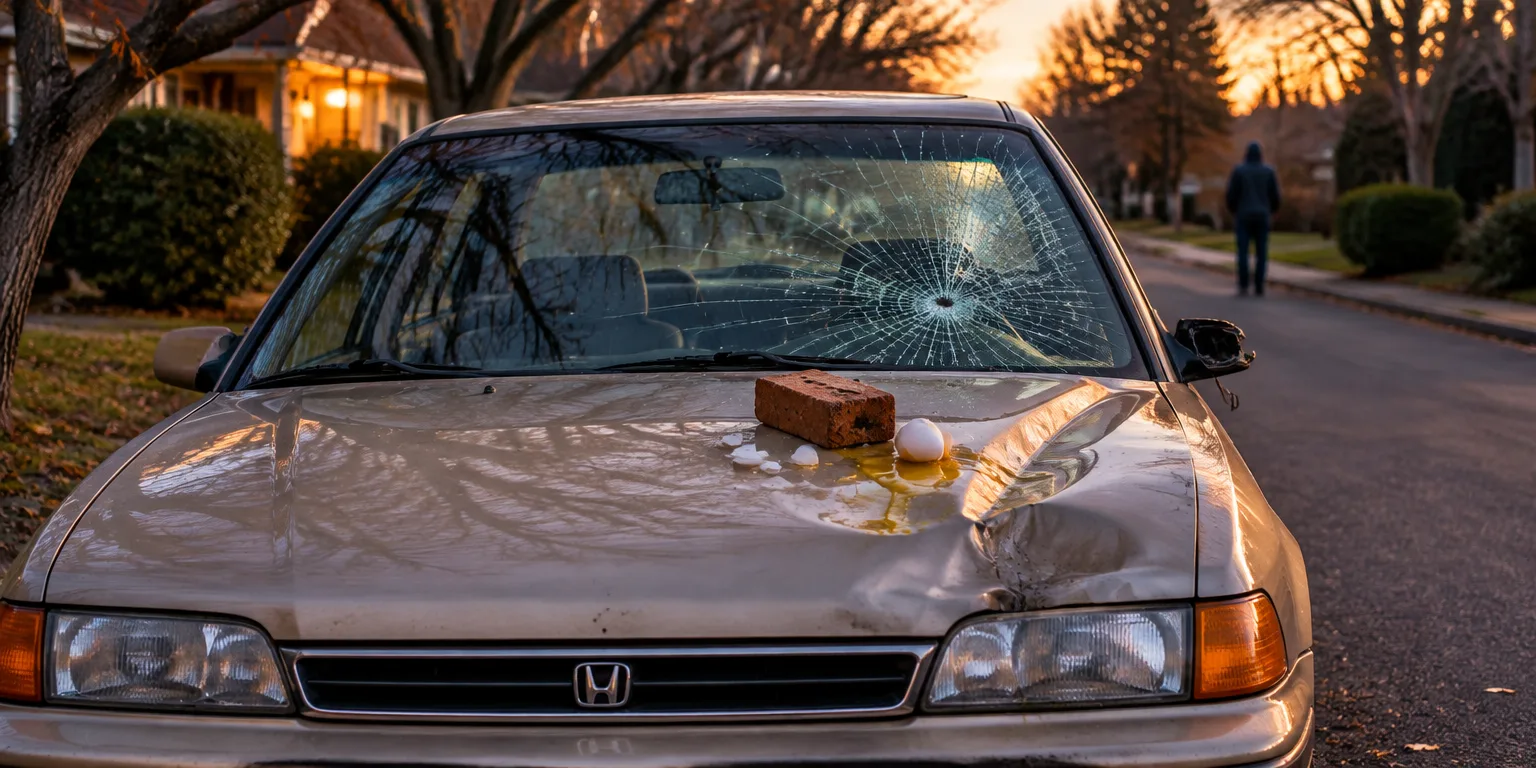
Jamie was behind the wheel of her 1991 Honda Accord when a brick slammed into the windshield inches from her face.
The tempered glass did not shatter, but it spider-cracked in every direction. Another brick had already dented the passenger side, and a friend ducking for cover knocked off the side mirror. Her foot shook so hard on the gas pedal she could barely drive.
She had taken the wheel that year for what she called "a rite of passage, maybe," and a lie she told to cover the egging run soon involved her parents, the police, and the five o'clock news.
Until her senior year in high school, she had always been a passenger, hanging out the window throwing eggs. That year she decided she wanted to be the driver. A group met at a friend's house, split up cars, and headed out with eggs.
They found a yard full of boys from the opposing school, also armed with eggs. Jamie drove while her friends hung from the sunroof and the windows, throwing eggs over the car as both sides tossed them back and forth.
Only after they passed did they realize the street was a dead end. They had to turn around and drive past the same house again. This time, the boys threw bricks.
Back at the meeting house, Jamie locked herself in the bathroom and found shards of glass in her hair and small nicks on her face. She was terrified to tell her parents what had really happened.
Her father could be loving, she said, but frightening when he had been drinking. After she once clipped her mother's parked car while backing out of the driveway, he threw a hot tea bag at her in anger.
So she recruited an older neighbor, a girl nearly four years older whom her parents had known for years. Together they invented a cleaner story: Jamie had only been turning around in a neighborhood when a caravan of cars rolled by and pelted her Honda for no reason.
Her parents believed her. They were furious about the ruined car and decided to call the police. Jamie and her friend agreed to stick to the fabricated facts, and she repeated the caravan story to the officers, who said they would look into it and found nothing.
The next day at school, she heard the same house had egged another friend's car. She thought the trouble was over. Then she came home and learned her mother had called the local news.
Her mother drove the battered Accord back to the street for the cameras. The older friend sat in the driver's seat and used the cracked windshield to obscure her face, the way blurred faces stay anonymous on television, while she told the false story for the broadcast that evening.
Jamie eventually confessed to her mother, who said she "knew something wasn't right with that story."
The simpler truth would likely have been easier to tell, that a silly egging prank had escalated when the other side reached for bricks. Jamie thought her friend, whose parents were not as strict, probably told them the truth, but by then her own lie had already aired.
Questions people ask
Could Jamie have gotten in trouble for lying to the police?
Yes, in most states giving false information to police can be a misdemeanor, even if no one is arrested. Officers can also charge obstruction or filing a false report, and penalties can include fines, community service, or jail time.
Why didn't the windshield shatter completely?
Tempered glass is heat treated so it breaks into small, dull pieces instead of sharp shards. A hard hit can make it crack in a spiderweb pattern while staying in the frame, which is why Jamie saw an imprint and loose bits in her hair without a full collapse.
Why do small cover stories often grow instead of fading away?
One way researchers describe this pattern is as escalation of commitment. Once someone tells a lie to avoid punishment, admitting it can feel riskier than adding details, especially when parents, police, or cameras are involved. Each new audience raises the cost of confessing.