A Cowboy Found a Bone That Rewrote America’s Human History
He knew the bone was ancient and gigantic, but museums dismissed him for 30 years.
 The Shawn Ryan Show · #358 Ed Barnhart - Inside America’s Forgotten Pyramid Civilization
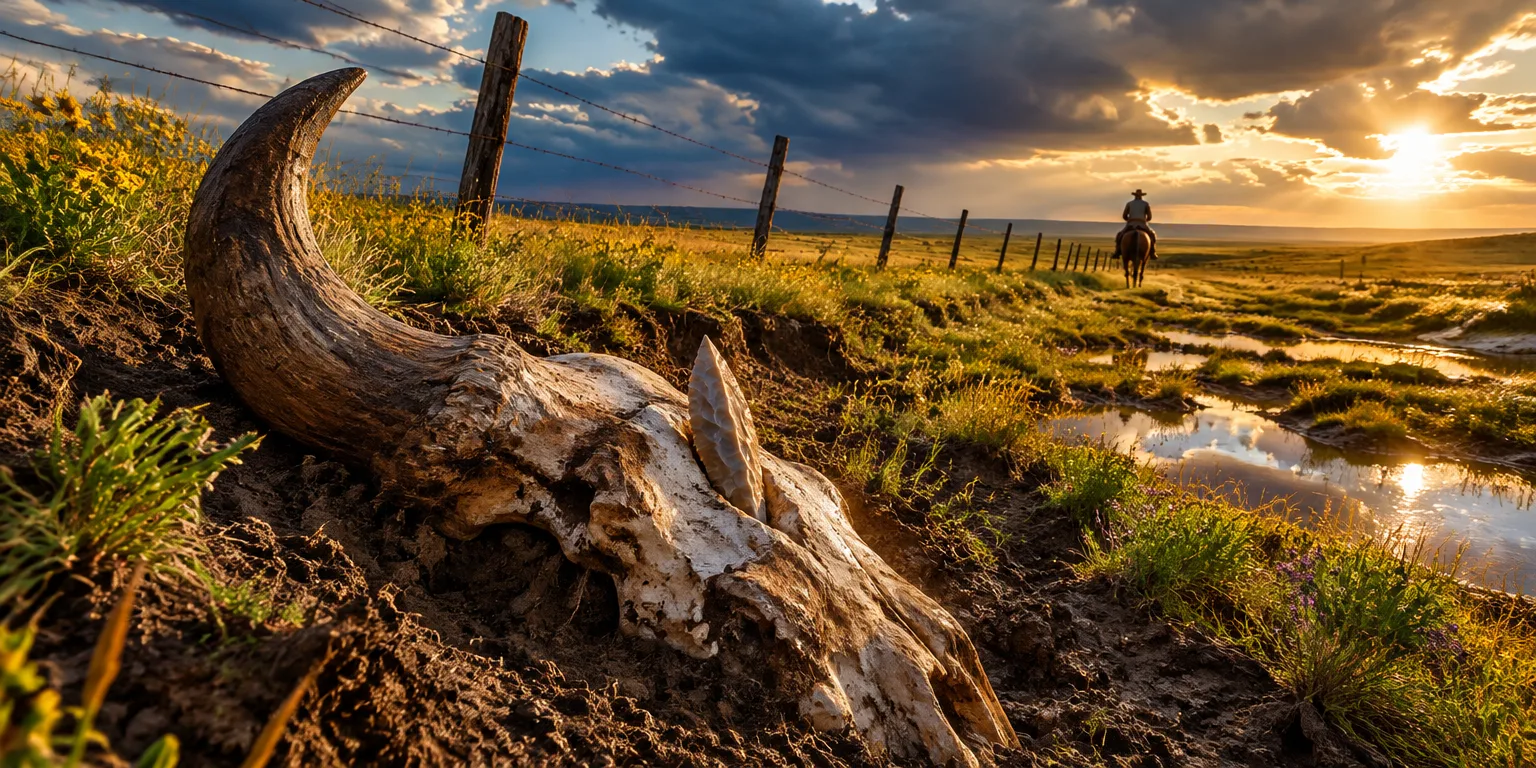
After a storm tore across the ranch, George McJunkin set out to walk the fences and make sure everything was sound. He stopped at something strange, a huge old bone with a stone point driven so deeply into it that it was still there.
McJunkin was a Black cowboy who had been born enslaved and later freed, and who was working as a ranch hand in his older years. He had gone to school and learned geology, and he had spent years hunting buffalo alongside Native American hunters.
That history told him two things at once. The point was not a modern arrowhead, and the bone was not from any bison he knew, but from an animal about three times larger.
He had found strong evidence of an ancient kill preserved in bone. The discovery would eventually be recognized as the Folsom site, about 9,000 years old and tied to finely made Folsom stone points.
Its importance was the date. The prevailing claim at the time was that people had arrived in the Americas no earlier than about 3,000 years ago. McJunkin’s bone said they had been there thousands of years earlier, hunting giant animals that no longer exist.
In the account told later, the experts would not listen for about 30 years. People at the Smithsonian and the Denver Museum dismissed him as an old cowboy.
He had read the evidence correctly. The bone belonged to an extinct bison, a towering animal that could stand 10 to 12 feet tall.
Those were the animals the first Americans pursued on foot with stone tipped weapons, bold hunters taking down prey far bulkier than a modern bison. Other early camps preserve mastodon bones bearing wounds where Clovis points pierced them.
It took decades for science to agree with the fence rider. When it did, one man’s sharp eye after a storm pushed back the human story in America by millennia.
Questions people ask
What is a Folsom point?
Folsom points are finely chipped, fluted spear tips made about 9,000 to 10,000 years ago. Makers removed a long flake from the base to thin the point so it could be tightly bound to a spear, a skilled and distinctive technique that archaeologists use to identify the culture.
How do scientists know the Folsom site is about 9,000 years old?
The age comes from several lines of evidence, including the extinct animal bones themselves, the distinctive style of the points, and later radiocarbon dating of bone and charcoal from the site. Excavations in the 1920s confirmed that the points lay undisturbed with the extinct bison remains, ruling out a recent burial.
What else is known about George McJunkin’s life?
McJunkin was born into slavery in Virginia in 1851 and freed as a child after the Civil War. He worked as a cowboy in Texas and New Mexico, taught himself geology, astronomy, and natural history, and became a respected ranch foreman. He died in 1922, several years before archaeologists excavated his discovery and confirmed its importance.