A Host Blindfolds His Guests So Strangers Skip Small Talk
Without sight, guests skip basic questions and start sharing feelings, then spend much of the night matching voices to faces.
 Today, Explained · We should party more
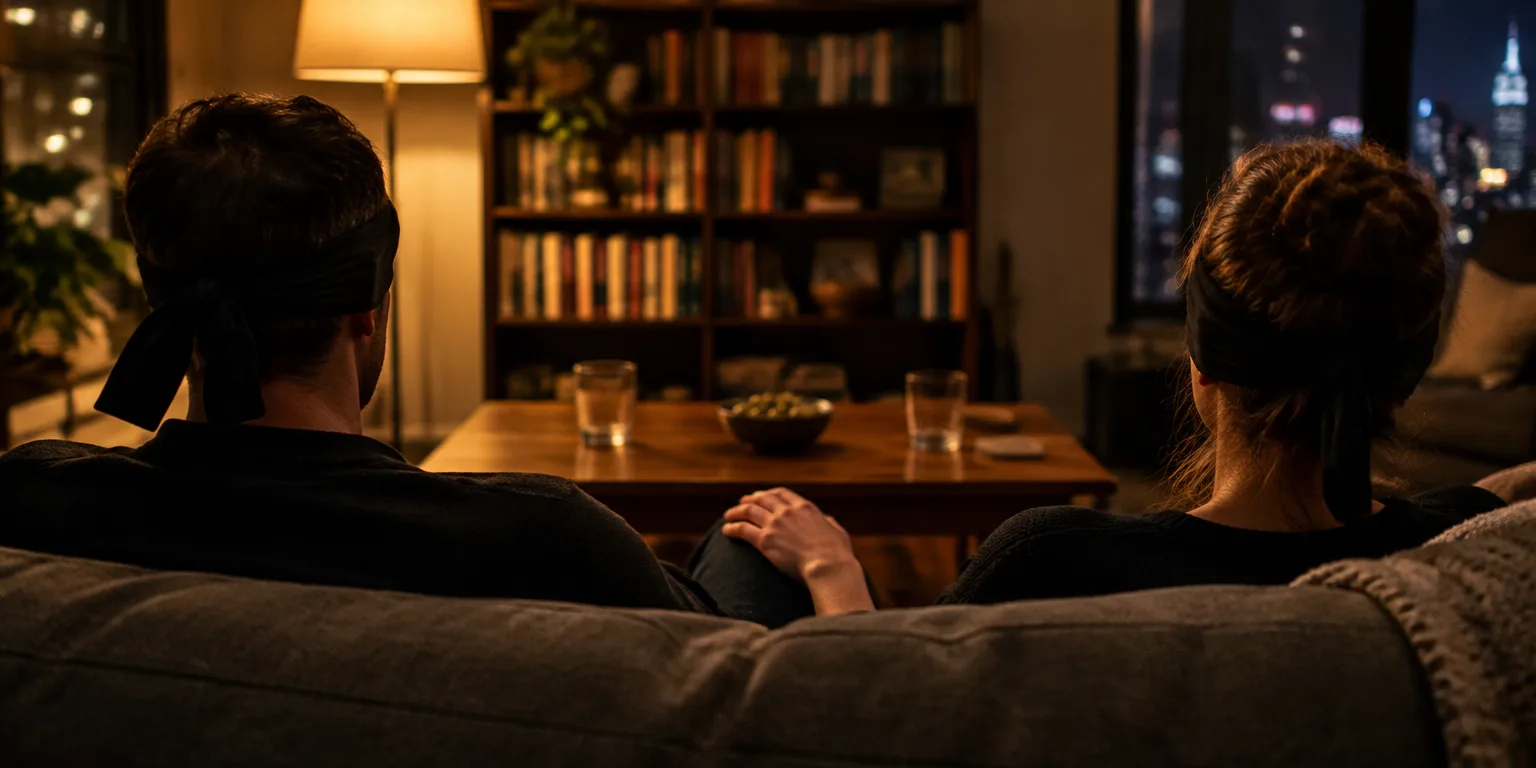
You arrive at the apartment and get buzzed up. At the door, a friend of the host you have never met slips a blindfold over your eyes, takes you by the hands, walks you through the apartment, and sits you down.
He takes your hand, puts it on a stranger's knee, introduces the two of you, and tells you to raise your hand if you need anything, including a drink. Then he leaves you to talk.
The host is Victor Jeffries, a New Yorker who is serious about creating a magical and memorable experience. He builds the night around 25 carefully chosen guests, and the curation matters because the guests cannot know each other in advance.
The idea lands at a lonely moment. A majority of Americans describe themselves as isolated, and in 2023 only about 4 percent said they attended a party over a holiday or weekend.
When a sense is taken away like this, Jeffries says, conversation changes. Guests skip the basic questions and start going into feelings. The talks run in 10-minute cycles.
Then a chime signals the switch, aides steer guests to fresh partners, and each blindfolded guest starts over with someone new. As Jeffries puts it, "we go through this cycle maybe three times."
Only then do the blindfolds come off, and you finally see the person you just spoke with. Much of the evening goes to tracking down the first two people you talked with, voices you know but faces you have never seen.
He likes that edge: "I love pushing up to the line to make people feel uncomfortable in the safest of ways, just to kind of switch it up a little bit."
Questions people ask
Isn't it awkward to talk to a stranger when you cannot see them?
Yes, at first, and that is the point. Social psychology research finds that eye contact and appearance judgments shape first impressions within seconds, so removing them lowers self consciousness about looks and status. Many people report that talking without being seen feels freer, though some remain anxious until the blindfold comes off.
How would you pick guests for a party like this?
Start with separate friend groups, coworkers from different jobs, neighbors, and friends of friends, and confirm that the key guests are strangers to one another. Keep the total small enough that you can manage rotations, around 20 to 25 people, and have one or two trusted helpers to guide, serve drinks, and watch for discomfort.
What if someone feels unsafe or wants to stop?
Build in clear outs from the start. Tell guests what will happen before they arrive, keep helpers in the room, and give a simple signal, like raising a hand, for help, a drink, or a break. Keep the cycles short, around 10 minutes, and let anyone sit out or remove the blindfold without having to explain.