A Perfect Safety Record Can Mean Nobody Is Checking
For drone crews, a flawless inspection record is often a sign the inspection has become decoration.
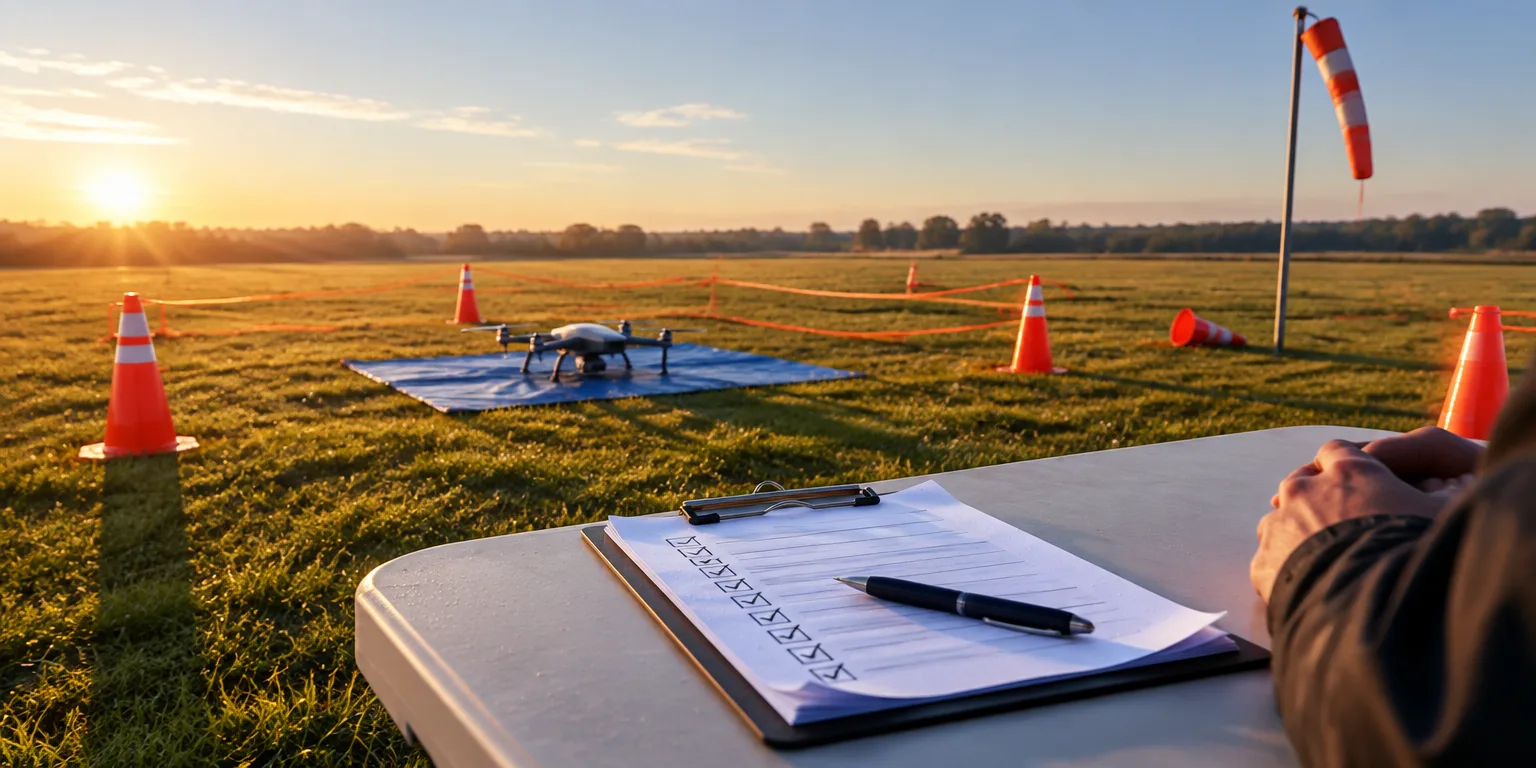
 Sky Commander Academy · S9E30: Safety Metrics That Actually Mean Something, Stop Measuring Only Crashes and Start Measuring the Signals That Predict Them
A signed checklist proves little unless someone tests whether it works. A control that lives only on paper offers reassurance without protection.
The rule of thumb is: "If it never finds a defect in a thousand flights, your crew is just pencil whipping the form," meaning filling out the form without really checking the aircraft.
The distinction is between two kinds of counting: one count records signatures, the other records serious problems caught before takeoff.
Common barriers include pedestrian exclusion zones, an observer watching a blind spot, and a hard limit against flying when winds exceed 15 knots. The thousand-flight example applies the same test to the checklist: a working check is expected to turn up problems over many flights, rather than come back clean every time.
By that logic, a spotless record can be reassuring paperwork rather than proof of protection. It may mean quiet flights reflect fortunate timing rather than a system that would catch the next problem.
The closing question asks anyone with a perfect record whether the system is strong or the luck has simply held. Hidden risks may just not have combined at the wrong moment yet.
Questions people ask
What does pencil whipping mean?
It means filling out a form without doing the work, signing a checklist as if an inspection happened. The term describes signing a preflight checklist without actually checking the aircraft.
How often should a good checklist actually find a problem?
There is no universal number, because it depends on the equipment, environment, and operation. Over many flights, a checklist that is actually being used should catch something.
What is a safety control in this context?
It is a specific barrier meant to interrupt the path between a hazard and harm. Examples are a pedestrian exclusion zone, an observer assigned to a blind spot, and a hard limit against flying when winds exceed 15 knots.