An Immigrant's Deportation Fight United Justices Left and Right
Her mother came out from St. Louis, two children fidgeted in the seats, and five justices found common ground.
 Original Jurisdiction · ‘There’s Always A Way’: Jaime Santos
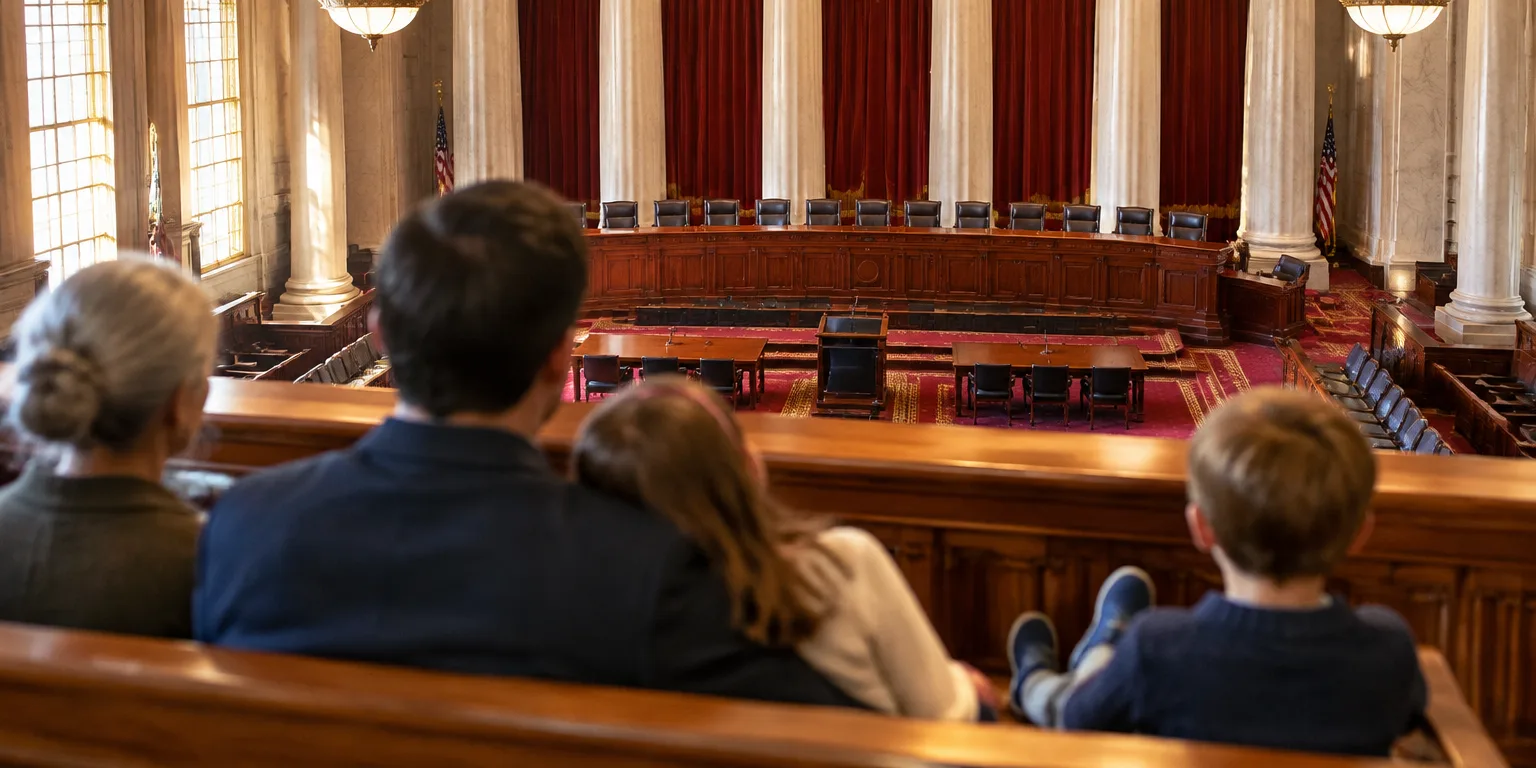
High in the benches of the Supreme Court, the family of lawyer Jaime Santos fidgeted through her argument. Her mother had come from St. Louis, and two of her three children sat with her husband.
One of those children had already voted no. "That sounds too boring, Mommy. I'd rather go to school," Santos recalled one child saying. The other two came, and one got scolded for trying to lie down on her father's lap during the argument.
Santos, a Washington appellate lawyer, was arguing for Situ Wilkinson, an immigrant trying to avoid deportation. Wilkinson said being removed would cause serious harm to his young son, who is an American citizen, and asked to stay under a law called cancellation of removal.
The case mattered because a lower court had said judges had no power to review that kind of immigration decision. The Supreme Court disagreed and reversed, ruling that courts could review it. The majority united the Court's three Trump appointees with Justices Sonia Sotomayor and Elena Kagan.
For Santos, the unusual five vote coalition was the point. In an immigration case, she said, counting to five votes is hard, and winning required a careful textual argument, strong precedent, and a case chosen because it could make good law across the country.
She said she valued having time for thorough research, work that busy practice often squeezes and that she rarely gets to do. At every stage of briefing and in every practice argument, she brought in immigration advocates.
She said she does that deliberately, and takes such cases only when she believes they can win. She does not think lawyers should bring a long shot case to the high court on behalf of vulnerable people just to get an argument.
Santos said she grew up poor and seldom talks with her childhood family about her complicated, technical work. In that courtroom, Santos said her mother could "completely understand the gravity of what I was doing."
Questions people ask
What is cancellation of removal?
It is a form of relief that allows some longtime immigrants facing deportation to stay in the United States. They must show, among other things, that removal would cause exceptional hardship to a close relative who is a citizen or permanent resident, such as a young child.
What did the fight over jurisdiction mean in plain terms?
The question was whether federal courts have jurisdiction, meaning legal authority, to review an immigration agency's hardship decision. The Third Circuit said no, which would have left the agency with the final word. The Supreme Court said yes, preserving court review.
Is it unusual for liberal and conservative justices to join the same majority?
Yes, such cross-ideological majorities happen, but they are notable in immigration cases, which often divide the Court. Here, justices who often disagree about immigration and agency power agreed on what the law's text required about court review.