An Investor Says Thinking Can Steer a Robotic Hand
An investor says a device placed under the skin picks up signals once meant for a missing hand.
 This Week in Startups · Founders Are Now Sending VCs a File Written for AI
D.A. Wallach, an investor who backed the Texas company Phantom Neuro at seed about three years earlier, described a way for upper-limb amputees to steer a robotic hand by thought. His account, given in November 2026, is the sole basis for this story, and no outside results were checked.
Picture losing an arm below the elbow, then trying to move fingers that are gone. Wallach said the brain still sends those orders through nerves in the stump.
Wallach said the implant goes just under the skin and above the muscle in the stump. Wallach said it detects the nerve signals once meant for the missing forearm and hand.
In his description, those detected signals let a wearer direct a robotic prosthesis. Wallach said, “you can control a robotic prosthetic limb just by thinking about it.”
Wallach said it can be done as an outpatient, minimally invasive procedure that takes less than an hour.
Wallach said robotic hands have grown capable, but the ability to control them has lagged.
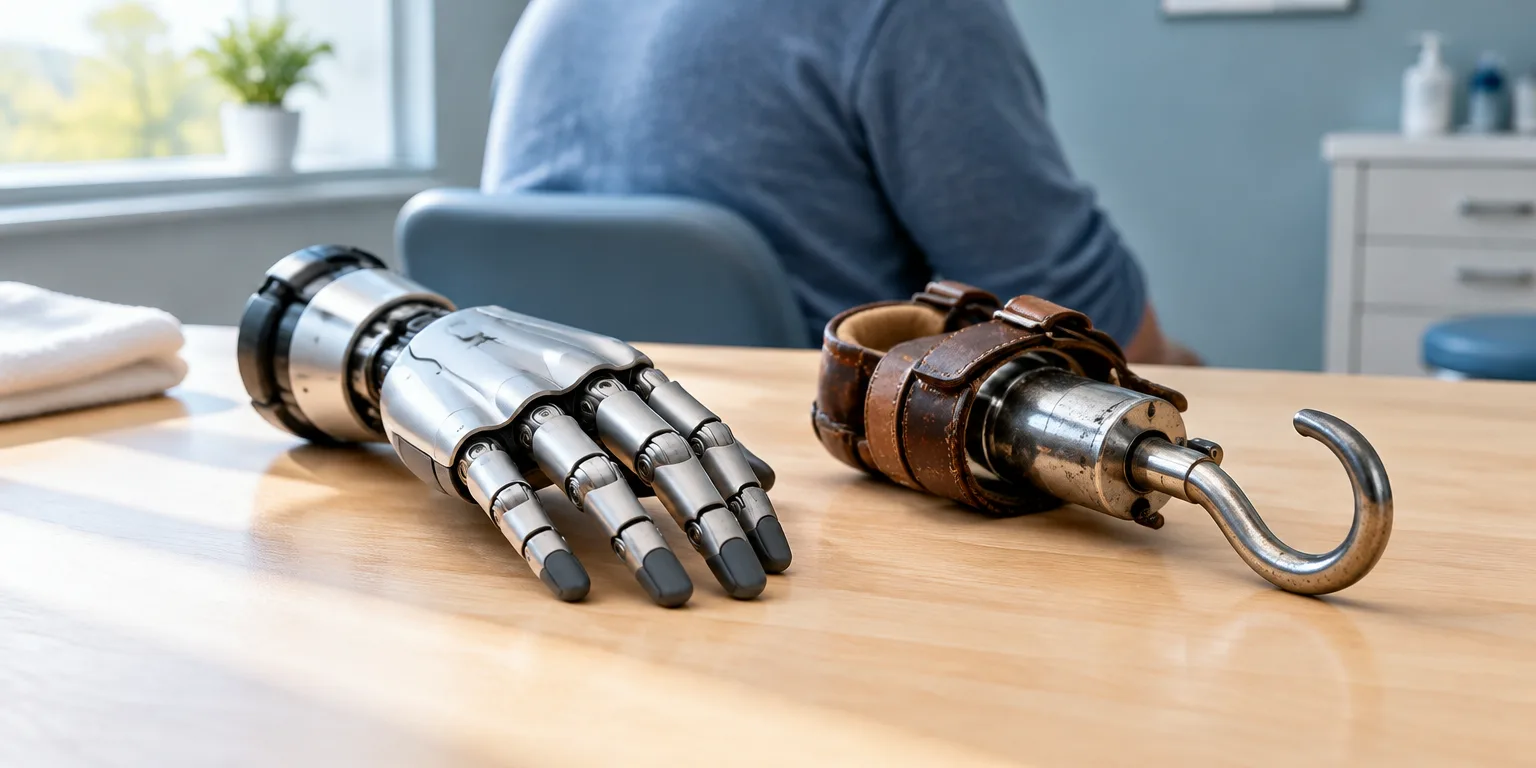
That gap also explains a jarring detail he offered. Wallach said many amputees still use a hook, which he described as essentially Civil War era technology, because newer hands are hard to operate.
The work is early and unverified. Wallach said he was excited because the first patients were implanted a few months before November 2026 during an Australian trial, and video he watched showed a user moving the prosthesis effortlessly.
Wallach said many amputees are veterans, and he pointed to the war in Ukraine as a reminder of how many people are losing limbs in current fighting.
Questions people ask
Why do many amputees still use a hook if robotic hands exist?
Wallach said a hook is “basically the best thing that's out there” for many users. He said robotic hands have grown capable, but the ability to control them has lagged.
When could ordinary patients get this implant?
As of November 2026, Wallach said it was being tested during an Australian trial. Wider use would normally require larger trials and clearance from medical regulators, so ordinary access is still some way off.