Vitamin C Keeps Collagen Enzymes Switched On by Rescuing Their Iron
During normal collagen weaving the iron loses an electron and the enzyme stops, then vitamin C hands back an electron and restarts production.
 Glow Theory · Vitamin C for Skin: What Actually Supports a Healthy Glow?
Forget boosts. Vitamin C does not cheer collagen along from the sidelines, it keeps the assembly line from seizing up.
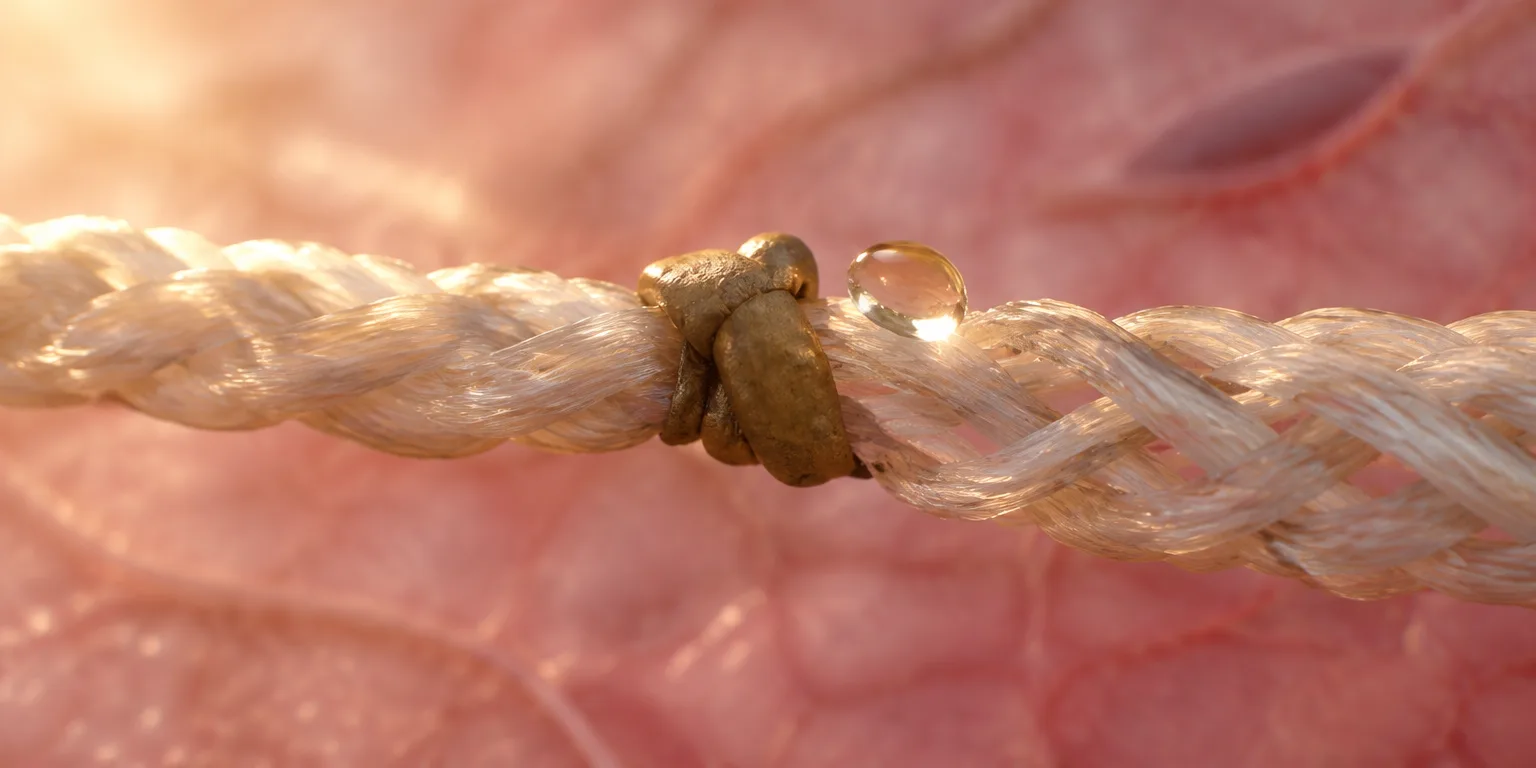
Deep in the dermis, the lower layer of skin, sit cells called fibroblasts, microscopic factories whose job is to make collagen. They braid long chains of amino acids, mainly glycine and proline, into a triple helix that works like a tightly wound rope.
A rope is only as strong as its weave. Two enzymes called prolyl and lysyl hydroxylase add the links that hold the strands together, a step that gives skin its plumpness and firmness.
Those enzymes can only work with iron at their center in a particular electrical state, called ferrous, which carries a plus-two charge. As the enzyme weaves, the iron loses an electron, shifts to a plus-three state called ferric, and the enzyme shuts down completely.
That is where vitamin C steps in. It dives into the fibroblast, hands an electron back to the iron, and returns it from plus-three to plus-two, effectively flipping the enzyme back on for another round.
Without that rescue, the triple helix cannot form properly. When vitamin C is missing for long enough, the breakdown becomes scurvy, with bleeding gums and reopening wounds, because collagen synthesis stalls and tissue cannot be maintained.
Seen that way, vitamin C is an active biological tool, not just a brightening serum. Skin products aim to raise vitamin C levels locally, and without that electron donation, the enzymes stop working and sturdy collagen cannot be built.
Questions people ask
Can you just put collagen on your skin instead?
No. Collagen is a large, braided protein that is too big to pass through the skin barrier in a useful form. The body has to build it inside the dermis with fibroblasts and helper enzymes.
Does eating vitamin C help skin, or does it have to come from a serum?
Yes, diet matters because humans cannot make vitamin C on their own. Bloodstream delivery supports fibroblasts throughout the body, while a well formulated skin product aims to raise levels locally where sun and age deplete them.
Why was scurvy so common among sailors?
Sailors on long voyages went months without fresh fruit or vegetables, the main sources of vitamin C. When stores ran out, collagen synthesis faltered, causing bleeding gums, loose teeth, poor wound healing, and fatigue.