At 69, She Turned Wilting Leis Into Glass Beads That Last
Randy Spikoki prices her work at $20 an hour plus materials, but says praise from Native Hawaiians matters more than sales.
 Marketplace · The Fed vs. AI inflation
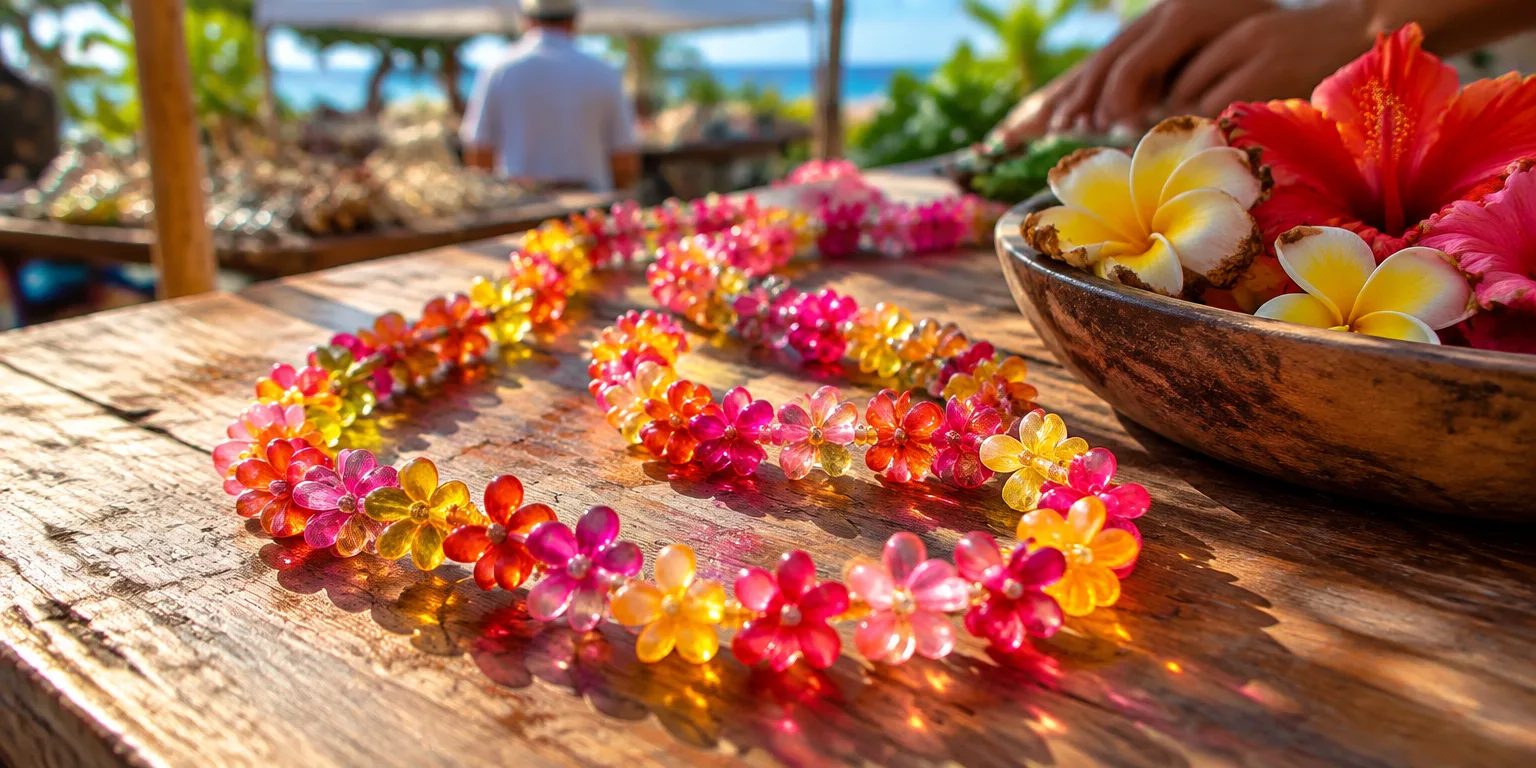
At her booth on Maui, Randy Spikoki watches shoppers pick up her leis and hold them to the light. The loops of flowers are bright as fresh blossoms, but each petal is made of tiny Japanese glass beads.
They will never brown, droop, or wilt. That permanence is the point, and it is also her livelihood.
Spikoki, 69, is six years into a second career as an "artisan with the Lahaina Art Society," as Spikoki calls herself. She did not plan it, and in that way her story fits a much larger shift, with data from Monster.com showing that 64% of job seekers are applying outside the industry they came from.
For 30 years, she worked in human resources and organizational psychology. She loved it, she said, and described herself as a sponge for the field.
Then, in 2016 or 2017, she had three foot surgeries and could not work. Her husband, a minister, took work in Hawaii, and she moved with him as a minister's spouse with time on her hands.
People welcomed her with gifts of Hawaiian leis, the garlands of flowers given to mark affection, greeting, or celebration. She watched them wilt, and thought of the beadwork she was already doing.
She had been making fiber beads, and the idea arrived plainly: she could make those flowers last out of glass beads. Then, as she put it, it was off to the races.
She says she is still learning how sales move with tourist traffic. About three weeks before her mid-November 2026 interview, she had a $1,500 day. About two weeks before that interview, she made only $130.
Spikoki said she is "learning the cadence of the shoulder season" and "learning the cadence of the tourists." She prices on a simple rule, about $20 an hour plus materials, so a piece that takes four hours might sell for $120 to $150.
What she prizes most is not always a sale. When Native Hawaiians stop at her booth, she said, they often tell her that a piece reminds them of home.
That recognition, Spikoki said, "is truly better than purchasing it because they are recognizing my ability to represent their culture in a way that's classy and appropriate, not appropriating."
For years she still called herself retired. Only this year did she start saying she is no longer retired.
She describes this stage of life as its decline, and also as growth she never expected. She said she wakes up with "this passion to just jump out of bed and start creating."
Questions people ask
What is a Hawaiian lei?
A lei is a garland, often made of fresh flowers, leaves, shells, or other materials, worn around the neck. In Hawaii, leis are given to welcome people, celebrate graduations and weddings, honor the dead, and mark many other occasions.
What is the Lahaina Art Society?
It is a community arts organization based in Lahaina, on the west side of Maui, that shows and sells work by local artists. Lahaina suffered devastating wildfires in 2023, and local art groups have been part of the town's cultural and economic recovery.
How common is it to start a craft business after retirement?
It is fairly common. Current Population Survey data show more than a million Americans age 65 and older are self-employed. For many, health events, caregiving, or layoffs close an earlier career, while crafts, consulting, and small retail offer another path.