Cahokia Grew After Mass Sacrifice Was Sealed Inside a Low Mound
Inside Mound 72, archaeologists found rows of strangled women and a pit of men, women, and children, some still alive when thrown in.
 The Shawn Ryan Show · #358 Ed Barnhart - Inside America’s Forgotten Pyramid Civilization
The last pit in Mound 72 held a bunch of white sand, put there for some unknown reason. Then the killing started at its edge, with skulls bashed and bodies thrown in, men, women, and children together.
That pit held over 50 people. A couple were still alive, and the positions of the bodies show they had tried to claw their way out.
Edwin Barnhart, an archaeologist who studies early Indigenous history in the Americas, calls the low mound at Cahokia the site of a dark and violent reordering. He thinks the small rise holds about 260 bodies in separate groups that were sacrificed, just as residents ripped down an older village of wood buildings to start building pyramids.
The first to go in, he says, were about 40 women. The bones of their necks show that they were strangled.
Next came a richly furnished grave with a man and a woman laid atop a spread of beads. They were surrounded by copper that had come from the Great Lakes, shells from the Gulf Coast, and about 10 other people buried alongside them in honor.
Then came another large group of women, more than 50, all teenagers or in their 20s. They too had been strangled, and they were laid out carefully in straight rows.
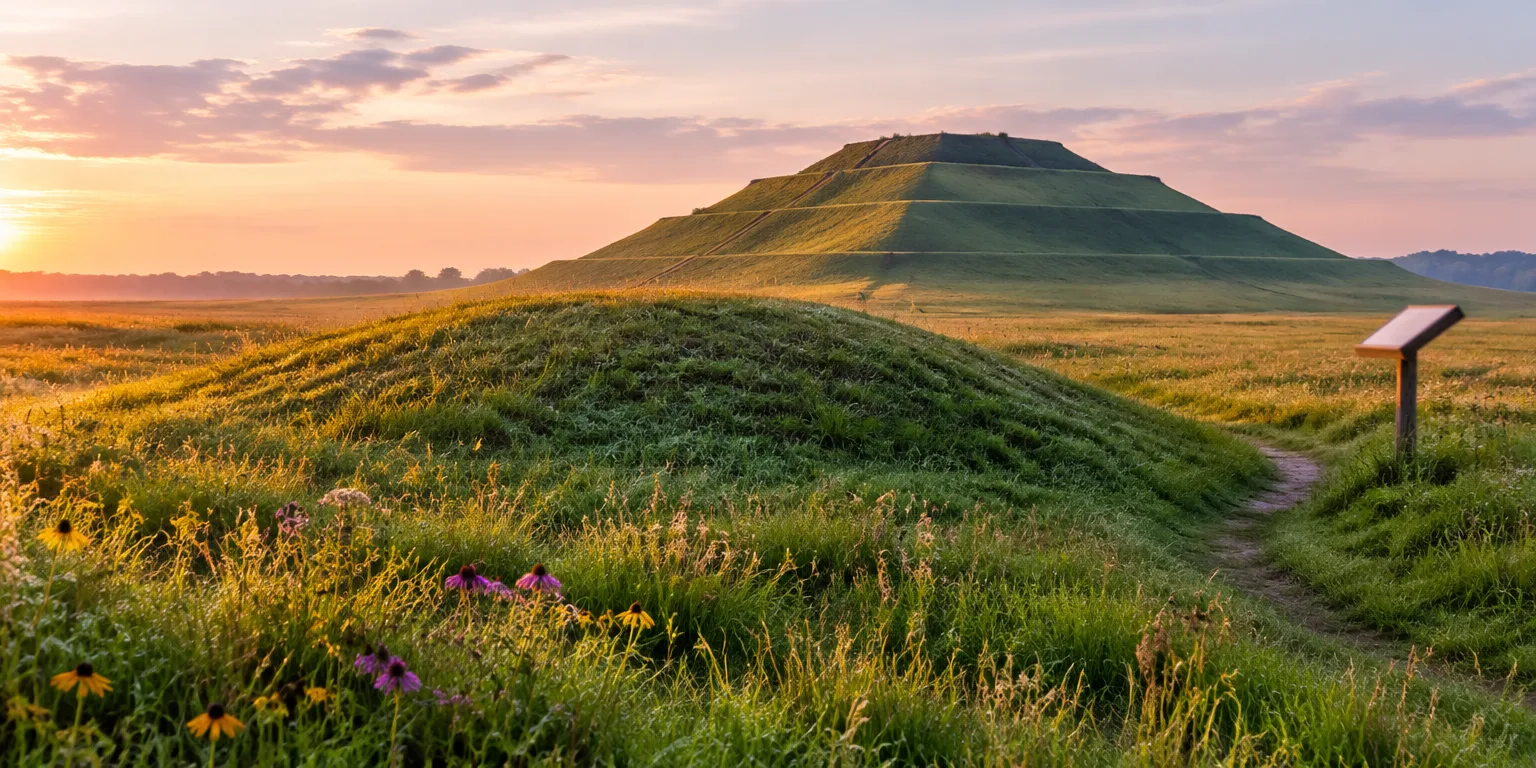
The sand pit with men, women, and children was the worst, and after it was filled the whole sequence was sealed inside Mound 72. The mound looks like nothing, a rise a visitor can walk past without noticing, in front of the site's largest pyramid.
Once it was sealed, Cahokia began to grow. Pyramids rose, neighborhoods formed, and defensive walls went up and were rebuilt three times.
Later Mississippian cities copied Cahokia for about three centuries and did not repeat the mass killing, Barnhart says. After a period of relative peace, Cahokia declined.
Questions people ask
Where is Cahokia today?
Cahokia is in southwestern Illinois, across the Mississippi River from St. Louis. The center of the city is preserved as the Cahokia Mounds State Historic Site, dominated by a huge earthen platform called Monks Mound. Visitors can walk the grounds and see Mound 72 as a low ridge.
How large did Cahokia become?
At its peak around 1050 to 1200, Cahokia likely held 10,000 to 20,000 residents, with tens of thousands more in nearby villages. That made it larger than London at the time. Its influence spread through trade in copper, shell, and other goods across much of eastern North America.
Do descendants of Cahokia's builders live today?
Yes. Present-day tribes of the Southeast and Midwest trace ancestry to Mississippian peoples. Their communities were later devastated by European disease and colonization, but they retain traditions and stories connected to that older world.